Buying charcoal internationally involves more than choosing the right product and comparing quotations. Importers also need the correct charcoal hsn code to prepare customs declarations and review applicable import charges. Although charcoal falls under a common international heading, the complete declaration code can differ between countries. For buyers importing wood charcoal, coconut shell charcoal or charcoal briquettes, understanding these differences helps prevent mismatched paperwork before shipment.
What Is the Charcoal HSN Code?
The international tariff heading for wood charcoal is 4402, described as “wood charcoal (including shell or nut charcoal), whether or not agglomerated.” This wording covers both qualifying loose charcoal and agglomerated charcoal products, so briquettes are not automatically classified outside the charcoal heading.
Within heading 4402, the six-digit subheadings distinguish the material used: 4402.10 for bamboo charcoal, 4402.20 for shell or nut charcoal, and 4402.90 for other charcoal within the heading. Ordinary non-bamboo wood charcoal generally falls within the “other” branch, subject to the product’s actual composition and the applicable classification rules.
However, a six-digit HS code for charcoal is not always sufficient for a customs declaration. National tariff systems add further digits to identify the full import classification. Buyers should therefore distinguish the international heading from the complete code required in the destination country.
Charcoal HSN Code by Country
The examples below cover the United States, the United Kingdom and Australia. They show why importers should not copy a complete tariff number from another market, even when buying the same charcoal product.
United States
The United States uses the Harmonized Tariff Schedule, commonly called the HTS. Under heading 4402, the complete classifications shown in the official schedule are 4402.10.0000 for bamboo charcoal, 4402.20.0000 for shell or nut charcoal, and 4402.90.0100 for other charcoal.
For ordinary non-bamboo wood charcoal, the relevant “other” entry is therefore 4402.90.0100, subject to confirmation that the goods meet that description. Importers should not create a declaration number simply by adding zeros to the international subheading 4402.90.
Coconut shell charcoal belongs in the shell-or-nut branch when its characteristics meet that tariff description. Buyers should confirm whether the shipment contains ordinary charcoal, activated material or a mixture before selecting the entry.
United Kingdom
The UK Integrated Online Tariff also divides charcoal into bamboo, shell or nut, and other charcoal. Its terminal import entries additionally distinguish goods exported from Somalia from other goods.
Within the branches not described as exported from Somalia, the listed commodity codes are 4402100090 for bamboo charcoal, 4402200090 for shell or nut charcoal, and 4402900090 for other charcoal.
For an ordinary non-bamboo wood charcoal shipment from Vietnam, 4402900090 is the relevant “other” branch to review, provided the product meets the tariff description. The importer should still check the applicable trade date, shipment circumstances and whether the declaration concerns Great Britain or Northern Ireland.
This illustrates an important difference between an international subheading and a national import code: 440290 identifies the broad HS category, while 4402900090 identifies a more specific UK tariff entry.
Australia
Australia lists 4402.10.00 for bamboo charcoal, 4402.20.00 for shell or nut charcoal, and 4402.90.00 for other charcoal.
The official schedule also shows separate statistical codes: 40 for bamboo, 41 for shell or nut, and 49 for other charcoal. Importers should preserve the distinction between the tariff item and its statistical code rather than presenting both as an internationally interchangeable HS number.
For ordinary non-bamboo wood charcoal, 4402.90.00, with the corresponding statistical code 49, is the entry to review against the actual goods. Coconut shell charcoal should instead be assessed under the shell-or-nut category.
Classification of Mangrove Charcoal, Khaya Charcoal and Briquettes
Mangrove charcoal and khaya charcoal, also marketed as kaya charcoal, are wood-based products. When supplied as ordinary, non-activated charcoal without ingredients that change their classification, the starting point is generally the “other” wood charcoal subheading 4402.90. The complete national code must then be selected from the destination country’s tariff.
Natural charcoal lumps do not receive a separate international subheading merely because they are irregular pieces rather than sticks. Within heading 4402, the material distinction remains important: bamboo, shell or nut, or other charcoal.
The same principle applies to briquettes. Coconut shell charcoal briquettes and carbonized sawdust charcoal briquettes should not automatically receive the same code just because both are compressed fuel. Their raw materials differ, and the tariff heading expressly includes charcoal “whether or not agglomerated.”
Buyers must also distinguish carbonized sawdust charcoal briquettes from uncarbonized wood briquettes. The official schedules list wood briquettes under heading 4401, separately from charcoal under heading 4402. A commercial description that says only “briquettes” leaves an important classification question unanswered.
Coal HS Code vs. Charcoal HS Code
A coal hs code should not be used interchangeably with a charcoal code. Coal and charcoal may both be solid fuels, but the tariff treats them as different product categories.
Heading 2701 covers coal and certain solid fuels manufactured from coal. Ordinary wood charcoal is covered by heading 4402. Buyers using a general fuel description should therefore confirm whether the product is coal-based or made by carbonizing wood, bamboo or shells.
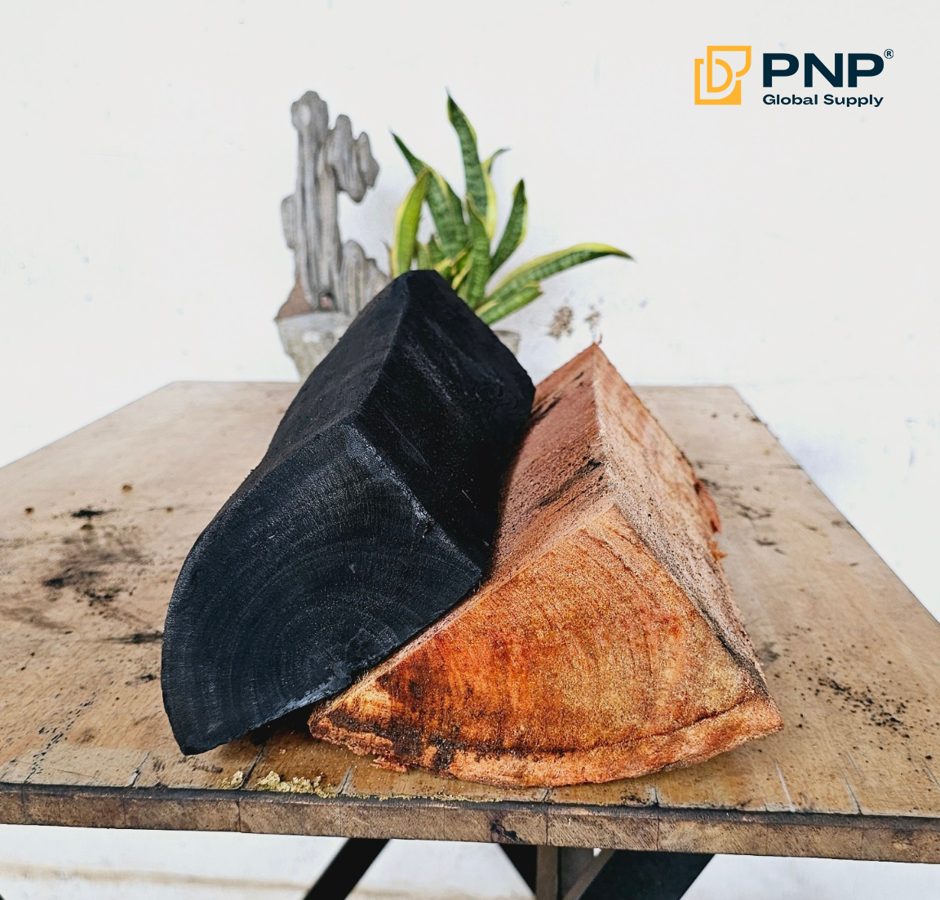
Activated charcoal is another separate case. The Chapter 44 notes explicitly exclude activated charcoal and direct it to heading 3802. Ordinary BBQ charcoal should not be declared as activated charcoal simply because both products contain carbon.
For buyers searching “hs code charcoal,” the first step is therefore to identify the actual material and processing condition, rather than selecting a number from the product’s appearance alone.
Does the Charcoal HSN Code Affect the Price of Charcoal?
The price of charcoal quoted by a supplier and the importer’s final landed cost are different figures. A supplier quotation reflects the agreed product, specifications, packing, quantity and delivery terms. Customs classification helps identify the tariff treatment to review at the destination.
A listed base duty of “Free” does not necessarily mean the shipment has no import-related costs. Other measures, taxes, clearance charges and transport expenses may still apply, depending on the market and shipment.
When comparing quotations, buyers should therefore compare equivalent products and delivery terms first, then review destination charges using the confirmed classification. Sharing the destination country and port early helps keep the commercial quotation and import planning aligned.
Confirming Product Details Before Shipment
A useful classification review starts with a precise product description. The supplier should identify the raw material, whether the goods are carbonized or activated, whether they are loose or agglomerated, and whether they contain binders or other additives.
A description such as “non-activated mangrove wood charcoal in natural pieces” gives the importer more useful information than “BBQ fuel.” For briquettes, the description should identify the material and carbonized condition rather than relying only on shape.
The importer or customs broker can then compare those details with the destination tariff and confirm the complete declaration code. A code used on an earlier shipment is a reference, not proof that it remains correct for a different product or market.
Choosing Charcoal from PNP Charcoal
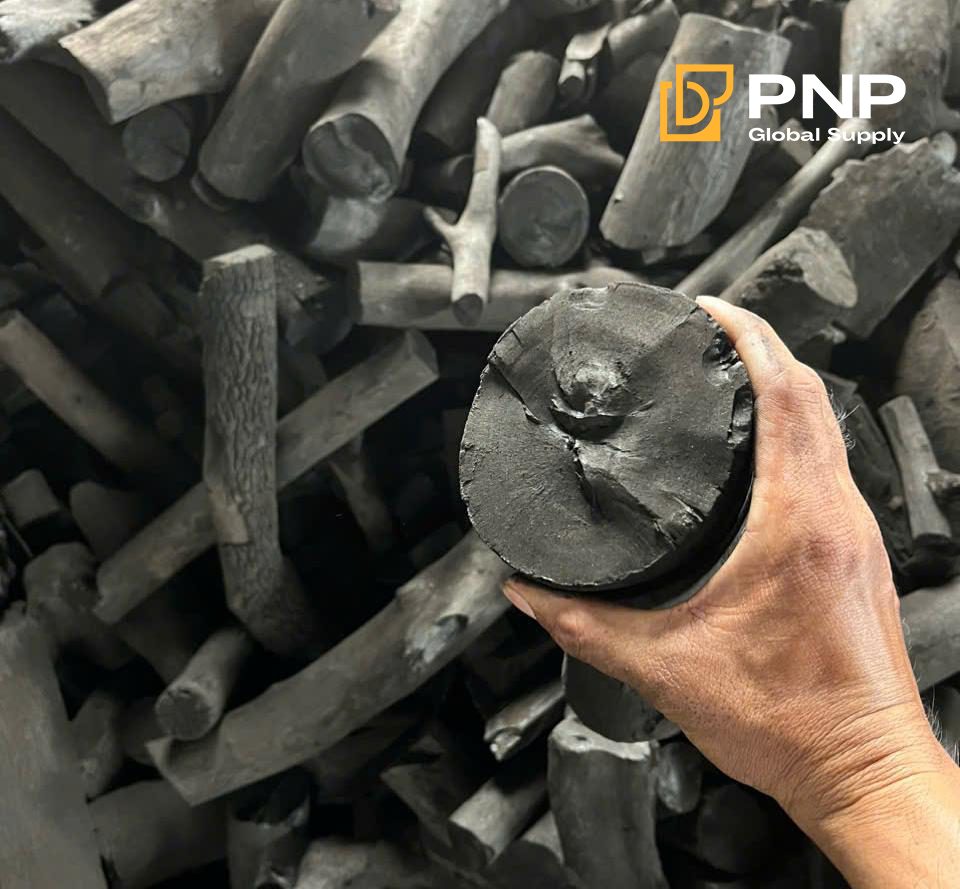
PNP Charcoal offers wood charcoal and briquette charcoal options for BBQ, restaurant, wholesale and distribution needs. Buyers can discuss the required product type, size, packing, quantity and destination before requesting a quotation.
Alongside customs planning, importers should confirm that the selected charcoal suits their customers’ requirements. For practical product checks, read PNP Charcoal’s guide on how to check charcoal quality before placing a bulk order.
Conclusion
The correct charcoal hsn code depends on the raw material, processing condition and destination tariff. Heading 4402 provides the international starting point, but complete national codes differ. Confirm the product details with your supplier and the declaration code with your customs broker before shipment.
Contact PNP Charcoal to discuss suitable charcoal products, packing requirements and a quotation for your market.
Contact us for more information
Facebook: PNP Charcoal
Instagram: PNP Charcoal
Email: info@pnpglobalsupply.com