What is charcoal briquettes made out of? For charcoal buyers, the answer is not only about the material name. The raw material behind a briquette affects burn time, heat, ash, smoke, shape stability, and packing performance. This article explains the main materials used in charcoal briquettes and what buyers should check before choosing a product for BBQ, restaurant, wholesale, or export supply.
What Is Charcoal Briquettes Made Out Of?
Charcoal briquettes are made from sawdust, coconut shell, coconut waste. These materials are not used in their original loose form. They need to be dried, compressed, molded, carbonized, or mixed depending on the product type. The final quality depends on both the raw material and how well the factory controls each production stage.
Charcoal Briquettes Made From Sawdust
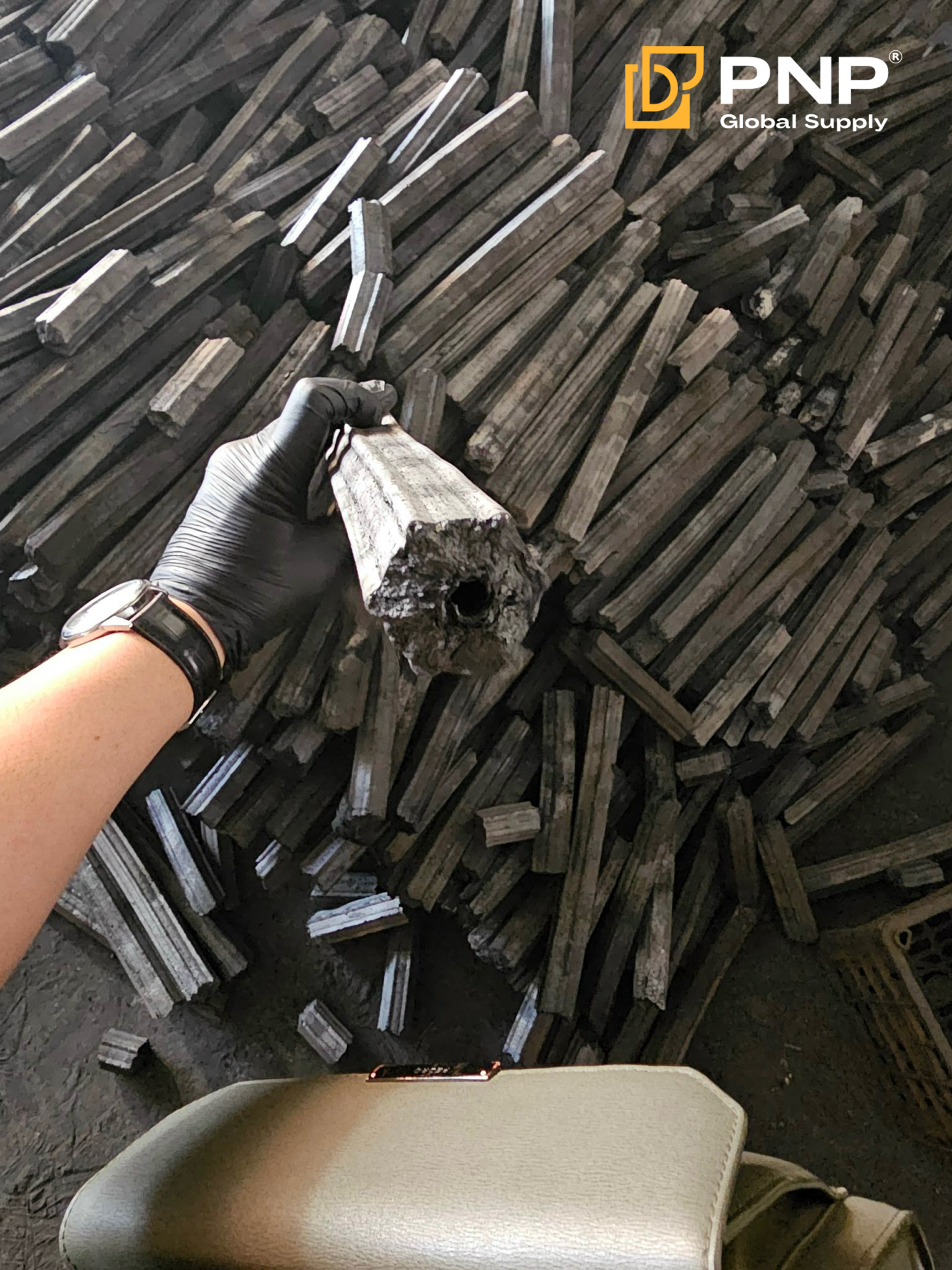
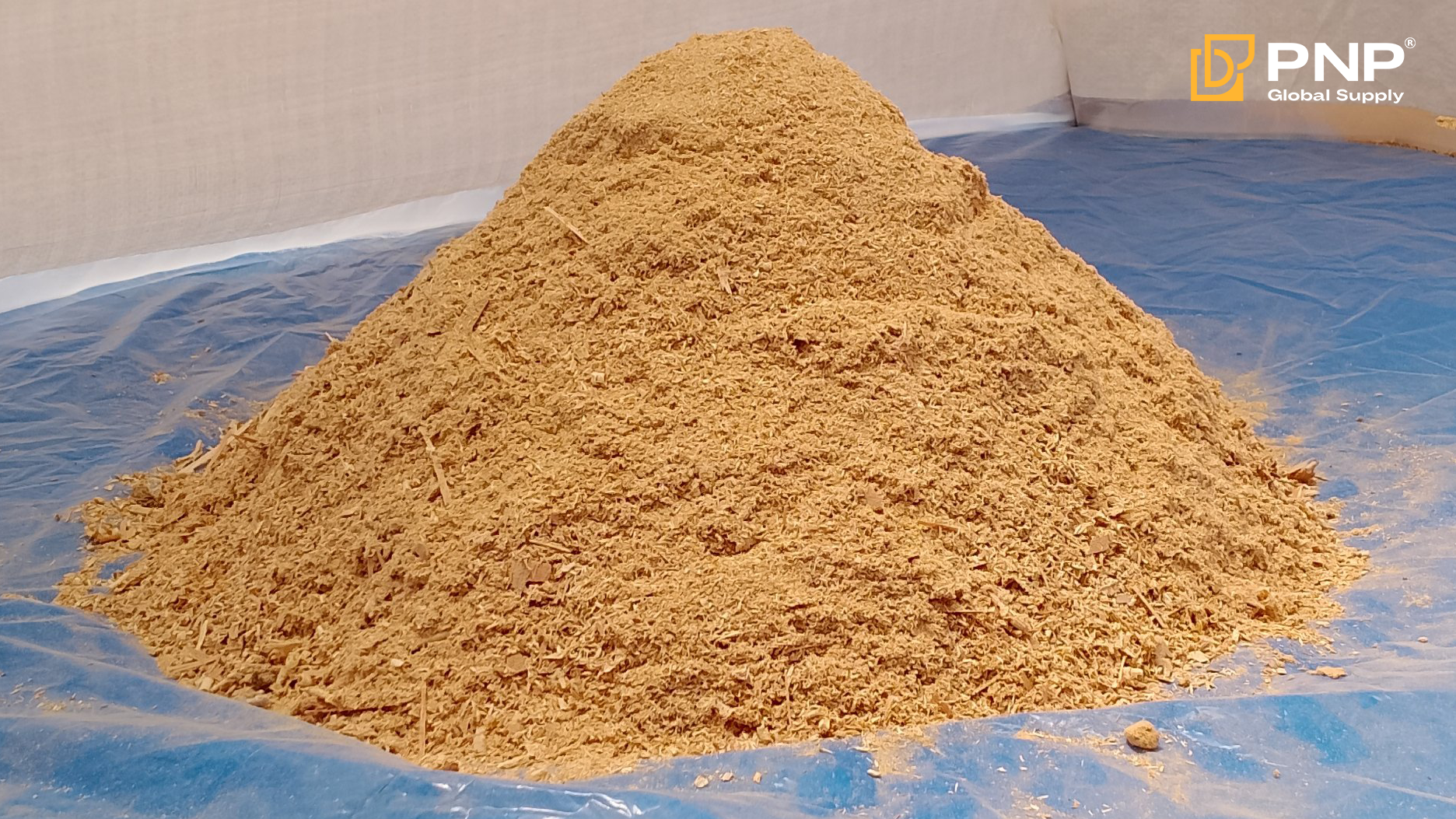
Charcoal briquettes from sawdust are made from sawdust collected from wood processing. Before sawdust can become a stable charcoal product, it must be dried to a suitable moisture level and pressed into a solid form. Loose sawdust cannot be used directly for BBQ, restaurant, or wholesale supply because it does not have the density needed for controlled burning.
After drying, the sawdust is compressed by a charcoal briquettes machine into dense logs, often with a hexagonal shape. These pressed logs are then carbonized in a kiln with limited oxygen. After cooling, the briquettes are sorted and packed according to buyer requirements.
The strength of sawdust briquette charcoal depends heavily on moisture control and compression. If the sawdust is too wet, the briquette may crack, create smoke, or carbonize unevenly. If the compression is weak, the finished charcoal can break during loading or transport.
Sawdust briquette charcoal can have a calorific value of around 7900 kcal/kg and a burning time of about 6–7 hours. This makes it suitable for buyers who need long burning time, stable heat, and a uniform product for BBQ, restaurant, wholesale, or export supply.
Charcoal Briquettes Made From Coconut
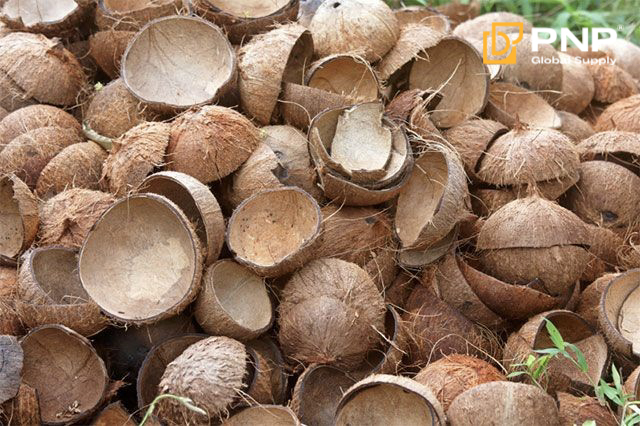
Briquettes made from coconut waste are usually made from coconut shell. The shell is carbonized first, then crushed or ground into charcoal powder before being shaped into briquettes. Depending on the market requirement, coconut charcoal can be produced in cube, finger, or hexagon shapes.
Coconut shell is a useful raw material because it has a naturally hard structure. When properly carbonized and processed, it can produce compact charcoal briquettes with a clean and uniform appearance. It also turns coconut by-products into a practical fuel product for cooking and BBQ markets.
The production quality depends on carbonization, powder fineness, forming pressure, drying, and packing. If the shell is not fully carbonized, the finished product may produce more smoke or odor. If the powder is not prepared well, the briquette may have weaker structure or uneven burning.
Coconut charcoal can have a calorific value of around 7224 kcal/kg and a burning time of about 2 hours. For buyers, coconut charcoal is often considered when the market needs compact shape, clean handling, and convenient packing.
Charcoal Briquettes Production Process
To understand what is charcoal briquettes made out of, buyers should also look at how briquettes are produced. The process affects density, burning time, smoke level, ash content, shape stability, and breakage rate during packing and transport.
Step 1: Raw Material Preparation
For charcoal briquettes from sawdust, production starts with clean sawdust collected from wood processing. For briquettes made from coconut waste, coconut shell is carbonized first, then crushed or ground into charcoal powder.
At this stage, the raw material must be prepared properly because moisture, particle size, and carbonization level can directly affect the final briquette quality.
Step 2: Drying and Moisture Control
Sawdust needs to be dried to a suitable moisture level before pressing. If the material is too wet, the briquettes may crack, produce more smoke, or burn unevenly.
For coconut charcoal powder, proper drying also helps improve structure, shape stability, and burning performance.
Step 3: Pressing and Forming
The prepared material is shaped by a charcoal briquettes machine into the required form, such as hexagon, cube, or finger briquettes.
For sawdust briquettes, dried sawdust is compressed into dense logs before carbonization. For coconut charcoal briquettes, prepared charcoal powder is formed into compact briquettes based on buyer requirements.
Step 4: Carbonization
Carbonization turns the pressed biomass material into charcoal. This step must be controlled carefully with limited oxygen to create stable heat, reduce smoke, and improve burning performance.
If carbonization is incomplete, the final product may have odor, unstable heat, or uneven ash.
Step 5: Cooling and Sorting
After carbonization, the briquettes need to cool down before sorting. The factory checks size, shape, hardness, breakage, and appearance to remove weak or damaged pieces.
This step helps ensure the finished product is more stable for packing, loading, and transport.
Step 6: Packing and Buyer Requirements
After sorting, briquettes are packed according to buyer requirements. Packing can affect breakage rate, product appearance, container loading, and retail or wholesale handling.
For buyers who want to buy briquettes for BBQ, restaurant, wholesale, or export supply, it is important to check raw material, shape, burning time, moisture, ash level, hardness, packing method, and briquettes price before placing a bulk order.
Learn more about: How Sawdust Charcoal Briquettes Manufacturers Ensures Quality for Global Markets
Choosing Charcoal Briquettes at PNP Charcoal
At PNP Charcoal, buyers can choose briquette charcoal products based on their market, usage, and packing needs. Sawdust briquette charcoal is suitable for buyers who need long burning time, strong heat, and uniform shape. Coconut charcoal can be considered for buyers who prefer compact briquettes made from coconut shell material.
Before placing an order, buyers can discuss raw material, briquette type, shape, burning time, moisture and ash expectations, packing requirement, intended use, and sample quality with PNP Charcoal. This helps match the right briquette product with the buyer’s market instead of choosing only by product photo or price.
Buyers can also visit the PNP Charcoal website at PNP Charcoal to explore more product information and compare suitable charcoal options for their market needs.
Conclusion
What is charcoal briquettes made out of? The article above has explained that charcoal briquettes are made from processed biomass materials such as sawdust, coconut shell, coconut waste, or charcoal powder. Sawdust briquette charcoal is often chosen for long burning time and uniform shape, while coconut charcoal is known for compact structure and convenient packing options.
If you are looking to buy briquettes for BBQ, restaurant, wholesale, or export supply, contact PNP Charcoal for suitable sawdust briquette charcoal, coconut charcoal, and other charcoal product options.
Contact us for more information
Facebook: PNP Charcoal
Instagram: PNP Charcoal
Email: info@pnpglobalsupply.com