As demand for sustainable cooking fuel continues to grow, sawdust briquettes have become a popular choice for restaurants, wholesalers, and distributors worldwide. However, product quality depends heavily on raw materials, manufacturing processes, and quality control.
Professional charcoal briquettes manufacturers ensure consistent performance by carefully managing every production stage, from selecting premium sawdust to conducting charcoal testing and preparing products for export. This article explores how manufacturers maintain high-quality standards for global markets.
Selecting Premium Raw Materials for Sawdust Briquettes
The quality of sawdust briquettes starts with the selection of premium raw materials. Reliable charcoal briquettes manufacturers source clean hardwood sawdust from trusted wood-processing facilities to ensure consistent product quality.
- Premium hardwood sawdust: Produces denser charcoal with higher heat output and longer burning time.
- Clean raw materials: Free from bark, soil, stones, plastic, and metal contaminants to improve combustion performance and reduce ash content.
- Consistent supply: Ensures uniform quality across every production batch, meeting the requirements of global export markets.
By carefully selecting high-quality sawdust, charcoal briquettes manufacturers build a strong foundation for producing export-grade charcoal with reliable and consistent performance.
Manufacturing Process That Ensures Consistent Quality
After premium raw materials have been selected, the manufacturing process plays a crucial role in ensuring every batch of sawdust briquettes delivers consistent quality for global markets.
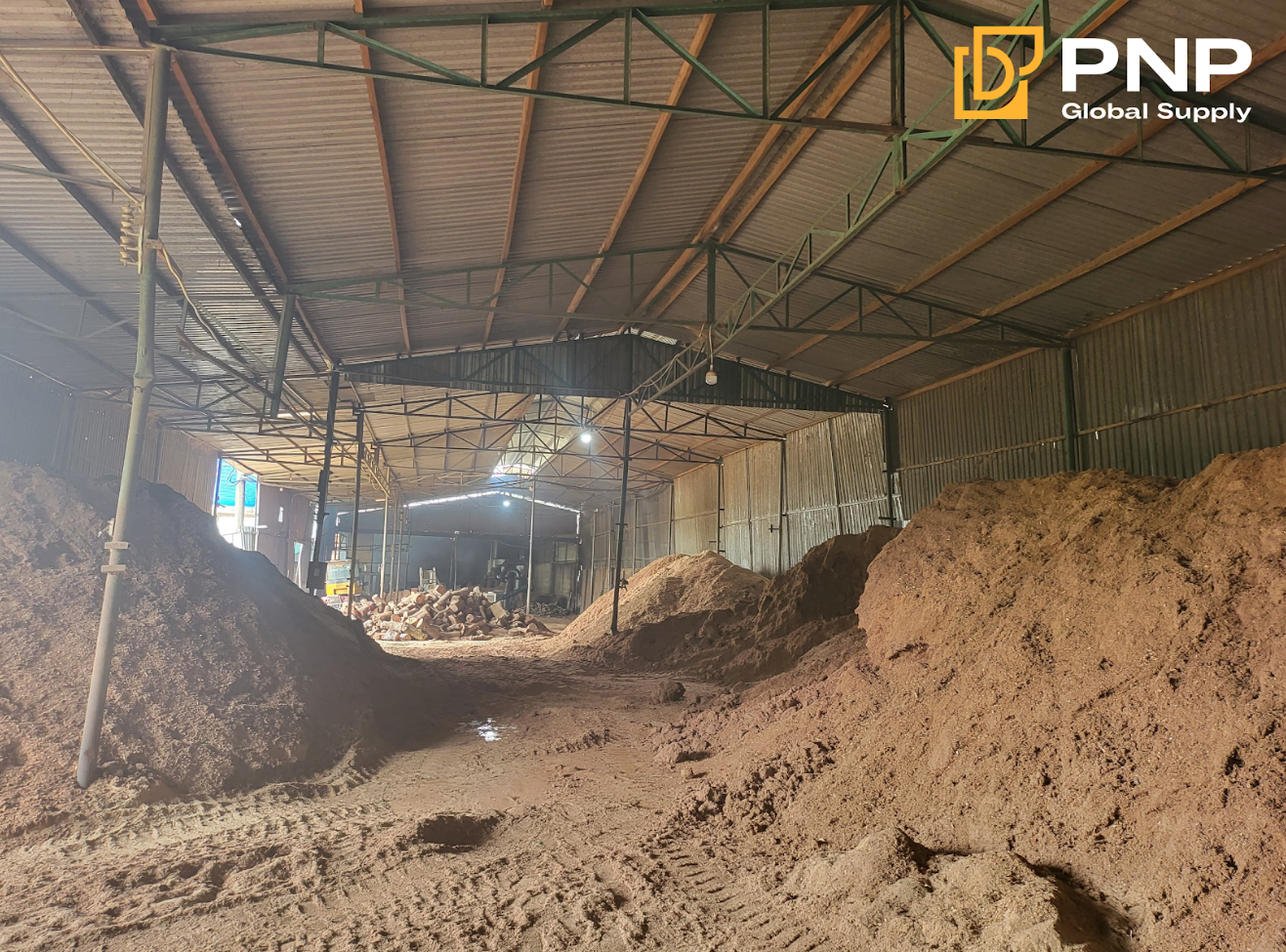
Sawdust Drying
The production process begins by drying the sawdust to achieve the ideal moisture content. Proper moisture control improves compression efficiency, creates denser briquettes, enhances carbonization, and reduces the risk of cracking during production.
High-Pressure Briquetting
The dried sawdust is compressed using specialized briquetting machines under high pressure. Instead of chemical binders, the natural lignin in the wood acts as a binding agent, forming dense and durable briquettes.
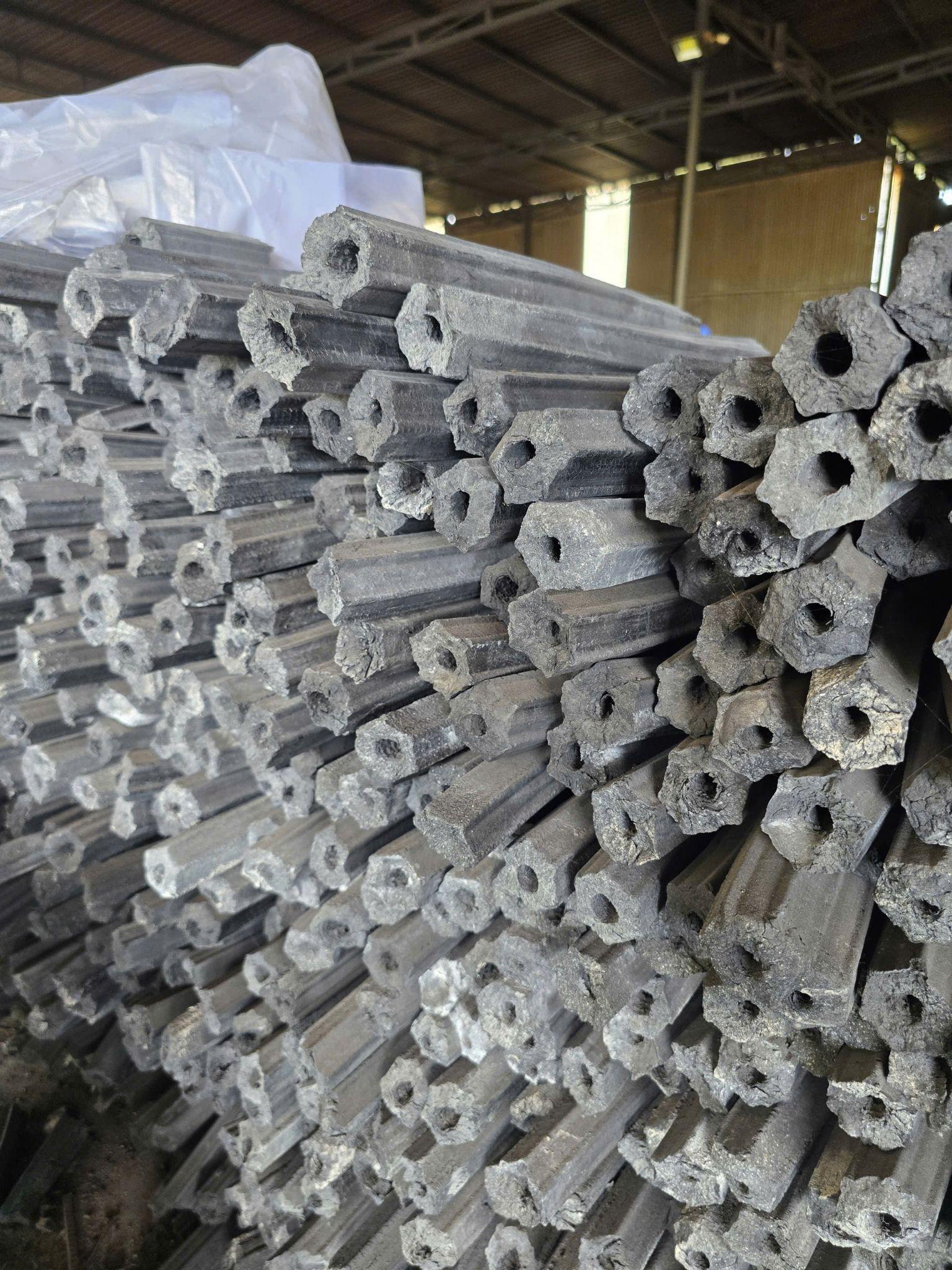
Most sawdust briquettes feature a hexagonal shape with a center hole, allowing better airflow during combustion for more stable and efficient burning.
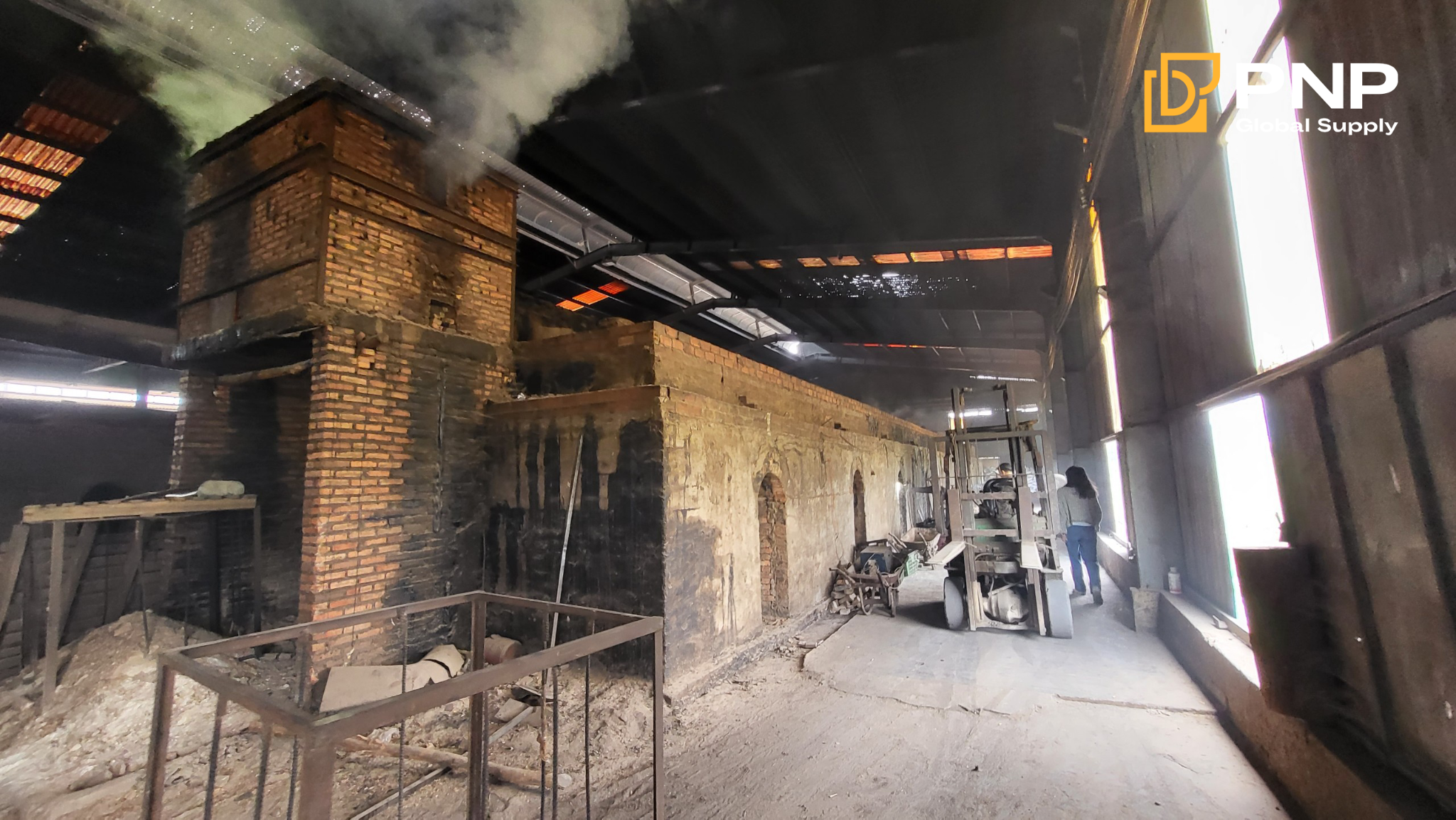
Carbonization Process
Carbonization is one of the most critical production stages. The compressed briquettes are heated in kilns under carefully controlled temperatures with limited oxygen, converting the wood into high-quality charcoal.
A stable carbonization process produces charcoal with:
- High calorific value
- High fixed carbon content
- Low ash content
- Minimal smoke
- Long and consistent burning performance
These characteristics make sawdust briquettes ideal for restaurants, BBQ businesses, and commercial kitchens.
Cooling and Storage
After carbonization, the charcoal is cooled gradually to prevent cracking and maintain its structural integrity. It is then stored in clean, dry conditions to protect it from moisture before packaging.
Proper cooling and storage help preserve product quality and ensure the charcoal reaches international customers in excellent condition.
Charcoal Testing Throughout Production
To ensure consistent product quality, professional charcoal briquettes manufacturers conduct strict quality testing throughout the entire production process. Every production batch is inspected to verify that it meets technical specifications and international export requirements before being delivered to customers.
Laboratory Testing
Each batch is tested in the laboratory to measure important quality indicators, including:
- Moisture content – Ensures the charcoal burns efficiently and stores well.
- Ash content – Lower ash means easier cleaning and better combustion performance.
- Fixed carbon – Higher fixed carbon provides longer burning time and more stable heat.
- Volatile matter – Maintained at the proper level for cleaner combustion.
- Calorific value – Measures the heat output generated during burning.
These tests confirm that the charcoal meets product specifications and customer requirements.
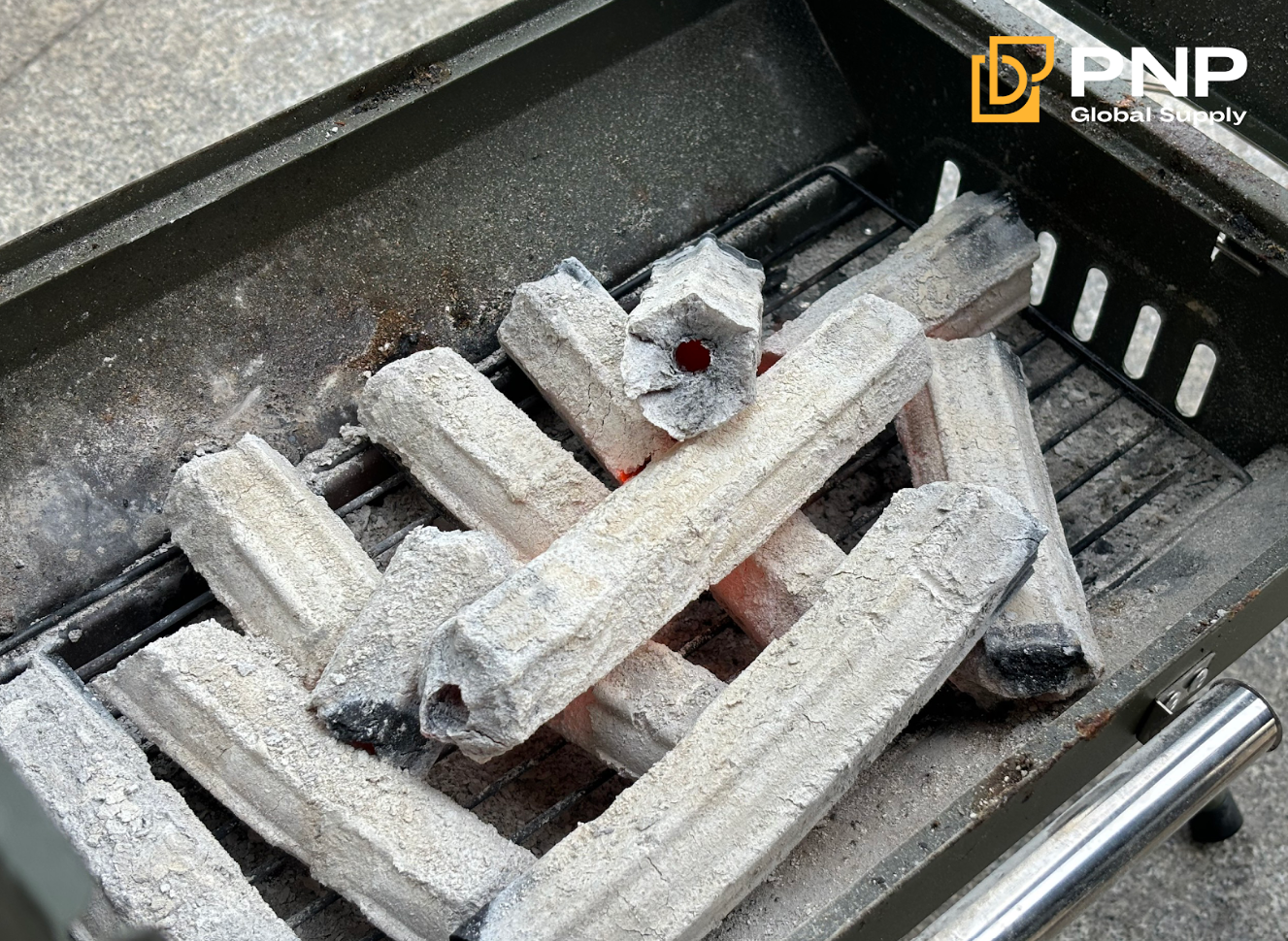
Burning Performance Testing
Manufacturers also perform practical burning tests to evaluate how the charcoal performs in real-world applications.
During testing, they assess:
- Burning time
- Heat consistency
- Smoke emission
- Spark generation
- Odor during combustion
The objective is to ensure the charcoal burns steadily with high heat, minimal smoke, and low ash, making it suitable for restaurants, BBQ operations, and commercial kitchens.
Strength and Durability Testing
Since charcoal is transported over long distances, product durability is equally important. charcoal briquettes manufacturers test the briquettes for compression strength and resistance to breakage during packaging, loading, and shipping.
Strong and durable briquettes help reduce product loss during transportation and ensure customers receive charcoal in excellent condition.
By combining laboratory analysis, burning performance testing, and durability testing, manufacturers can maintain consistent quality across every production batch while meeting the expectations of global buyers.
Learn more about the technical specifications and performance of sawdust briquettes in our detailed guide on wood sawdust briquettes: Wood Sawdust Briquettes Specification: Appearance, Burning Performance, and Key Features
Packaging and Export Quality Control
Quality control does not end after production and charcoal testing. During the packaging and export stages, professional charcoal briquettes manufacturers apply strict procedures to protect the product from moisture, damage, and external factors throughout international transportation.
Product Packaging and Protection
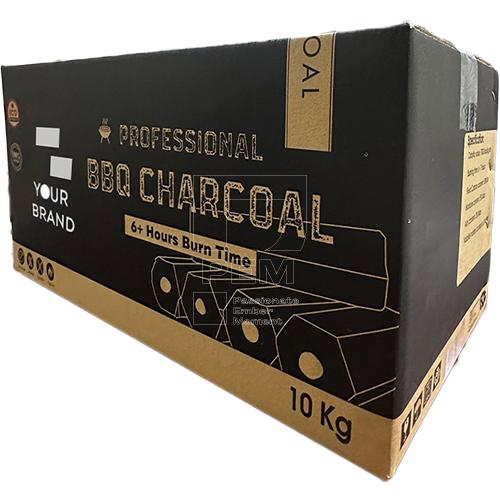
To maintain the quality and shape of sawdust briquettes during storage and international shipping, manufacturers use durable carton boxes that comply with export packaging standards. Unlike lump charcoal, sawdust briquettes are typically not packed in bags, as pressure and movement during handling and transportation may cause the briquettes to crack or break.
Strong carton packaging helps protect the briquettes from physical impact, maintains their shape during stacking and transportation, and reduces the risk of damage throughout the export process. The cartons can also be customized with customer branding, ensuring a professional presentation while meeting international shipping requirements.
Export Container Inspection
Before loading, every export container is carefully inspected to ensure it meets safety and quality requirements, including:
- Clean and dry condition
- No water leaks
- No dust, contaminants, or foreign materials
- Suitable conditions for charcoal transportation
After inspection, a fire-resistant container liner bag is installed inside the container before the charcoal is loaded. This protective liner acts as an additional safety layer, helping reduce potential risks during international transportation while protecting the charcoal from external environmental impacts such as moisture, contamination, and handling conditions throughout the shipping process.
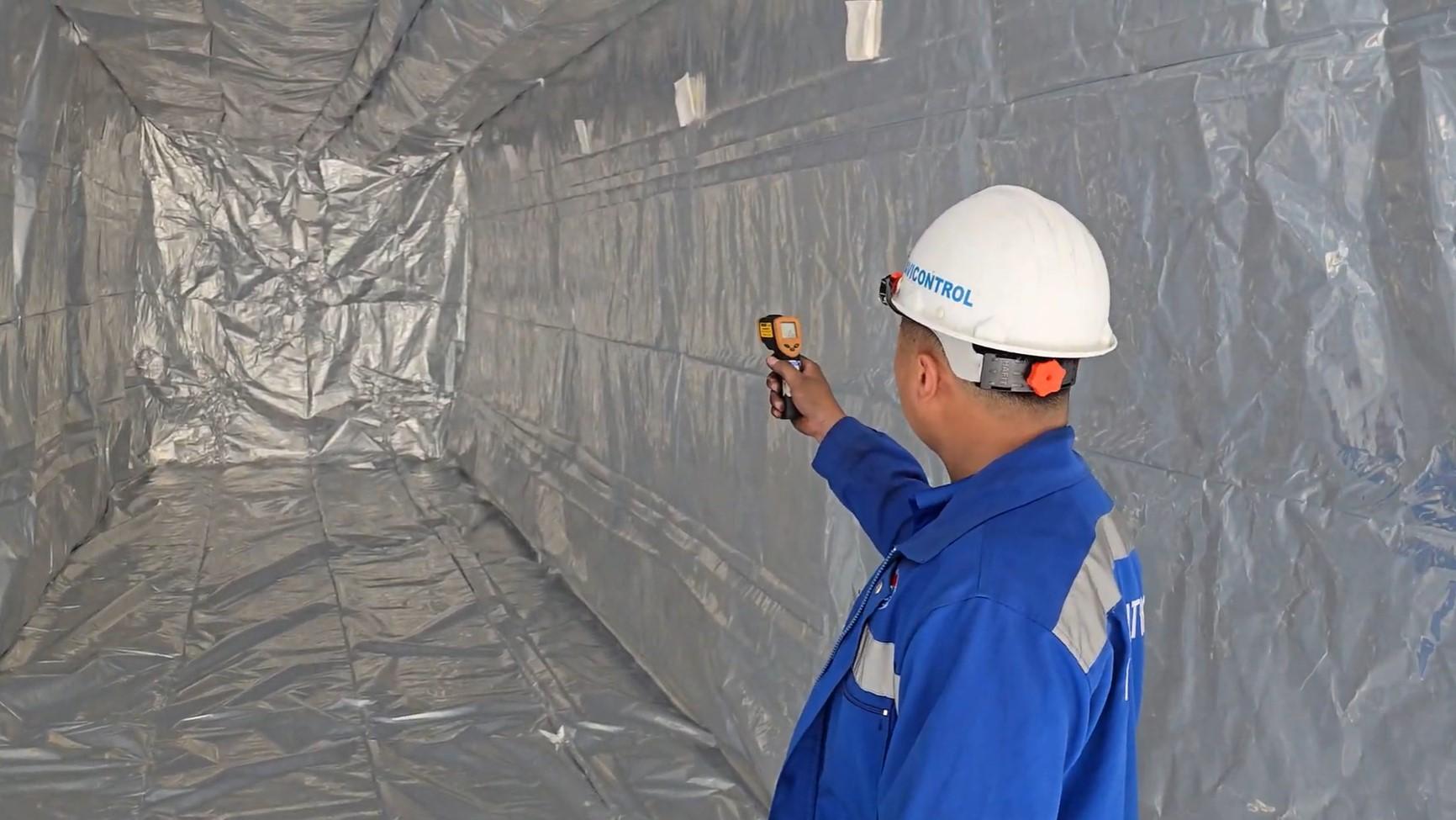
Safe Loading and Transportation
Sawdust briquettes are carefully arranged inside the container to maximize loading capacity while minimizing movement during transit. During loading, the charcoal is stacked approximately 30 cm below the container ceiling and 30 cm away from the container doors. This loading method helps improve ventilation, enhances transportation safety, reduces the risk of product damage, and maintains the shape and quality of the briquettes throughout the journey.
Choosing Reliable Sawdust Briquettes for Sale
With many suppliers available in today’s market, selecting the right manufacturer requires more than comparing prices. When searching for sawdust briquettes for sale, buyers should evaluate a supplier’s production capabilities, quality management system, and export experience to ensure long-term reliability.
A trustworthy manufacturer should provide clear product specifications, including moisture content, ash percentage, fixed carbon, calorific value, and burning time. Transparent technical information helps buyers compare products and choose the right supplier for their market.
Production capacity is another important factor. Experienced charcoal briquettes manufacturers, such as PNP Charcoal, maintain strict quality control while ensuring a stable supply for global customers.
Buyers should also look for suppliers that offer OEM packaging, product samples, and quality reports before placing bulk orders. Working with a reliable manufacturer helps reduce supply chain risks and ensures consistent product quality with every shipment.
Conclusion
Choosing reliable charcoal briquettes manufacturers is essential for ensuring consistent product quality and long-term supply. From premium raw material selection and standardized production to charcoal testing and export packaging, every step plays a vital role in producing high-quality sawdust briquettes for global markets.
At PNP Charcoal, we are committed to delivering export-grade charcoal with stable quality and dependable supply. If you are looking for sawdust briquettes for sale, contact our team today to request product specifications, samples, or a quotation and discover the right charcoal solution for your business.
Contact us for more information
Facebook: PNP Charcoal
Instagram: PNP Charcoal
Email: info@pnpglobalsupply.com