For charcoal buyers, ash is one of the clearest signs to check after burning. A small amount of ash is normal, but too much ash charcoal may show problems in raw material, moisture control, carbonization, or production consistency. For importers, wholesalers, restaurants, and BBQ distributors, understanding ash helps evaluate charcoal quality before confirming a bulk order.
What Is Ash Charcoal?
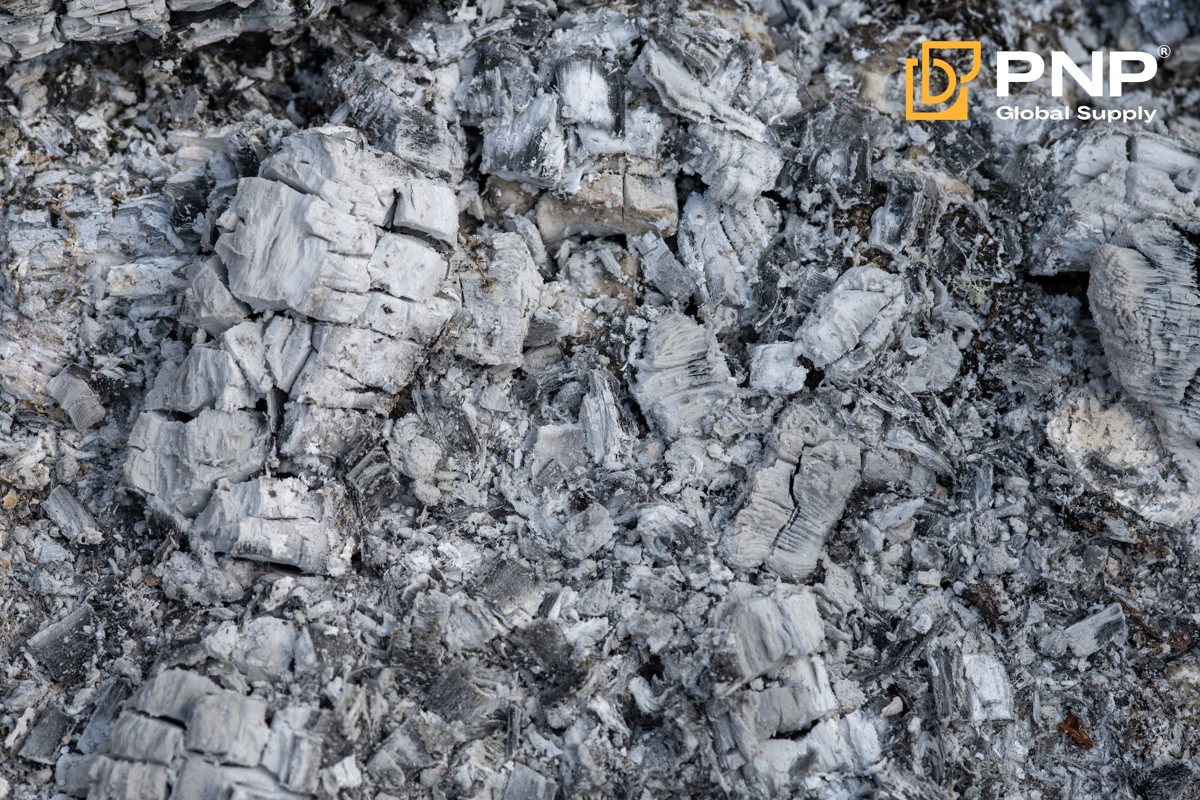
Ash charcoal refers to the ash left after charcoal has completely burned. This ash comes from the natural minerals inside the raw material, such as wood, sawdust, or coconut shell. Because every biomass material contains minerals, all charcoal products will leave some ash after burning.
The important point is not whether ash appears, but how much ash remains, how fast it appears, and what it says about the product’s burning performance. If the charcoal produces too much ash too quickly, buyers may need to check whether the material was clean, properly carbonized, well dried, and suitable for the intended market.
In real use, ash affects more than appearance. Too much ash can reduce airflow in the grill, cover the burning surface, make cleaning harder, and affect the user experience in BBQ restaurants, retail packs, and wholesale supply.
Why Ash Is Important When Checking Charcoal Quality
Ash is a practical indicator of charcoal quality because it appears only after the product has gone through real burning. A charcoal sample may look good in photos, but the burn test shows how it actually performs.
For commercial buyers, ash should be checked together with heat, burn time, smoke, ignition, hardness, breakage, and packing condition. A good charcoal product should burn steadily, produce suitable heat, create acceptable ash, and stay consistent from sample testing to container shipment.
If the ash level is too high, the charcoal may create more waste for end users. In restaurant kitchens, this means more cleaning and less efficient grilling. In retail markets, customers may feel the product burns out too fast or creates too much mess. For importers, inconsistent ash between batches may also show weak quality control from the supplier.
What Does Too Much Ash Charcoal Usually Mean?
Too much ash charcoal may suggest several quality issues. The most common reasons are raw material impurities, incomplete carbonization, high mineral content, poor drying, or inconsistent production control.
If the raw material contains too much bark, soil, dust, sand, or low-grade biomass, the final charcoal can leave more residue after burning. Clean and properly selected raw material is important for producing high quality charcoal, especially for BBQ, restaurant, and export markets.
Carbonization is another key factor. If the material is not fully carbonized, the charcoal may burn with unstable heat, more smoke, and heavier ash. Buyers should be careful with samples that break easily, create a lot of powder, or leave ash before delivering enough cooking time.
Moisture can also affect the burn test. Wet or poorly stored charcoal may be harder to light and may produce more smoke during ignition. While moisture is not the same as ash, poor drying and storage often make the whole burning process less clean and less stable.
Ash in Lump Charcoal
Lump charcoal is made from natural wood pieces, so the shape, size, density, and burning behavior can vary from piece to piece. Good lump charcoal should still provide stable heat, acceptable ash, and limited smoke when the raw material is suitable and the carbonization process is controlled.
For lump charcoal, buyers should not only look at the outside color. They should also test how the charcoal lights, whether it sparks too much, how long it burns, how much ash remains, and whether the pieces keep enough structure during use.
Some ash is normal because lump charcoal keeps the natural characteristics of wood. However, if the charcoal leaves heavy ash very quickly, breaks into dust, or burns with weak heat, buyers should ask the supplier about raw material selection, moisture level, kiln process, sorting, and packing.
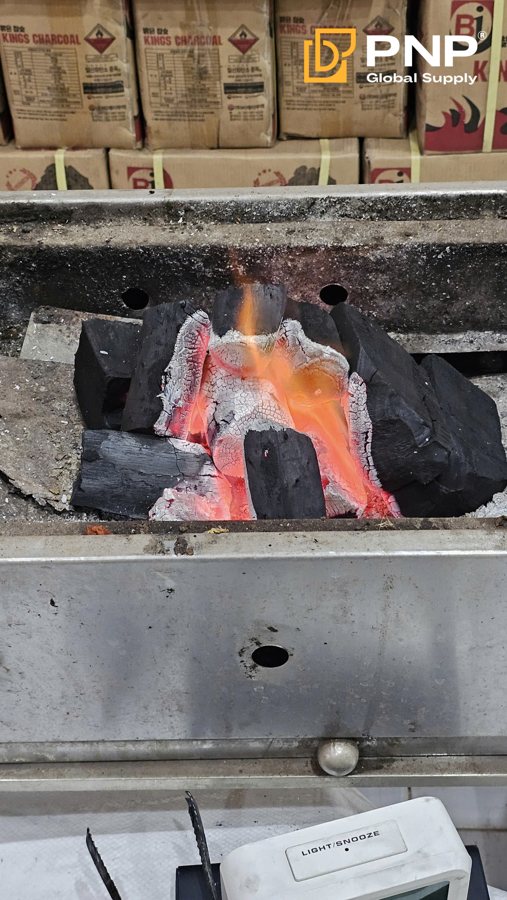
Ash in Briquette Charcoal
Briquette charcoal is made from processed raw materials such as sawdust or coconut shell, then pressed into a uniform shape. Because of this structure, briquette charcoal is often easier to arrange, pack, store, and use consistently.
However, a uniform shape does not automatically mean better quality. Charcoal briquette ash still depends on raw material quality, compression, binder condition if used, drying, carbonization, and storage. If the briquette is weak, too powdery, or produces too much ash, it may not be suitable for demanding BBQ or restaurant use.
For sawdust briquette charcoal, buyers often expect long burning time and stable heat. For coconut charcoal, buyers may look at shape, hardness, ash amount, and clean burning. In both cases, the ash test should be part of a full sample review before ordering.
Does Low Ash Always Mean High Quality Charcoal?
Low ash is usually a good sign, but it is not the only standard for high quality charcoal. A product can leave low ash but still fail in other areas, such as short burn time, weak heat, difficult ignition, high smoke, or high breakage.
That is why buyers should not judge charcoal quality by ash alone. The better approach is to test the charcoal under real conditions and compare several factors at the same time. A good test should check:
- Ignition time
- Smoke during lighting and cooking
- Heat stability
- Burn time
- Ash amount after complete burning
- Ash texture and cleanliness
- Hardness and breakage
- Dust level in the bag
- Packing condition after transport
For export buyers, consistency is especially important. The product should not only perform well in one sample test but also remain stable across bulk orders.
How Too Much Ash Affects BBQ, Restaurant, and Wholesale Buyers
Too much ash can create direct problems for BBQ and restaurant users. Ash may block airflow, reduce heat efficiency, cover the grill surface, and require more cleaning during and after service. If charcoal produces too much ash before finishing the cooking cycle, users may need to add more charcoal, which increases actual operating cost.
For wholesalers and distributors, ash affects repeat sales. End customers may not know technical charcoal specifications, but they can quickly notice if the product leaves too much mess, burns too fast, or produces unstable heat. A lower purchase price may not be useful if the product creates poor user feedback.
For importers, ash is part of supplier evaluation. If one batch has acceptable ash but another batch performs differently, it may show inconsistent raw material or production control. This is why buyers should work with suppliers that can explain their product type, production process, packing method, and sample testing support.
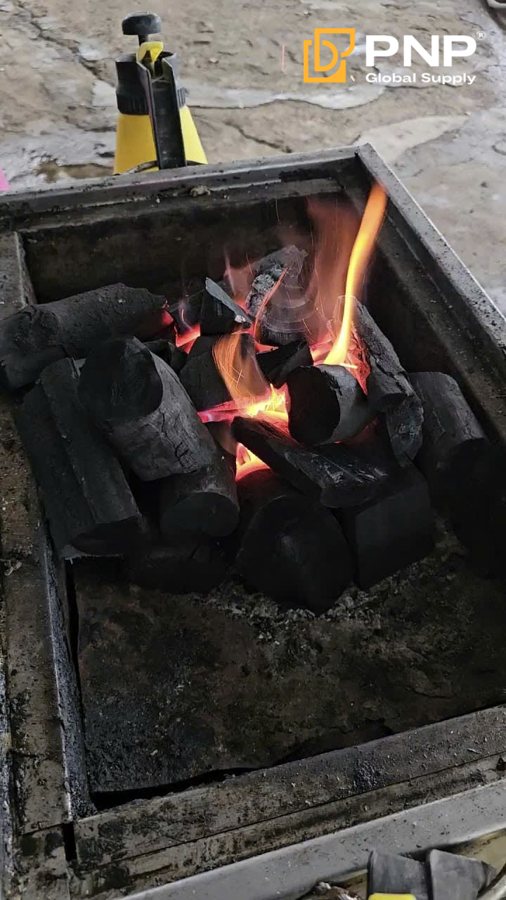
How Buyers Can Test Ash Before Bulk Orders
Before confirming a bulk order, buyers should test charcoal in a clean grill or burner with controlled airflow. The same test setup should be used when comparing different suppliers, because airflow, ignition method, and grill structure can affect the burning result.
For lump charcoal, buyers should test several pieces of different sizes. Natural pieces may not burn in exactly the same way, so one piece cannot represent the whole shipment. Buyers should observe whether the charcoal lights properly, burns with stable heat, leaves reasonable ash, and keeps enough structure during cooking.
For briquette charcoal, buyers should check whether the briquettes hold their shape or break apart too early. If charcoal briquette ash appears too quickly or becomes too heavy, the buyer should ask more about the raw material, drying process, compression, and carbonization method.
It is also helpful to record photos or videos during testing. This makes comparison easier when discussing quality with the supplier.
Choosing Charcoal Products from PNP Charcoal
PNP Charcoal supplies different charcoal products for buyers who need suitable options for BBQ, restaurant, wholesale, and export orders. Product selection should depend on the buyer’s target use, packing requirement, burning performance, and market expectation.
For buyers comparing lump charcoal and briquette charcoal, PNP Charcoal can support product consultation based on practical criteria such as burn time, heat, smoke, ash, shape, packing, and order requirements. Buyers can also review different product options here: PNP Charcoal.
When checking ash, buyers should not only ask for general quality claims. They should request samples, test the charcoal in real use, and compare the result with their market needs. For export shipments, packing condition is also important because dust, breakage, and moisture can affect the final burning experience.
Conclusion
The article above has explained what ash charcoal can reveal about charcoal quality, especially when buyers compare lump charcoal and briquette charcoal for BBQ, restaurant, wholesale, or export use. A small amount of ash is normal, but too much ash may show problems in raw material, moisture, carbonization, or production consistency.
To choose high quality charcoal, buyers should test ash together with smoke, heat, burn time, hardness, breakage, and packing condition. For suitable charcoal options and export support, buyers can contact PNP Charcoal for more product information.
Contact us for more information
Facebook: PNP Charcoal
Instagram: PNP Charcoal
Email: info@pnpglobalsupply.com