When buyers look for charcoal, they often focus first on wood type, lump size, burning time, ash level, or packaging. However, one important factor that should not be overlooked is charcoal moisture. Moisture content directly affects ignition, real heat output, fuel consumption, storage condition, and the overall stability of a charcoal shipment.
For BBQ businesses, restaurants, distributors, and importers, moisture is not just a technical detail. It can influence logistics cost, product performance, customer experience, and the commercial value of the order. That is why charcoal moisture should be reviewed together with other quality factors when evaluating charcoal quality before placing a bulk order.
What is charcoal moisture?
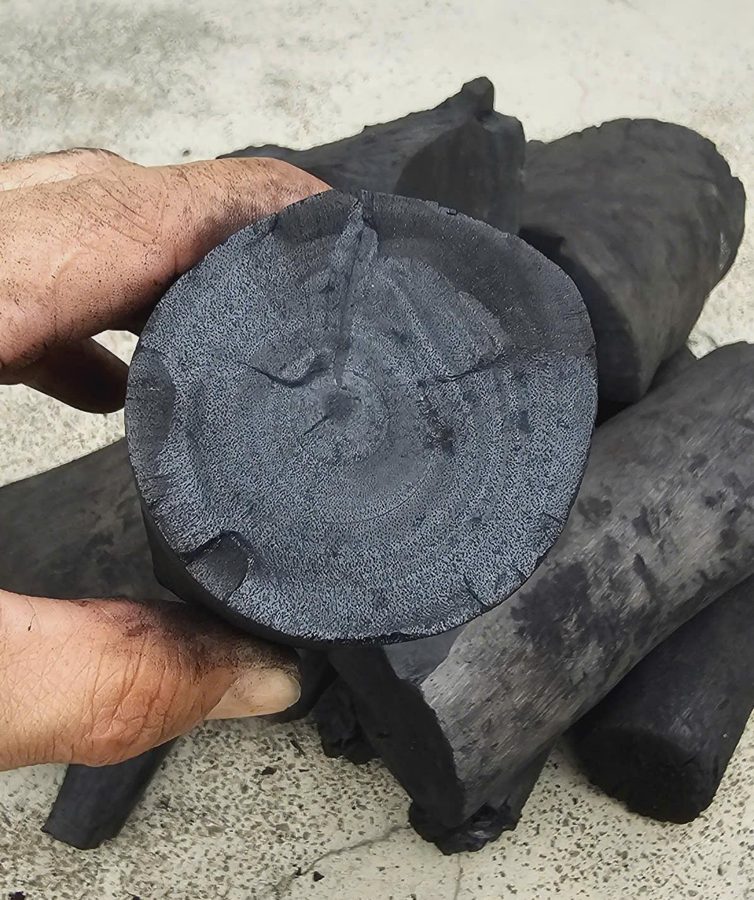
Charcoal moisture refers to the water that remains inside the charcoal or on its surface after production, cooling, storage, packing, or transportation. Charcoal can absorb moisture when it is stored in a humid warehouse, exposed to rain, placed on a damp floor, packed under unsuitable conditions, or shipped in an environment where condensation is not well controlled.
A certain level of moisture can naturally exist in charcoal. However, when the moisture level is too high, the product may become more difficult to ignite, less stable during burning, smokier at the early burning stage, and less efficient in real use. For buyers who need consistent BBQ charcoal quality, this factor should be checked carefully before purchasing.
High moisture reduces the real heat output of charcoal
One of the main reasons buyers should pay attention to charcoal moisture is its effect on real heat output. When charcoal contains too much moisture, part of the heat generated during burning must first be used to evaporate the water inside the charcoal before the product can burn steadily. As a result, the useful heat available for cooking, grilling, or heating becomes lower than expected.
Charcoal with high moisture may also feel heavier, but the additional weight mainly comes from water rather than usable fuel value. For bulk orders and container shipments, this can affect the cost efficiency of the whole order. In simple terms, buyers may end up paying for weight that does not contribute to actual heat performance.
Moist charcoal is harder to ignite
Ignition is one of the first things users notice when using charcoal. The higher the moisture content, the longer it may take for the charcoal to catch fire, because the initial heat is used to dry the charcoal before it can burn evenly. This becomes especially important for BBQ charcoal, restaurant use, and outdoor grilling where fast and stable ignition matters.
When buyers buy charcoal for BBQ, they need a product that is easy to light, reaches usable heat efficiently, and performs consistently during grilling. If the charcoal is too moist, end users may need more fire starters, more airflow, and more waiting time before they can start cooking. Even if the charcoal looks acceptable in shape and packaging, poor ignition can make customers feel that the product is unreliable.
Moisture can increase charcoal consumption
High moisture can also increase fuel consumption. Since part of the energy is used to evaporate water, users may need to burn more charcoal to reach the same heat level. For BBQ restaurants, grilling businesses, and frequent users, this difference can affect operating costs over time.
For importers and distributors, this is an important part of charcoal quality. A product may look good on the outside, but if it burns weakly, consumes faster, or performs inconsistently, the market response may not be positive. BBQ charcoal quality should therefore be evaluated through real performance factors, including moisture, ignition, heat output, ash level, and burning stability.
Moist charcoal may create more smoke at the beginning
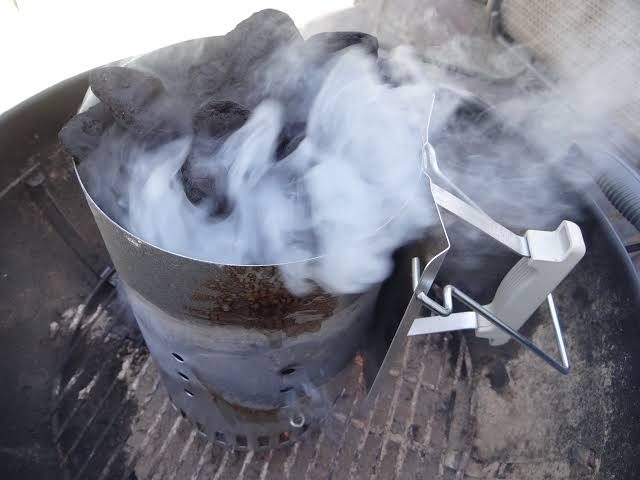
Dry charcoal that is properly stored usually burns more steadily. In contrast, charcoal with high moisture may create more smoke during the lighting stage or before the heat becomes stable. For BBQ users, excessive smoke can affect the grilling environment, the dining experience, and the overall impression of the product.
This is one reason buyers looking to buy charcoal for bbq should pay attention not only to the charcoal type, but also to how the product is stored and packed before shipment. A shipment that is kept dry, packed properly, and protected from moisture can offer a more stable experience when it reaches the final user.
Moisture affects logistics cost and shipment value
In commercial trade, especially export orders, product weight has a direct connection to logistics cost. If charcoal contains excessive moisture, the total shipment weight may increase without adding real usable value. In other words, buyers may be paying freight for water inside the product rather than for actual charcoal performance.
For importers who need to calculate landed cost, margin, and market competitiveness, moisture should not be ignored. When buyers buy charcoal in large quantities, working with a supplier that understands storage, packing, and shipment preparation can help reduce quality risks during transportation.
High moisture can affect storage and packaging
Moisture does not only affect burning performance. It can also influence storage, handling, and packaging condition. If charcoal is kept in a damp environment for too long, the packaging may become softer, weaker, or more easily damaged during loading and unloading. This matters for buyers who distribute charcoal to supermarkets, BBQ stores, restaurants, or retail channels where packaging appearance also affects customer confidence.
A clean, dry, and firm package gives buyers and end users a more professional impression. On the other hand, damp packaging, unusual softness, or excessive breakage can reduce trust in the product, even when the original charcoal material is acceptable.
Will charcoal dry out if stored longer?
A common question is: will charcoal dry out if it is stored for a longer time? In many cases, charcoal can gradually dry out when it is kept in a dry, well-ventilated place and protected from direct contact with water. However, buyers should not rely on this as the main solution for a moist shipment.
If charcoal has absorbed too much moisture or has been stored improperly for a long period, its burning performance, ignition, packaging condition, and appearance may still be affected. Waiting for charcoal to dry can also create extra storage time and management risk. The better approach is to control moisture from the beginning, including production, storage, packing, and transportation.
Why buyers should consider moisture when evaluating charcoal quality
When evaluating charcoal quality, moisture should be treated as a key factor because it affects both product performance and commercial value. Charcoal with a suitable moisture level is generally easier to ignite, more stable in heat output, and more reliable for end users.
For importers and distributors, stable shipment quality helps reduce complaints about hard ignition, excessive smoke, weak heat, or fast consumption. This is especially important for buyers who want to build a long-term charcoal supply and maintain a strong reputation in their target market.
Buyers who want a broader quality checklist can also read PNP Charcoal’s guide on how to check charcoal quality before placing a bulk order: How to Check Charcoal Quality Before Placing a Bulk Order
How PNP Charcoal supports buyers in choosing the right charcoal supply
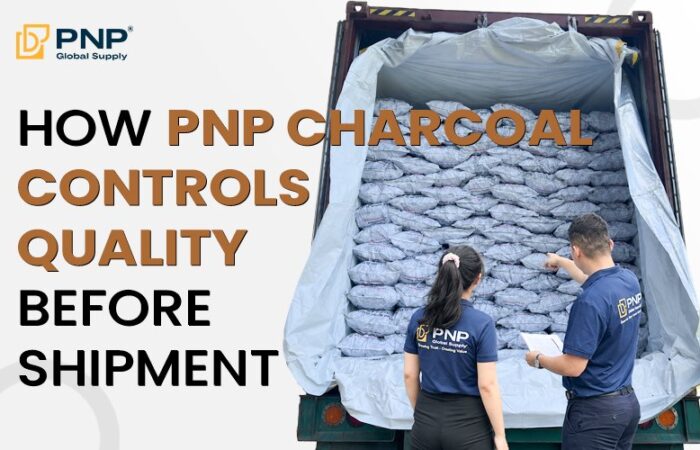
As a charcoal supplier serving commercial and export needs, PNP Charcoal understands that buyers are not only looking for a competitive price. They also need a shipment that is stable, easy to use, and suitable for their target market. For charcoal used in BBQ, restaurants, distribution, and export orders, quality depends not only on the raw material but also on how the product is stored, packed, and prepared before delivery.
PNP Charcoal focuses on shipment quality control and supports buyers in discussing product requirements, packing options, and export order needs. For commercial orders, choosing the right charcoal type and the right packing specification can help buyers improve cost efficiency, sales performance, and the experience of their end customers.
In addition to product quality, PNP Charcoal also supports export-order preparation, including warehouse preparation, packing arrangement, container loading, and shipment coordination based on buyer requirements. This helps buyers stay more confident when placing bulk orders, especially in markets where product consistency, packaging condition, and delivery readiness are important.
Conclusion
Charcoal moisture is an important factor when buyers evaluate charcoal quality, especially for those who want to buy charcoal or buy charcoal for bbq. Moisture affects ignition, real heat output, fuel consumption, logistics cost, storage condition, and the final user experience.
When considering charcoal quality or BBQ charcoal quality, buyers should not rely only on appearance or price. A good charcoal shipment should be produced, stored, packed, and prepared properly to ensure stable performance when it reaches the market.
If you are looking for charcoal supply for BBQ, restaurants, distribution, or export orders, contact PNP Charcoal to discuss your product requirements, packing options, and the best supply solution for your order.
Contact us for more information
Facebook: PNP Charcoal
Instagram: PNP Charcoal
Email: info@pnpglobalsupply.com