New importers often want to import charcoal from Vietnam but are not sure how to start, what to check, or which supplier questions matter before placing a container order. This guide explains the ordering process step by step, from product selection and sample testing to packing, documents, container loading, and shipment preparation.
Start With the Right Charcoal Product for Your Market
Before contacting a charcoal supplier, importers should define the market they want to serve. A BBQ distributor, restaurant supplier, retail brand, and wholesale trader may all need different charcoal products. Some buyers focus on long burning time and stable heat, while others need clean retail bags, private label packing, or easier container loading for bulk charcoal orders.
Vietnam can supply different charcoal products, including lump charcoal and briquette charcoal. Lump charcoal may include mangrove charcoal, kaya charcoal, coffee charcoal, longan charcoal, eucalyptus charcoal, and white charcoal. Briquette charcoal may include sawdust briquette charcoal and coconut charcoal. Each type has different raw material, shape, burn time, heat level, smoke, ash, hardness, breakage rate, and packing suitability.
New buyers should avoid asking only for the cheapest bulk charcoal for sale. A low price does not always mean the product fits the target market. It is better to tell the supplier the intended use, packing requirement, target buyer, and expected quality level first. This helps the supplier recommend a more suitable product before the buyer moves to samples or price negotiation.
Choose Reliable Charcoal Manufacturers in Vietnam
After deciding the product direction, importers should compare charcoal manufacturers in Vietnam and check whether they can support export orders properly. A reliable supplier should understand product quality, export packing, warehouse preparation, container loading, and basic shipment documents. This is especially important for buyers handling their first charcoal import from Vietnam.
Many buyers search for wholesale charcoal suppliers online, but not every seller can support stable export orders. Some suppliers may only trade locally, while others can prepare product photos, sample support, packing options, private label discussion, inspection coordination, and container loading updates. New importers should look for a supplier that can communicate clearly and explain the product honestly.
A practical supplier check should include product range, raw material source, packing type, loading quantity, sample availability, export experience, and document support. Buyers can also review official product pages before making a shortlist. For example, importers can explore PNP Charcoal’s full charcoal product range at PNP Charcoal to compare different charcoal options for BBQ, restaurant, wholesale, and distribution markets.
Ask for Product Specifications Before Asking for Final Price
For a first order, product specifications should come before final price confirmation. Importers should ask about raw material, shape, size, moisture condition, ash level, burn time, calorific value if available, packing weight, bag type, and estimated loading quantity. These details help buyers compare products more accurately instead of judging only by photos or price.
For example, sawdust briquette charcoal is often valued for uniform shape and longer burning performance, while lump charcoal is chosen for natural wood structure and different market preferences. Coconut charcoal can be suitable for compact packing and steady burning in certain retail or food-service markets. The best product depends on the buyer’s market, not only on the general product name.
When buyers buy charcoal from Vietnam, they should also confirm whether the supplier can keep the same grade for the bulk order after the sample is approved. Size sorting, moisture control, dust level, breakage, and packing condition can all affect customer feedback after arrival. Clear specifications give both sides a reference point before production and loading.
Test Samples Before Confirming a Bulk Charcoal Order
Sample testing is an important step for any new importer. Photos and videos can show product appearance, but they cannot fully prove how the charcoal performs in real use. Buyers should test ignition, heat stability, smoke, ash, smell, spark or popping behavior, breakage, dust level, and actual burning time.
If the charcoal is intended for BBQ or restaurant use, the sample should be tested in a real cooking setup. If the product is for wholesale or retail resale, buyers should also check appearance, bag design, size consistency, and how the product looks after handling. This helps the buyer understand whether the product is suitable for the final customer.
Good sample feedback should be specific. Instead of saying the product is good or bad, buyers should record what happened during lighting, burning, cooking, and ash cleaning. Photos, short videos, and simple test notes make it easier for the charcoal supplier to adjust the product, packing, or grade before a bulk charcoal order is confirmed.
Confirm Packing Requirements for Export Shipments
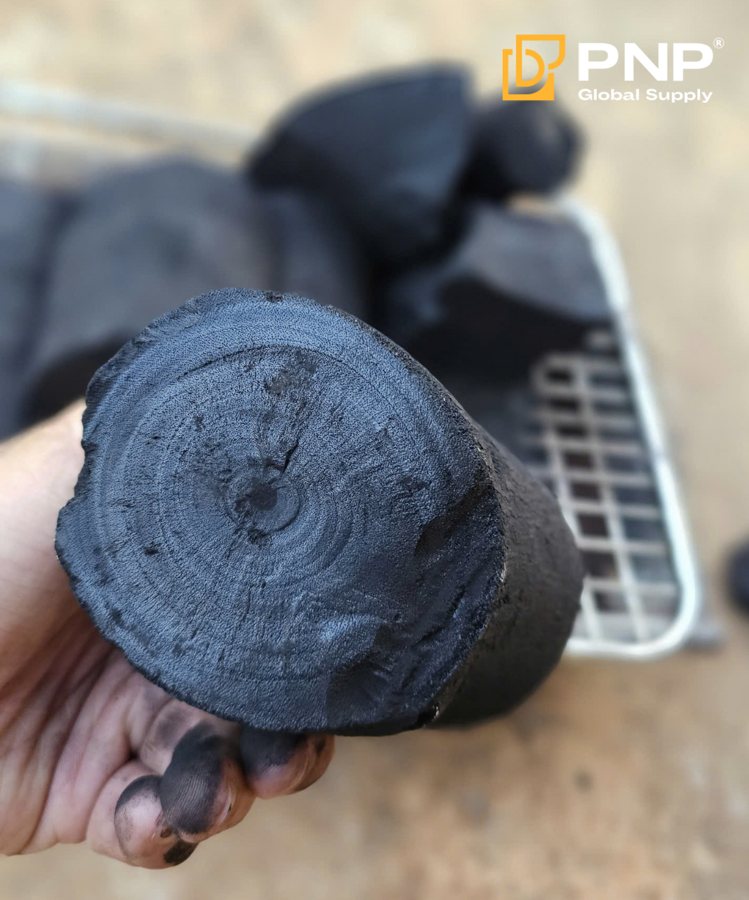
Packing is one of the most important parts of a charcoal import order. Importers should confirm bag material, bag weight, label information, private label design, pallet requirement if any, and loading method. Weak packing can lead to broken bags, dust leakage, moisture exposure, or poor customer impression after arrival.
For export shipments, fire-resistant bags are required to improve safety during storage, handling, and international transportation. Buyers should discuss this requirement early, especially when ordering container quantities. The supplier should also confirm how the packed goods will be stored before loading and how the bags will be arranged inside the container.
New importers should not assume that all bulk charcoal for sale uses the same packing standard. Packing for local sales, restaurant supply, retail display, and export containers can be very different. A clear packing confirmation helps reduce risk before shipment and makes the order easier to check during loading.
Confirm Price, MOQ, Payment Terms, and Trade Terms
After the sample and packing details are approved, the buyer can confirm commercial terms. A clear quotation should include product name, grade or specification, packing type, unit price, minimum order quantity, estimated loading quantity, trade term, payment term, and quotation validity. If private label packing is needed, label cost and production details should also be confirmed.
For new importers, price comparison should be careful. A lower price may come with smaller size, shorter burn time, higher moisture, weaker packing, more breakage, or less export support. Buyers should compare the full offer instead of comparing only the price per ton or per container.
Trade terms such as FOB or CIF should be agreed clearly with the supplier and forwarder. The importer should also make sure the proforma invoice matches the agreed product, packing, quantity, payment schedule, loading port, and buyer information. Written confirmation helps avoid confusion when production, packing, and shipment preparation begin.
Prepare Export Documents and Import Requirements
Documentation is part of the ordering process, not a final detail to check after loading. Depending on the destination country and buyer requirements, importers may need a commercial invoice, packing list, bill of lading, certificate of origin if required, inspection certificate if requested, and other customs-related documents.
The Vietnamese supplier can support export documents from Vietnam, but the importer should check destination-country requirements with the local customs broker or forwarder. Some markets may have specific requirements for labeling, product description, customs code, wood-related declaration, or inspection. These requirements should be checked before the container is loaded.
If third-party inspection is needed, buyers should arrange it before loading. Inspection may include product appearance, bag condition, quantity, packing weight, container condition, and loading supervision. For a first charcoal import order, this step gives the buyer more confidence before the container leaves Vietnam.
New importers can also read more about the Vietnam charcoal ordering process at PNP Charcoal’s import guide: UNDERSTAND THE PROCESS TO IMPORT SAWDUST CHARCOAL FROM VIETNAM.
Monitor Production, Packing, and Container Loading
Once the order is confirmed, importers should follow the production and packing process with clear communication. The supplier can provide updates on product preparation, bag printing, packing, warehouse arrangement, and loading schedule. This is useful for new importers who want to understand how their first order is handled.
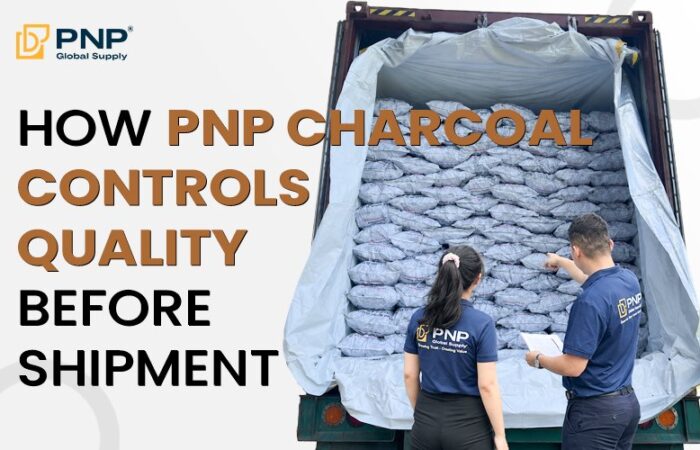
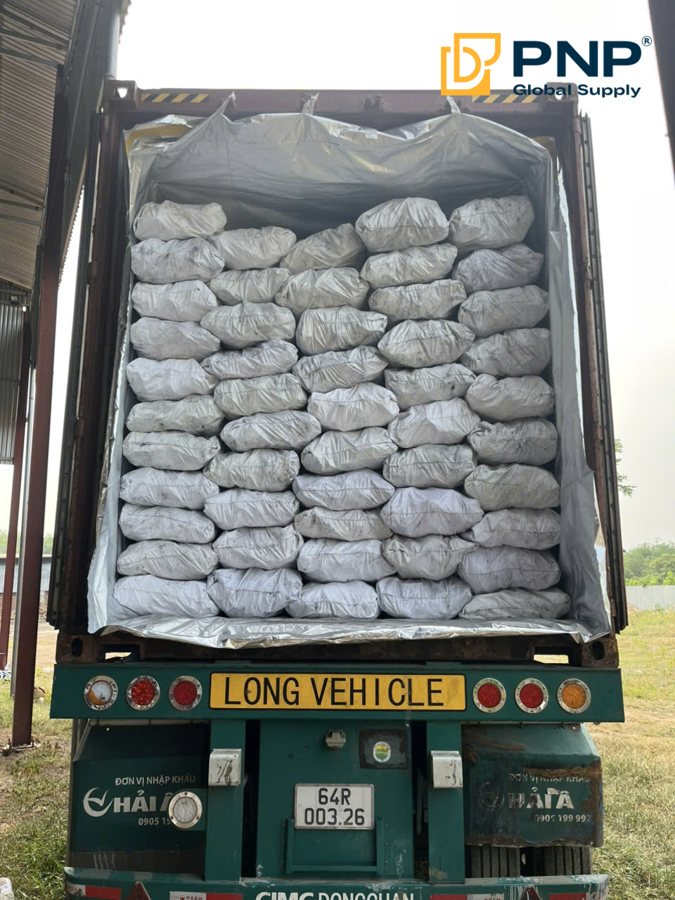
Before container loading, buyers should request photos or videos of packed goods, label details, bag condition, container condition, loading process, container number, and seal number. These records help the buyer track the order and review product condition if any issue appears after arrival.
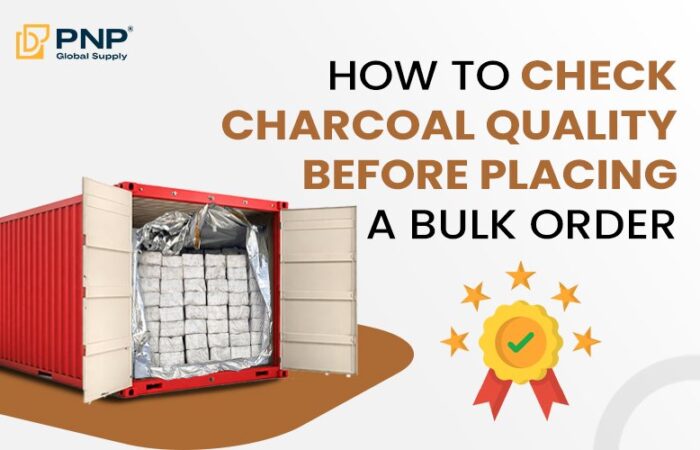
Container loading affects both quantity and product condition. Charcoal bags should be arranged carefully to reduce damage, moisture risk, and unnecessary breakage. For importers buying bulk charcoal, loading efficiency also affects landed cost because it determines how much product can be shipped in one container.
Check Goods After Arrival and Improve the Next Order
After the container arrives, the importer should inspect the goods again. Important points include bag condition, dust level, breakage rate, product size, moisture signs, weight consistency, and customer feedback. This arrival check helps the buyer compare actual goods with the approved sample and shipment records.
If the product performs well, the buyer can plan repeat orders, adjust packing, develop private label bags, or increase order quantity. If there are issues, the buyer should document them with photos and clear notes, then discuss the cause with the supplier. Good feedback helps both sides improve the next shipment.
For new importers, the first order is also a test of supplier communication, product fit, packing performance, document handling, and market response. A structured process makes the next order easier and supports a more stable long-term supply chain.
Choosing an Export Charcoal Supplier from PNP Charcoal
PNP Charcoal supports buyers who need to import charcoal from Vietnam for BBQ, restaurant, retail, wholesale, and distribution markets. Buyers can discuss product type, packing requirements, sample testing, export packing, warehouse preparation, container loading, and shipment coordination based on their target market.
For new importers, working with a supplier that understands both product quality and export-order support can make the first order easier to manage. Instead of choosing only by the lowest price, buyers should compare product fit, sample results, packing quality, communication, document support, and container loading control.
Conclusion
The article above has explained the key steps to import charcoal from Vietnam, from selecting the right product and checking samples to confirming packing, documents, container loading, and arrival inspection. For new importers, a clear process helps reduce risk and makes the first shipment easier to control.
If you are looking for a charcoal supplier, comparing wholesale charcoal suppliers, or planning to buy charcoal from Vietnam in container quantity, PNP Charcoal can support you with product options, export packing, sample discussion, and order preparation for your market.
Contact us for more information
Facebook: PNP Charcoal
Instagram: PNP Charcoal
Email: info@pnpglobalsupply.com