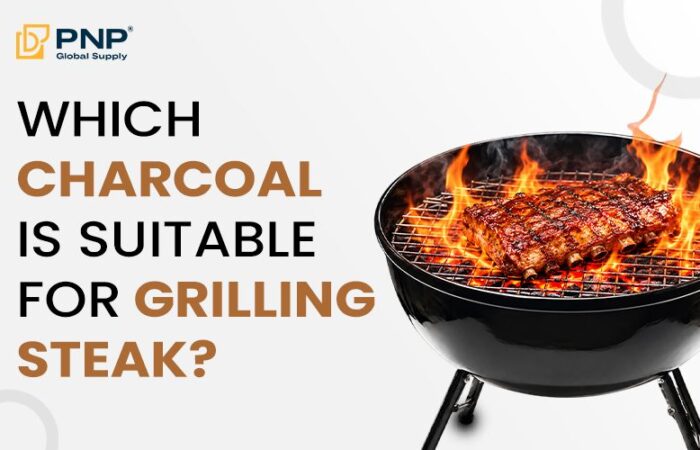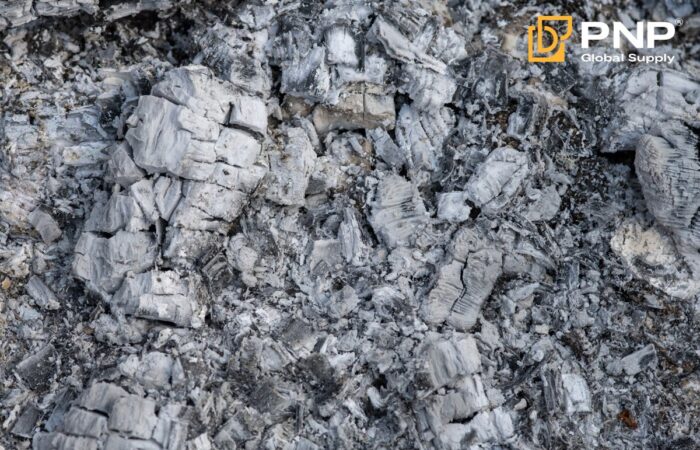
A vegetarian BBQ menu needs more than fresh vegetables and flavorful marinades. The charcoal underneath the grill affects browning, cooking consistency, and how clearly natural ingredients come through. Excessive smoke or uneven heat can turn delicate vegetables into bitter, scorched dishes. For restaurants developing a charcoal veg grill menu, choosing suitable fuel means balancing clean burning, manageable heat, and service duration—not simply buying the hottest charcoal available.
Why Charcoal Choice Matters for Vegetarian BBQ
Vegetables behave differently on the grill. Thin zucchini slices soften quickly, mushrooms release moisture, and thick eggplant pieces need enough time to cook through without burning outside. A restaurant serving these ingredients together needs a charcoal bed that supports different cooking zones rather than uncontrolled heat across the entire grate.
Flavor is another consideration. Sweet corn, bell peppers, asparagus, and tofu can pick up unwanted odors from poorly carbonized fuel, contaminated charcoal, or unsuitable ignition products. A grilled aroma should complement the ingredients, not cover them with an acrid taste.
For restaurants, the right charcoal for grilling also supports smoother service. Fuel that burns predictably makes it easier to repeat dishes, schedule refueling, and keep portions consistent between the first and last orders.
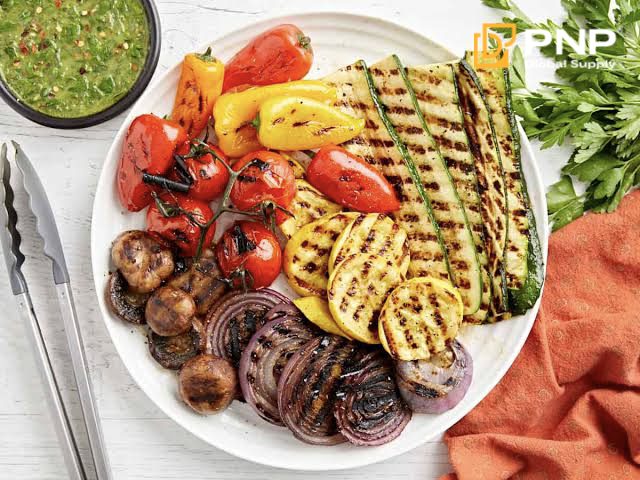
What a Charcoal Veg Grill Needs from Its Fuel
Clean Burning Without Unwanted Odors
Clean burning charcoal is a useful starting point for vegetarian BBQ, but the term should be evaluated through actual performance. Restaurants should look for dry, properly carbonized charcoal intended for cooking, with clear information about raw materials and any binders or additives.
Low visible smoke after the charcoal is fully lit can help preserve the character of vegetables and plant-based proteins. However, smoke also comes from oil, sauces, and food residue dripping onto the coals. Changing charcoal alone will not solve a grill overloaded with oily marinades.
Clean burning does not mean emission-free. All charcoal produces carbon monoxide, so commercial kitchens still need appropriate extraction, ventilation, and equipment operated according to its safety requirements.
Stable, Adjustable Heat
The highest heat output is not automatically the best choice for a vegetarian menu. Delicate vegetables may need brief direct grilling, while denser ingredients benefit from gentler finishing heat.
Good fuel should form a stable charcoal bed that chefs can manage through loading, spacing, airflow, and grate height. A hotter searing area and a cooler finishing area give the kitchen more flexibility than an evenly overloaded grill.
Manageable Ash and Durable Structure
Ash behavior matters during repeated cooking. Excessive loose ash can interfere with airflow and may rise toward food when the fuel bed is disturbed. Charcoal that crumbles easily also creates more dust during loading and makes portioning less predictable.
Restaurants should assess how well the pieces hold together during handling and burning. Strong structure and manageable ash make routine grill operation easier, especially during busy service.
Which Charcoal Types Suit Vegetarian BBQ Restaurants?
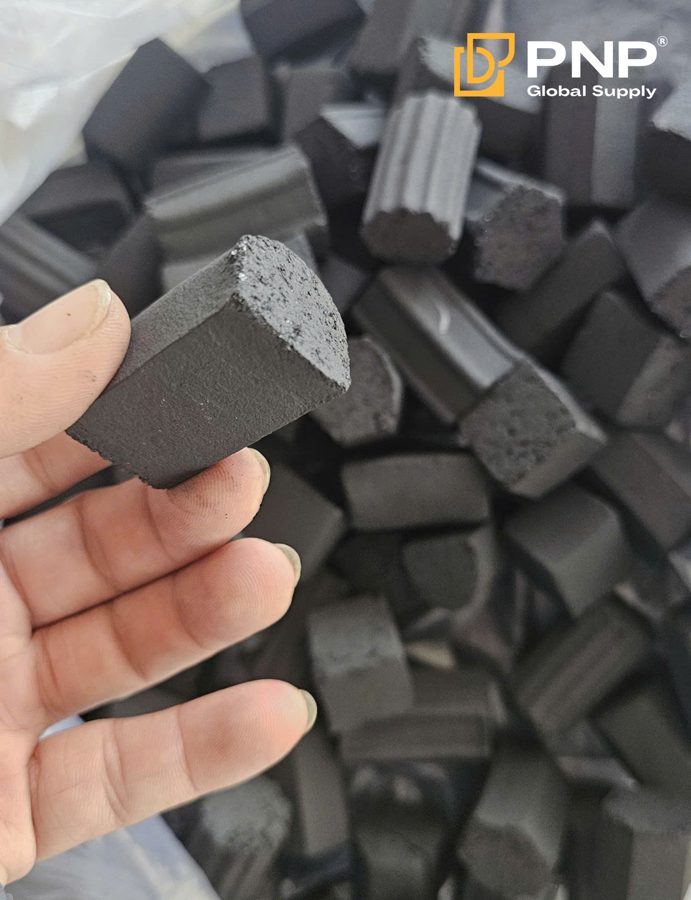
Sawdust Charcoal Briquettes for Extended Service
Sawdust charcoal briquettes are a practical candidate for restaurants running a vegetarian grill across a sustained lunch or dinner service. Their uniform shape makes the fuel bed easier to arrange and helps staff establish a repeatable loading routine.
PNP’s sawdust charcoal briquettes have a hexagonal shape, which supports organized placement while leaving space for airflow. For a kitchen preparing mixed vegetable platters, mushroom skewers, and grilled tofu throughout service, this consistency can be more useful than the irregular sizing of some lump charcoal.
Their heat still needs careful management. A dense bed placed too close to the food can scorch vegetables regardless of how evenly the charcoal burns. Restaurants should test the loading amount and grate distance before adopting a standard setup.
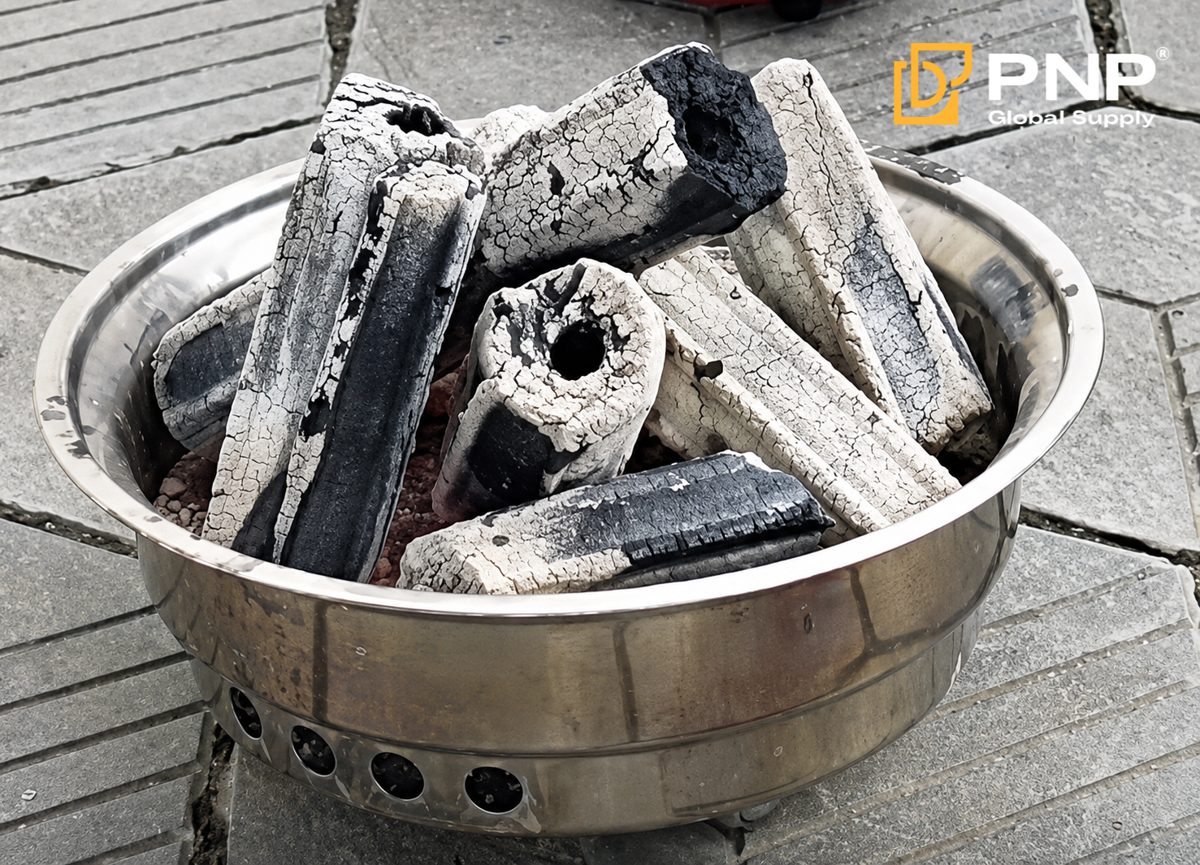
Coconut Charcoal Briquettes for Portion-Controlled Loading
Coconut charcoal briquettes are another option for restaurants that prefer regularly shaped fuel. Consistent pieces can make it easier to measure each load and maintain a defined grilling area.
For charcoal BBQ vegetables, this can be useful when the kitchen works with a compact grill or prepares dishes in repeated batches. Buyers should select a cooking-grade product and confirm the briquette dimensions, formulation, and performance rather than assuming all coconut charcoal behaves identically.
The final choice should reflect the restaurant’s service pattern. A product that works well for short batches may require more frequent replenishment during continuous service, depending on the grill and operating conditions.
White Charcoal for Controlled Vegetable Grilling
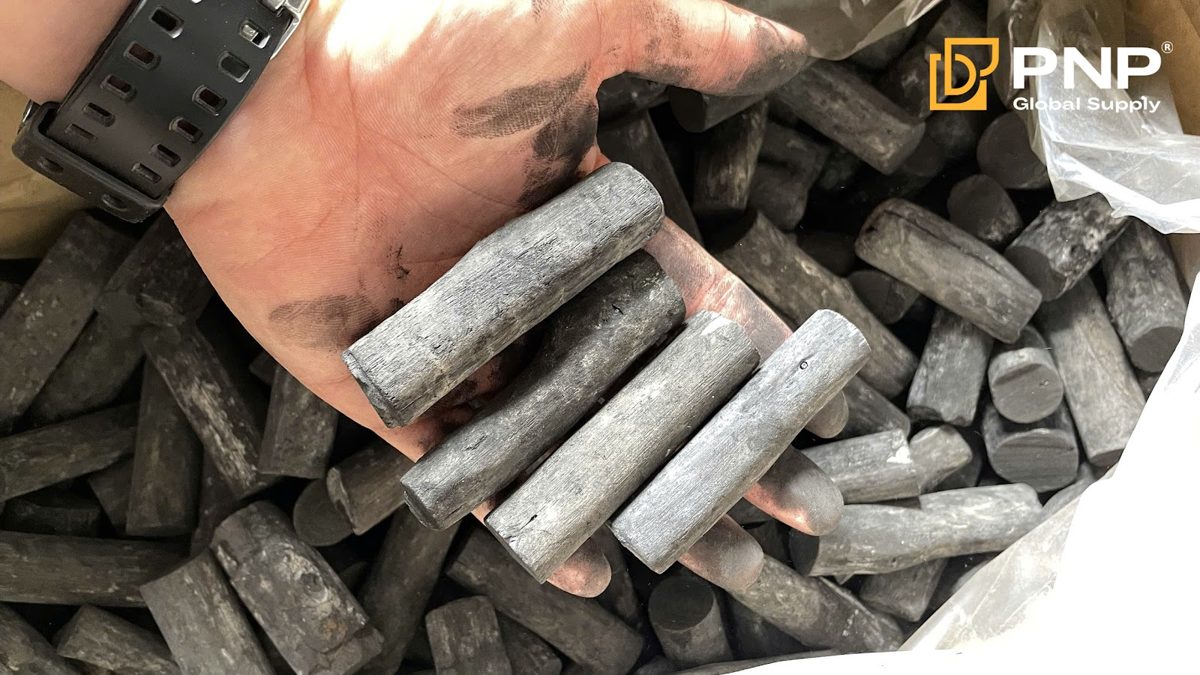
White charcoal is worth considering for restaurants that prioritize carefully managed grilling and ingredient-focused presentation. PNP supplies Vietnam white charcoal, positioned for high heat and low-smoke grilling.
For a menu featuring asparagus, thick-cut mushrooms, or lightly seasoned seasonal vegetables, this fuel can be evaluated for its ability to maintain a dependable cooking bed without overpowering the food.
White charcoal still requires an appropriate ignition routine and heat-control method. Its performance should be tested on the restaurant’s actual grill, particularly when chefs need moderate heat rather than intense searing.
Lump Charcoal for Flexible Grilling Operations
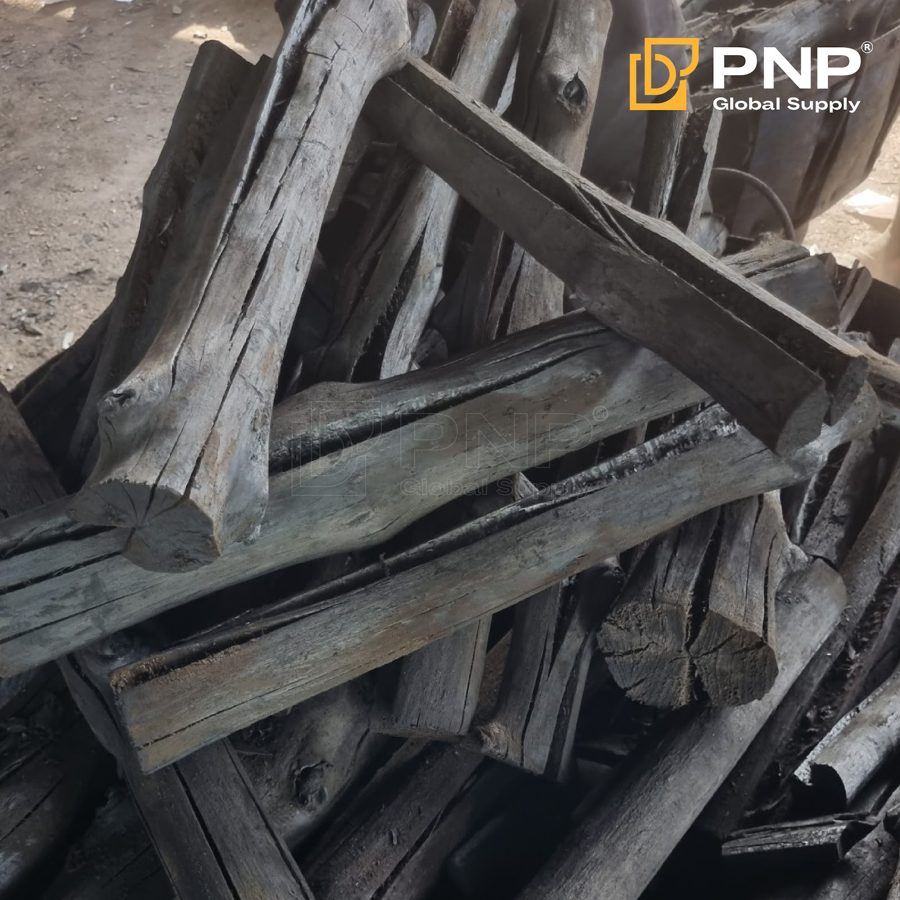
Wood lump charcoal remains an option for kitchens comfortable managing natural variation in piece size. Restaurants can arrange larger and smaller pieces to suit their equipment, but inconsistent sizing may make loading less repeatable.
When comparing lump charcoal with briquettes, the useful question is not which category is universally better. It is which product gives the kitchen the required heat control, cooking quality, and handling efficiency with the least disruption.
Matching Charcoal Grill Vegetables to the Right Heat Setup
Choosing fuel becomes easier when the menu is grouped by cooking behavior. Tender ingredients such as zucchini, asparagus, and bell pepper strips need controlled exposure to direct heat. Corn, cauliflower, and thick eggplant portions may need a longer finishing stage away from the hottest part of the grill.
When cooking vegetables on charcoal grill equipment during restaurant service, chefs should avoid treating every ingredient as a quick-searing item. Adjusting cut thickness, preparation, and cooking zones can improve results without changing the charcoal itself.
Mushrooms and tofu introduce another consideration: surface moisture. Wet ingredients may steam before browning, while sugary marinades can darken before the center is ready. Fuel selection should therefore be tested alongside the actual recipe, not separately from it.
Successful grilling vegetables on charcoal grill stations depends on the combination of fuel, airflow, food preparation, and chef technique.
Protecting Flavor and Vegetarian Menu Integrity
A vegetarian BBQ operation also needs procedures that charcoal cannot provide on its own. Restaurants serving both meat and vegetarian dishes should establish suitable separation for grilling surfaces, utensils, trays, and preparation areas.
Replacing the fuel does not remove meat residue or grease from a shared grate. Dedicated equipment or clearly controlled preparation procedures help the kitchen deliver what the menu promises.
For dishes marketed as charcoal vegetables, the appeal should come from the ingredients’ texture, natural sweetness, and balanced grilled aroma. Heavy smoke is not proof of better flavor. Clean grates, controlled oil application, and fully lit charcoal help prevent unnecessary smoke from dominating the dish.
Test Charcoal Against Real Restaurant Service
Before committing to bulk purchases, restaurants should run a cooking trial with representative menu items. A useful test includes both delicate vegetables and thicker ingredients, followed by repeated batches that reflect normal service.
Keep the grill, charcoal loading method, and preparation consistent when comparing products. Observe ignition behavior, usable cooking heat, refueling needs, ash accumulation, and any unwanted odors or flavors.
Cost should be evaluated against usable cooking performance rather than bag price alone. A lower-priced product may become less economical if it contains excessive fragments, requires frequent replenishment, or causes inconsistent dishes. Conversely, a premium-priced fuel may offer little benefit if the restaurant only operates a short grilling session.
For a broader purchasing assessment, read PNP Charcoal’s guide on how to check charcoal quality before placing a bulk order.
Choosing Charcoal for a Vegetarian BBQ Menu from PNP Charcoal
PNP Charcoal supplies sawdust charcoal briquettes, coconut charcoal briquettes, white charcoal, and wood lump charcoal options. Restaurants and food-service distributors can compare these products according to grill dimensions, service duration, preferred loading method, and menu requirements.
When evaluating charcoal for sale, provide the supplier with practical operating details rather than requesting a general “best charcoal” recommendation. Knowing whether the kitchen serves quick vegetable skewers, continuously grilled platters, or carefully finished seasonal dishes helps narrow the selection.
Product specifications and sample testing should guide the final decision. Buyers can explore PNP Charcoal and discuss suitable options for their restaurant or distribution needs.
Conclusion
The right charcoal veg grill fuel should provide controllable heat, clean burning performance, and consistency throughout service. Sawdust briquettes are a practical starting point for extended operations, while coconut briquettes, white charcoal, and lump charcoal suit different loading and cooking preferences. Contact PNP Charcoal to discuss product specifications and sample testing for your vegetarian BBQ menu.
Contact us for more information
Facebook: PNP Charcoal
Instagram: PNP Charcoal
Email: info@pnpglobalsupply.com