Understanding how to manufacture charcoal helps buyers look beyond product photos and assess what determines consistent fuel quality. Wood selection, drying, kiln operation, and cooling all influence the charcoal that reaches restaurants, distributors, and retail customers. A well-managed production process supports reliable burning performance while reducing problems such as uncarbonized pieces, excessive dust, and moisture damage. For importers and wholesalers, knowing these stages also makes supplier discussions more practical.
What Makes Charcoal Different from Wood?
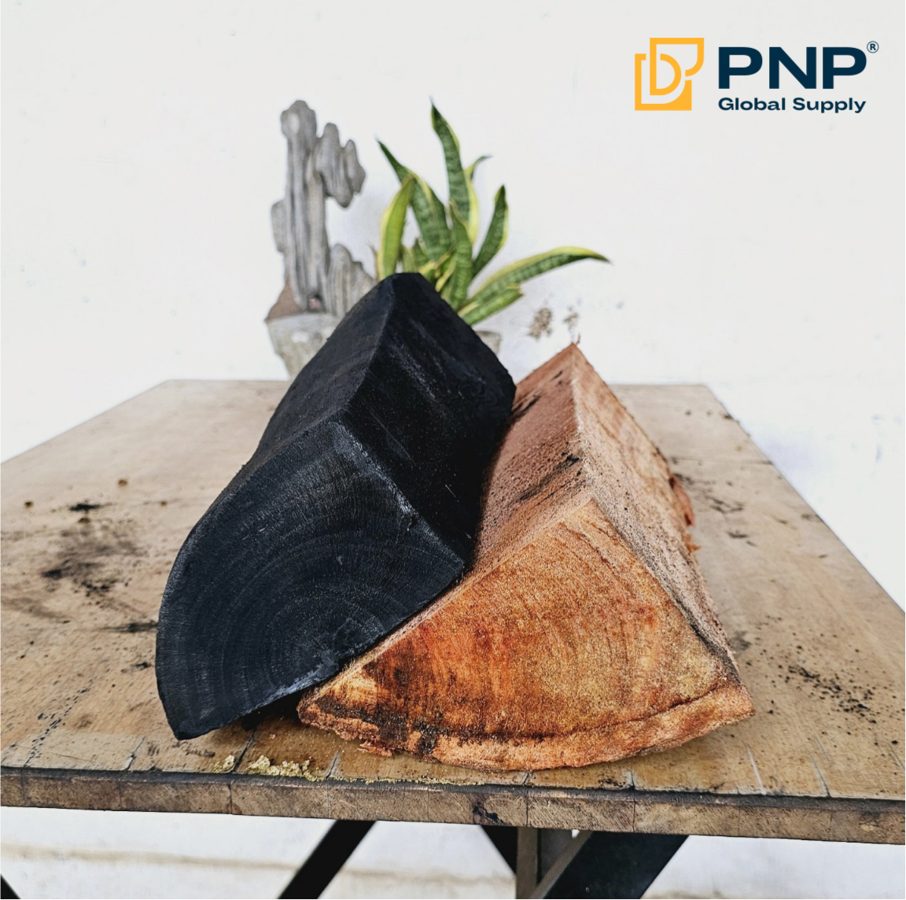
Charcoal is a carbon-rich material produced by heating wood or other suitable biomass under oxygen-limited conditions. This transformation, known as carbonization, removes moisture and releases gases and vapors, leaving a black, porous solid.
For anyone asking what makes charcoal, the answer involves both the raw material and the production method. Wood supplies the original structure, while controlled heating changes its composition. Unlike an open fire, where sufficient oxygen allows wood to burn toward ash, charcoal manufacturing limits oxygen so that a usable carbon-rich fuel remains.
The finished material is not pure carbon. It also contains mineral ash, residual volatile matter, and moisture absorbed during handling or storage. Their proportions depend on the feedstock, carbonization conditions, and post-production controls.
Lump charcoal generally retains the natural form of the wood, including its grain, knots, and irregular shape. Briquettes follow a different production route involving material preparation and pressing, either before or after carbonization depending on the product.
Choosing Wood for Charcoal Manufacturing
The first production decision is selecting suitable wood. Species, density, condition, and dimensions influence how a kiln load dries and carbonizes. Sound wood with reasonably consistent characteristics is easier to process than a mixture of wet logs, decayed material, and widely different sizes.
Hardwoods commonly used for commercial charcoal include mangrove, eucalyptus, longan, coffee wood, and kaya. Each has a different structure, so producers must adjust preparation and kiln operation rather than assume that every wood behaves identically.
For example, khaya charcoal, also marketed by PNP Charcoal as kaya charcoal, is a wood-based lump charcoal option. Its finished condition depends not only on the wood itself but also on how thoroughly it is carbonized, cooled, and handled. The product name alone does not establish a consistent quality grade.
Raw-material control should also address sourcing and contamination. Producers should maintain appropriate sourcing records and keep unsuitable materials out of the feedstock. Painted, chemically treated, or contaminated wood should not be used for cooking charcoal.
How to Manufacture Charcoal from Wood: The Main Production Steps
The commercial process of charcoal making follows a clear sequence: prepare the wood, reduce excess moisture, load the kiln, control carbonization, cool the charcoal, and sort and pack the finished product. Equipment and production cycles vary, but each stage has a distinct role.
Step 1: Cut and Sort the Raw Wood
Wood is cut or split into dimensions suitable for the kiln and intended product. Large differences in thickness make uniform carbonization more difficult because smaller pieces heat through faster than larger logs.
Sorting helps producers create a more manageable load. Oversized sections may need splitting, while rotten pieces and material contaminated with soil should be removed. Keeping the preparation area clean also reduces the chance of introducing mineral contamination into the finished charcoal.
For lump charcoal, preparation influences the eventual size range, but the final pieces will not exactly match the original wood dimensions. Shrinkage and some cracking occur during carbonization, followed by additional sizing during sorting.
Step 2: Dry the Wood Before Carbonization
Drying is an important part of how to make charcoal from wood efficiently. Water must evaporate before wood can carbonize effectively. When excessively wet material enters the kiln, more heat is spent removing moisture instead of advancing carbonization.
Air drying can reduce this burden before loading. Wood should be arranged to allow ventilation and protected from repeated wetting. The drying period depends on species, thickness, weather, and storage conditions, so one fixed schedule will not suit every factory.
The objective is a reasonably consistent feedstock rather than simply leaving wood outdoors for a set number of days. Mixing very wet logs with much drier pieces makes the kiln load harder to control.
Step 3: Load the Charcoal Making Kiln
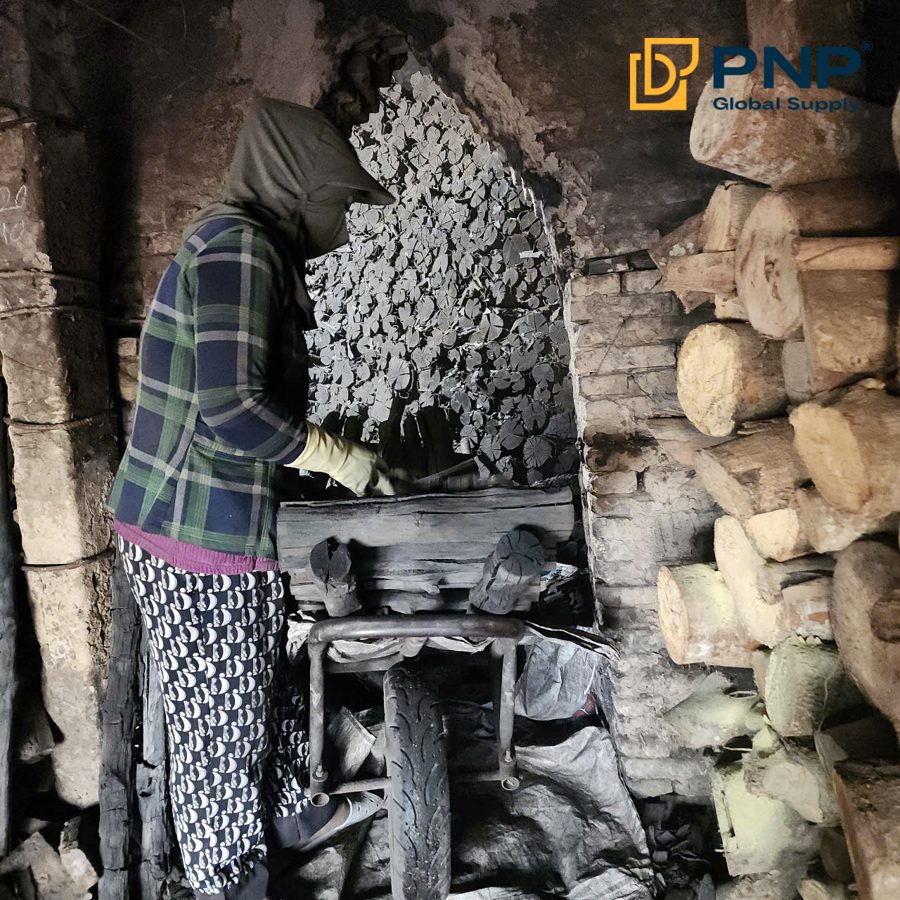
A charcoal making kiln provides the controlled environment needed to turn prepared wood into charcoal. Producers may use earth, brick, metal, or retort systems, depending on their equipment and operating requirements.
Wood must be arranged according to the kiln’s design so that heat and gases can move through the load. Poor loading can create uneven processing, leaving some sections insufficiently carbonized while others experience excessive burning.
Kiln condition matters as well. Damaged walls, uncontrolled air leaks, or poorly maintained openings can interfere with oxygen control. Operators should inspect the equipment and follow an established loading procedure before starting a production cycle.
Step 4: Control Heating and Carbonization
During heating, remaining moisture leaves the wood before thermal decomposition progresses. As the temperature rises, the wood releases gases and vapors, and its structure gradually changes into charcoal.
FAO describes final heating around 500–550°C as a stage used to drive off tar and increase fixed carbon in conventional commercial wood-charcoal production. This is a technical reference range, not a universal operating recipe for every kiln or charcoal grade. Specialized products may require different conditions.
The key challenge in producing charcoal is controlling heat distribution and oxygen entry throughout the load. Excess oxygen can consume valuable material through combustion. Insufficient or uneven heating can leave partially carbonized wood and excessive residual volatile matter.
Higher temperature is not automatically better in every respect. More severe carbonization can reduce yield and increase brittleness. Producers must balance the intended charcoal properties with usable output and handling strength.
Step 5: Cool the Charcoal Before Unloading
After carbonization, the charcoal must cool under controlled conditions before it is exposed to unrestricted air. Hot charcoal can ignite when oxygen becomes available, creating a fire risk and destroying finished material.
Cooling time varies with kiln design, load size, and operating conditions. The decision to unload should follow the facility’s temperature checks and safety procedure rather than an assumed waiting period.
Carbonization also produces carbon monoxide, so ventilation and worker protection are essential around operating kilns and during unloading. A surface that appears cool does not by itself prove that the entire load is safe to handle.
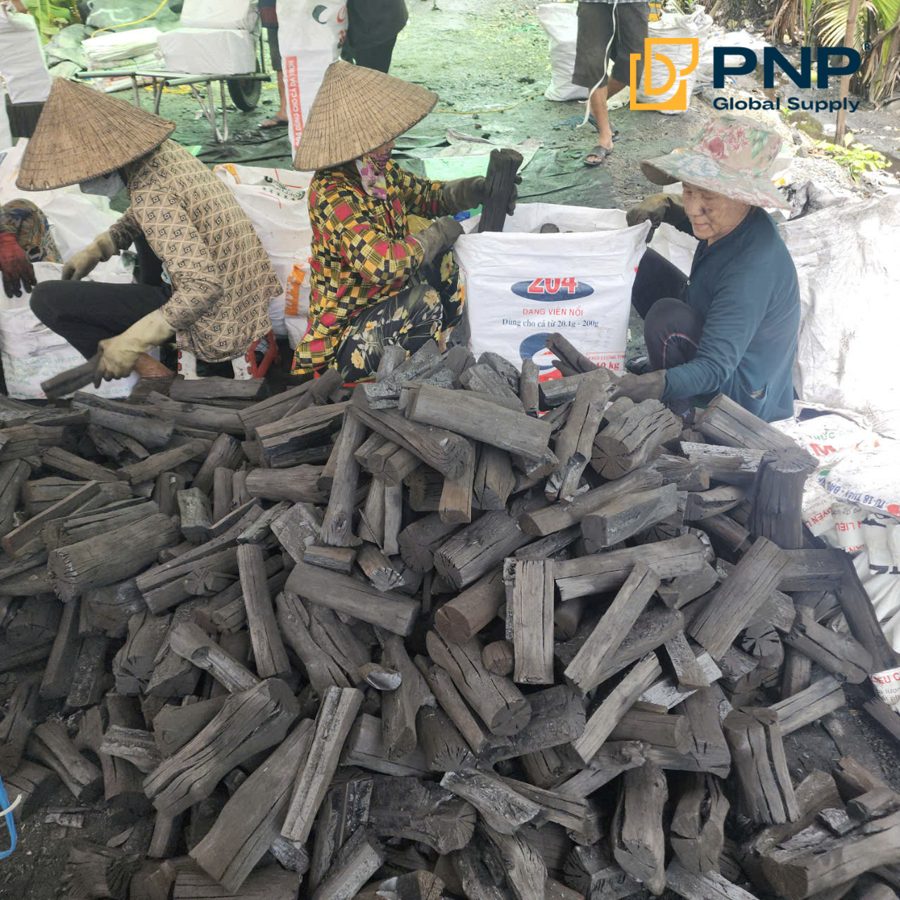
Step 6: Sort, Inspect, and Pack the Finished Charcoal
Once safely cooled, charcoal is sorted according to the agreed product specification. Producers separate saleable pieces from excessive fines, unsuitable fragments, and incompletely carbonized material.
Inspection should cover size distribution, structure, moisture, and contamination. For commercial orders, these checks help keep the delivered product aligned with the approved sample rather than relying only on appearance.
Packing then protects the charcoal during storage and transport. Suitable bags and cartons help limit breakage and moisture exposure, while dry storage preserves the condition achieved during production. Export packing must follow the applicable dangerous-goods requirements and carrier instructions; fire-resistant bags alone do not replace classification, testing, documentation, or shipment approval.
How the Production Process Affects Charcoal Quality
Manufacturing decisions explain many differences buyers notice during use. Incomplete carbonization can leave more volatile material, contributing to smoky burning. Moisture absorbed after production can make ignition harder and affect consistency between packages.
Wood structure and carbonization severity also influence durability. Dense feedstock can produce strong charcoal, but cracking during processing or rough handling can still create fragments and dust. A hard-looking piece is therefore not enough to establish the overall quality of a shipment.
Ash requires separate attention. Its amount is influenced by the original mineral content of the feedstock and contamination from bark, soil, or other material. High carbonization temperature does not remove mineral ash, and ash color alone cannot prove a superior grade.
For meaningful comparison, suppliers and buyers should use consistent testing methods. Moisture, ash, volatile matter, and fixed-carbon results need a clearly stated reporting basis. Practical burn tests should also use comparable fuel quantities, equipment, and airflow.
Buyers can read PNP Charcoal’s guide on how to check charcoal quality before placing a bulk order for a broader review of appearance, burning performance, and packing condition.
Choosing Charcoal from PNP Charcoal
PNP Charcoal supplies charcoal from Vietnam for commercial buyers, including importers, wholesalers, distributors, and food-service businesses. Its product range includes wood-based lump charcoal, sawdust charcoal briquettes, and coconut charcoal briquettes.
Buyers can discuss the intended application, preferred charcoal type, size range, and packing requirements before selecting a product. Mangrove, kaya, coffee wood, longan, eucalyptus, and white charcoal offer different options within the wood-charcoal range.
An approved sample and clear written specification provide a practical starting point for a bulk order. Visit PNP Charcoal to explore available products and discuss sourcing requirements.
Conclusion
Knowing how to manufacture charcoal gives buyers a clearer view of what happens before a product reaches the market. Consistent raw materials, controlled carbonization, safe cooling, and careful packing all contribute to reliable commercial quality. Contact PNP Charcoal to discuss suitable products, samples, and specifications for your business.
Contact us for more information
Facebook: PNP Charcoal
Instagram: PNP Charcoal
Email: info@pnpglobalsupply.com