For restaurants, BBQ users, and charcoal distributors, lighting performance affects preparation time and cooking consistency. A fire that starts quickly but burns unevenly can still be difficult to manage. If you are asking how do you light a charcoal bbq, the process starts with suitable fuel, clear airflow, and enough time for the coals to become ready. The guide below explains two practical lighting methods and how to maintain useful grilling heat.
What Should You Prepare Before Lighting a Charcoal BBQ?
Start with a clean grill and an outdoor cooking area. Position the barbecue on a stable, non-combustible surface, away from fences, trees, and other combustible materials. Never use it indoors, in an enclosed space, or on a balcony. Keep children and pets away and have suitable fire-safety equipment nearby.
Remove excess cold ash before adding fresh charcoal. Ash can block the vents, reducing the oxygen available to the fire. Prepare long matches or a long lighter, suitable natural firelighters, long-handled metal tongs, and heat-resistant gloves. A chimney starter is useful but not essential.
The grill should allow air to reach the fuel through its intended vents. When comparing charcoal grills on sale, check the vent controls, grate design, stability, and operating instructions rather than choosing by price alone.
Choose Suitable Charcoal for Your BBQ
The fuel should be intended for cooking and compatible with the grill. Lump charcoal consists of irregular wood-derived pieces, while briquettes have a more consistent manufactured shape. Good Food notes that lump charcoal generally burns more quickly, while briquettes typically last longer. Actual results depend on the specific product and cooking conditions.
When purchasing barbecue coal, confirm the product composition and intended use. Products containing lighting agents need to be handled according to their package instructions. Avoid assuming that all charcoal products can be lit or replenished in the same way.
For products advertised as bbq stove charcoal, check the appliance manual carefully. Outdoor BBQ charcoal is not automatically suitable for an indoor stove or woodburner. If considering khaya charcoal, confirm its BBQ suitability and lighting guidance with the supplier rather than judging performance from the wood name alone.
How Do You Light a Charcoal BBQ with a Chimney Starter?
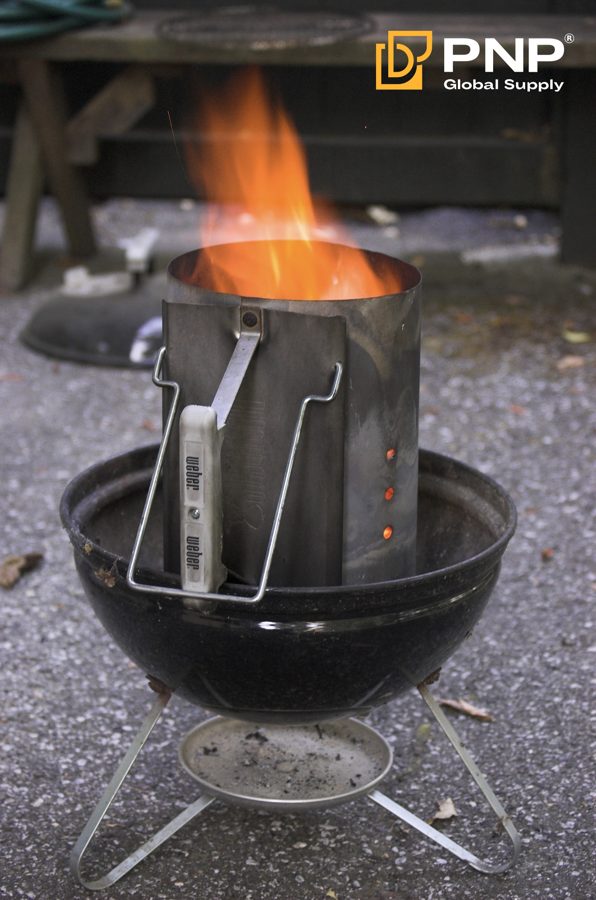
A chimney starter holds the charcoal together while the fire becomes established. It is a practical option when you want to light a batch separately before arranging the coals inside the barbecue.
Load the Chimney
Position the chimney on the grill’s charcoal grate or another suitable heat-resistant surface, following its manufacturer’s instructions. Add the amount of charcoal needed for the cooking session, without exceeding the recommended capacity.
Place a suitable firelighter beneath the chimney as directed. Natural firelighters made from wood fibres and suitable wax or vegetable oil can be used instead of liquid lighting fuel.
Ignite the Firelighter
Use a long match or lighter to ignite the firelighter. Allow the fire to spread through the charcoal naturally. Flames near the bottom do not mean the whole batch is ready, so avoid transferring the coals too early.
Do not add liquid accelerants to hot or burning charcoal. Give the fire time to establish rather than trying to force a faster result.
Transfer the Ready Coals
Once the coals glow and develop a light ash coating, carefully transfer them into the barbecue using suitable heat-resistant gloves. Keep your face and body away from the rising heat.
Arrange the hot charcoal with long-handled metal tongs. The layout should match the cooking method, whether you need direct heat across the grate or separate hot and cooler zones.
How to Light Charcoal Without a Chimney Starter
Without a chimney, build a loose mound of charcoal in the centre of the charcoal grate. Leave gaps between the pieces so air can circulate rather than pressing the fuel into a tightly packed pile.
Position suitable natural firelighters among the coals according to their instructions, then ignite them with a long match or lighter. Scrunched black-and-white newspaper is another option mentioned by Good Food, although paper produces smoke and loose ash. Avoid glossy or colour-printed paper.
Let the fire spread from the first burning pieces to the surrounding charcoal. Once several pieces have caught, allow the process to continue without repeatedly adding firelighters. Wait for the initial flames to subside and a light ash coating to form before spreading the coals for cooking.
When Is Charcoal Ready for Cooking?
Good Food gives a general preparation time of around 20–30 minutes, depending on weather and fuel. Use this as a guide, not a fixed deadline. The appearance of the charcoal matters more than elapsed time.
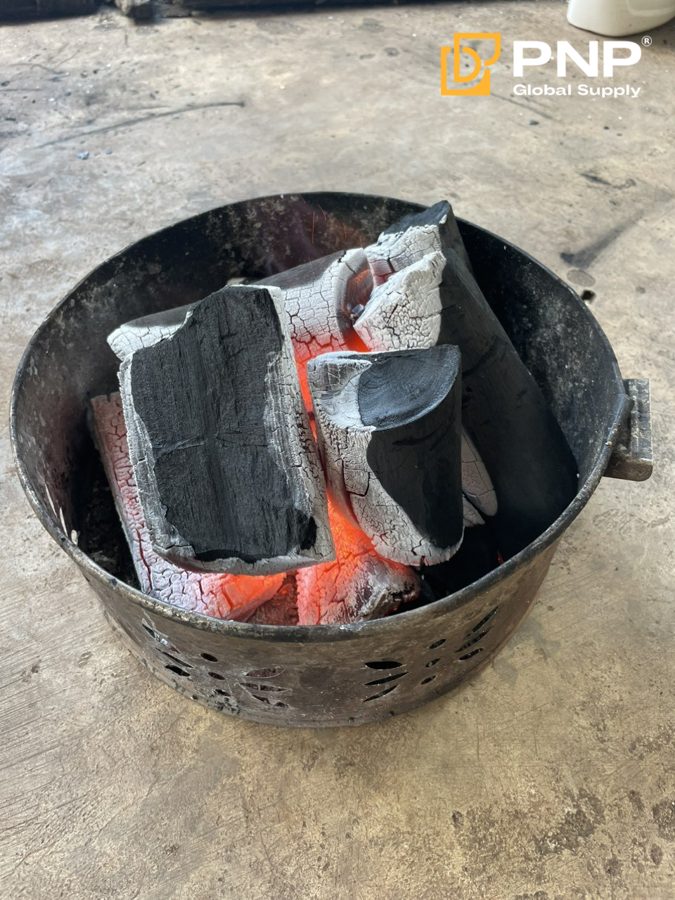
Coals that are mostly black and still surrounded by startup flames are not ready. For direct grilling, look for glowing coals with red centres beneath a light coating of grey ash. Pale, ash-covered charcoal may still hold substantial heat for indirect cooking.
Placing food over the initial flames can scorch the surface before the centre cooks through. Wait for established coals, then choose the appropriate heat zone. Use a food thermometer to check internal doneness; charcoal colour cannot confirm that food is safely cooked.
Arrange the Coals and Control Airflow
Direct and Indirect Heat
Direct cooking places food immediately above the coals and suits items that cook quickly, such as thin steaks and burgers. Larger cuts generally need a gentler approach so the outside does not burn before the centre is cooked.
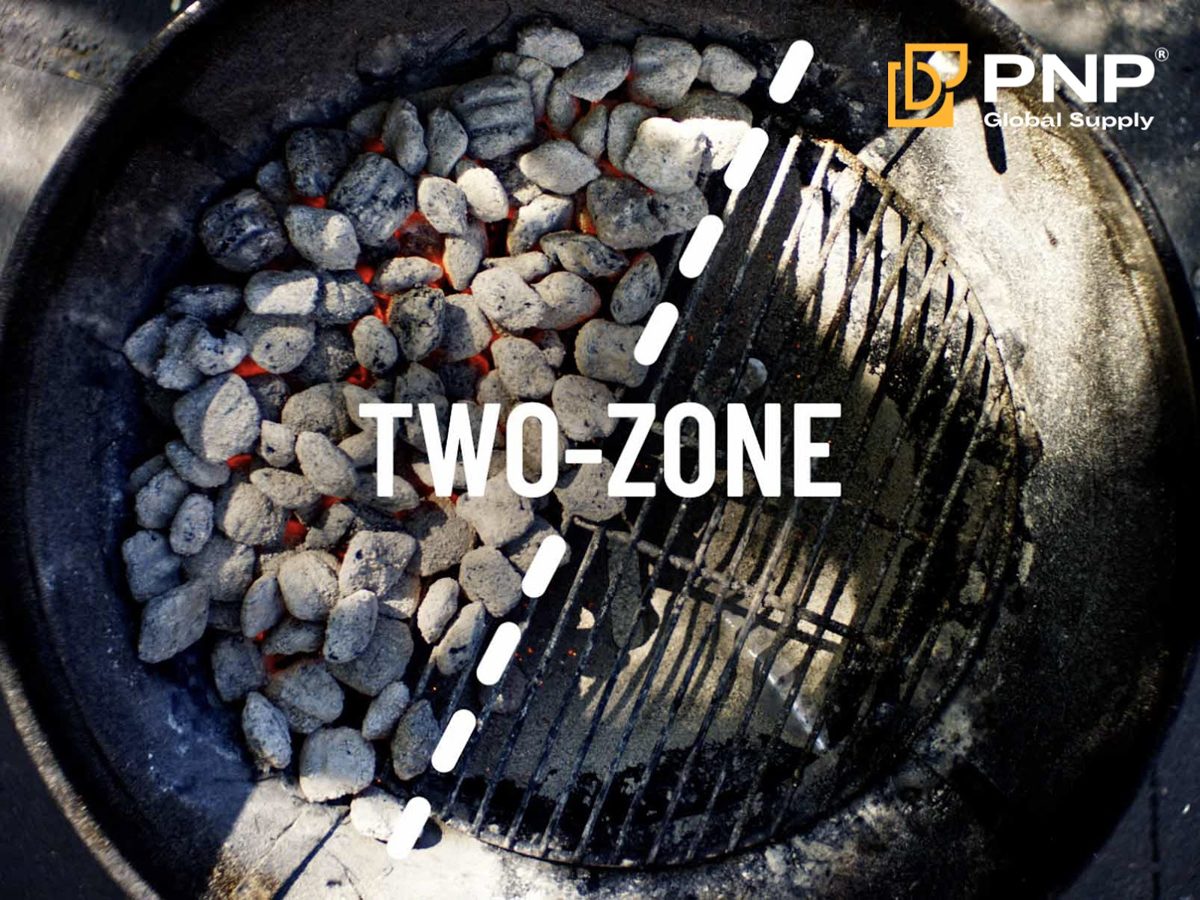
To create two zones, move the charcoal to one side and leave the other side clear. Use the hot side for browning and the coal-free side for indirect cooking, with the lid positioned as appropriate for the grill. This also provides somewhere to move food away from excessive heat.
Adjusting Heat and Adding Fuel
Opening the vents generally increases oxygen supply, making the charcoal burn hotter and faster. Reducing the opening slows combustion. Make small adjustments and allow the temperature to respond before changing the vents again.
If more fuel is needed, prepare it separately in a chimney starter and add it when ready. Without a chimney, place fresh charcoal away from the food and allow it to pass the flaming stage before cooking directly above it. Never add lighter fluid to an established fire.
Put Out the BBQ Safely After Cooking
Follow the grill manufacturer’s shutdown instructions. For a barbecue designed with a lid and adjustable vents, closing them restricts oxygen and helps extinguish the charcoal.
Leave the grill outdoors until the fuel and ash are completely cold. This can take several hours, and ash may conceal hot embers. Smouldering charcoal can continue producing carbon monoxide, so never bring a cooling barbecue indoors. Dispose of completely cold ash according to local waste guidance.
Choosing BBQ Charcoal from PNP Charcoal
PNP Charcoal supplies lump charcoal and briquette charcoal options for BBQ, restaurant, wholesale, and distribution needs. Buyers can discuss the intended cooking application, product size, packaging, and destination market before selecting a supply option.
Lighting performance should be considered together with usable heat, burning duration, smoke, ash, and handling condition. Sample comparisons are more useful when the same grill, fuel quantity, and lighting method are used. For a broader assessment, read PNP Charcoal’s guide on how to check charcoal quality before placing a bulk order.
Conclusion
The article above has explained how do you light a charcoal bbq using a chimney starter or natural firelighters. Clear airflow, established glowing coals, and a suitable heat arrangement help make grilling more controllable.
Contact PNP Charcoal to discuss BBQ charcoal options, sample requirements, packaging, and wholesale or export orders.
Contact us for more information
Facebook: PNP Charcoal
Instagram: PNP Charcoal
Email: info@pnpglobalsupply.com