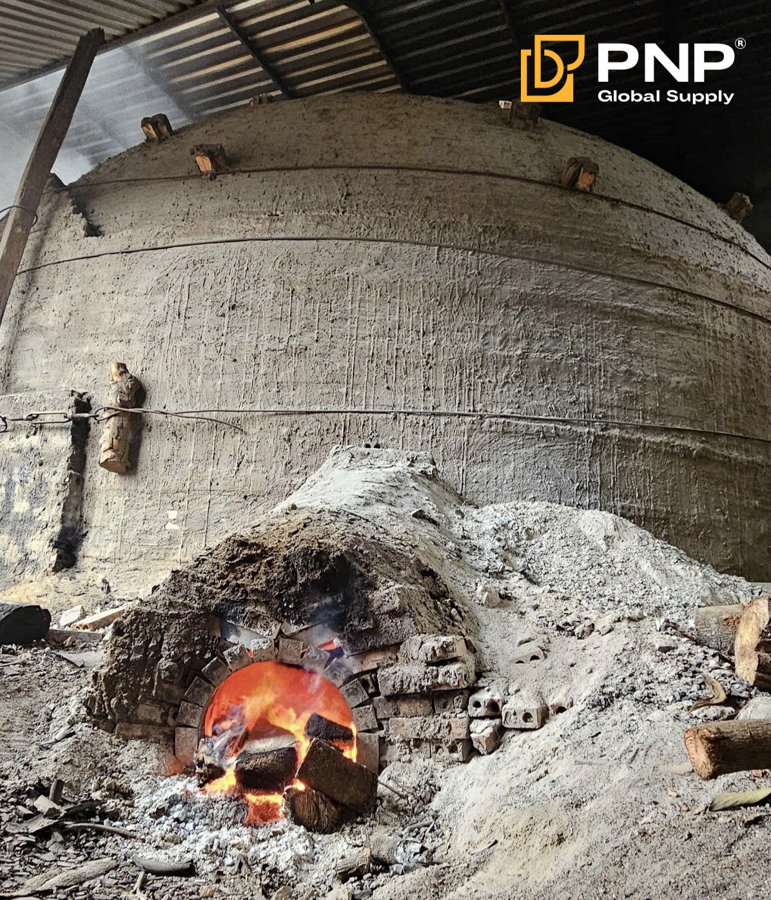
A traditional charcoal kiln in Vietnam is a simple but skill-based system used to turn wood into charcoal through slow, controlled burning. Instead of using modern industrial machinery, many traditional charcoal makers rely on earth pits, stacked wood, dry leaves, soil covering, and small ventilation holes to control heat and oxygen.
These real figures show that traditional charcoal production is not just about burning wood. The size of the kiln, the way wood is stacked, the thickness of the cover layer, and the control of air holes all affect the final charcoal quality.
What Is a Traditional Charcoal Kiln?
A traditional charcoal kiln is a structure or pit used to convert wood into charcoal through carbonization. In Vietnam, this process is often done by digging a pit or building an earth-covered mound, stacking wood inside, covering it with leaves and soil, and controlling the fire through small air holes.
The purpose of a charcoal kiln is not to burn wood completely into ash. Instead, the wood must be heated slowly with limited oxygen. This process removes moisture and volatile compounds from the wood, leaving behind carbon-rich charcoal.
Traditional charcoal kilns are usually found in rural production areas where workers have long experience with wood selection, stacking, airflow, and burn timing. In Đồng Nai, Báo Đồng Nai reported that charcoal making has existed in some local communities for more than 40 years, and in one area there were nearly 200 charcoal kilns operating, creating jobs for many local workers.
For buyers who want to understand how to make lumpwood charcoal, the traditional kiln method gives a clear example: wood is stacked, covered, burned slowly, and opened only after the carbonization process is complete.
Traditional Charcoal Kiln Size in Vietnam
Traditional charcoal kiln sizes vary by region and production method:
- Bottom base: about 2.2 meters
- Two side edges: about 2.6 meters
- Top side: narrower than the base
- Wood stack height: more than 1 meter
- Dry leaf covering layer: about 25 cm
- Ventilation design: two front openings and two rear air holes
- Carbonization time: around 10 days
- Finished charcoal output: about 600 kg per kiln
These numbers help explain the physical scale of a traditional charcoal kiln. It is not a small household cooking pit, but also not a large industrial furnace. It is a manual production system where workers use practical experience to control the fire and reduce wood loss.
Why the Shape of a Charcoal Kiln Matters
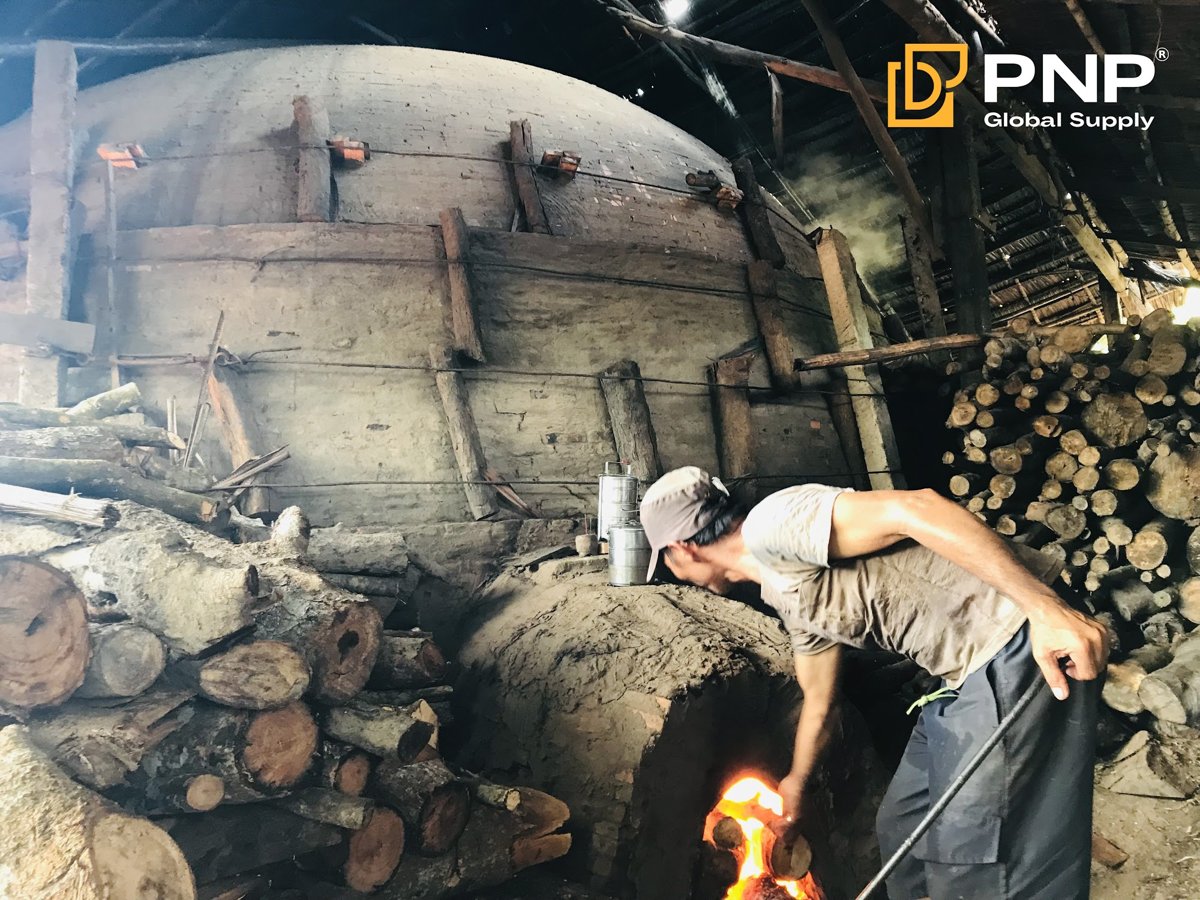
The shape of a charcoal kiln is important because it affects airflow, heat movement, and wood consumption. Workers explained that a trapezoid-like pit shape helps reduce fuel loss compared with a simple rectangular shape.
If too much oxygen enters the kiln, the wood may burn too strongly and turn into ash. If too little oxygen enters, the fire may not move properly through the wood, causing uneven carbonization. That is why traditional charcoal makers pay close attention to the shape of the kiln and the position of air holes.
A well-built charcoal kiln must control heat inside the wood stack, oxygen entering the kiln, smoke escaping through ventilation holes, fire direction during the burn, and timing before opening the kiln.
This is also why traditional charcoal production depends heavily on worker experience. Even when the equipment looks simple, the process requires careful judgment.
How to Make Lumpwood Charcoal in a Traditional Kiln
For buyers asking how to make lumpwood charcoal, the traditional kiln process can be understood through several main steps.
Collect and prepare wood: Workers first collect wood suitable for charcoal production. The raw materials were mainly acacia and eucalyptus wood from plantation forests after timber harvesting. After the main trunks were taken, branches and smaller wood pieces were gathered and transported to the charcoal-making site.
Dig and shape the kiln: The workers dig a pit and shape it according to their method. In the reported example, the pit had a base of about 2.2 meters and two side edges of about 2.6 meters. The top was narrower than the base to help guide burning and reduce unnecessary wood loss.
Stack the wood: The wood pieces are cut and stacked inside the pit. The stack must be arranged carefully so the fire can move through the wood without burning too fast. In the reported kiln, the wood was stacked more than 1 meter high.
Cover with dry leaves and soil: After stacking, workers cover the wood with a thick layer of dry leaves. In the example, the dry acacia leaf layer was about 25 cm thick. Soil is then added on top to seal the mound and keep heat inside.
Create air openings: Workers dig air openings at the front and rear of the kiln. They made two front openings and two rear ventilation holes. These openings help guide airflow and allow the fire to move through the wood slowly.
Burn slowly for about 10 days: Once the kiln is lit, workers monitor the smoke and airflow. The wood does not become charcoal immediately. It slowly carbonizes over time. In the reported case, the process took around 10 days before the charcoal was ready.
Open the kiln and collect charcoal: After the burning process is complete, the kiln is opened and the finished charcoal is collected. Each kiln in the report produced around 600 kg of charcoal.
Learn more about: CHARCOAL KILNS: Best Tips for Optimizing
What Buyers Should Check When Choosing Charcoal from a Kiln
If buyers are sourcing charcoal made from a traditional kiln, they should check both the product quality and the supplier’s ability to deliver consistently.
Charcoal size: The charcoal pieces should match the buyer’s intended use. Restaurants may need larger pieces for longer grilling, while retail markets may prefer more balanced sizing.
Moisture level: Good charcoal should be dry enough to light properly and burn efficiently. High moisture can create more smoke and reduce heat performance.
Smoke and odor: Properly carbonized charcoal should burn cleaner than poorly made charcoal. Heavy smoke or strong odor may show incomplete carbonization, high moisture, or poor storage.
Breakage and dust: Lump charcoal can break during handling and transport. Buyers should check how much dust, small pieces, or broken charcoal appears inside the bag.
Packing: For wholesale and export orders, packing must protect the charcoal and match the target market’s requirements.
Supplier consistency: A reliable wood charcoal supplier should be able to discuss wood type, product size, packing, sample testing, and order requirements clearly.
Why Work with a Wood Charcoal Supplier from Vietnam?
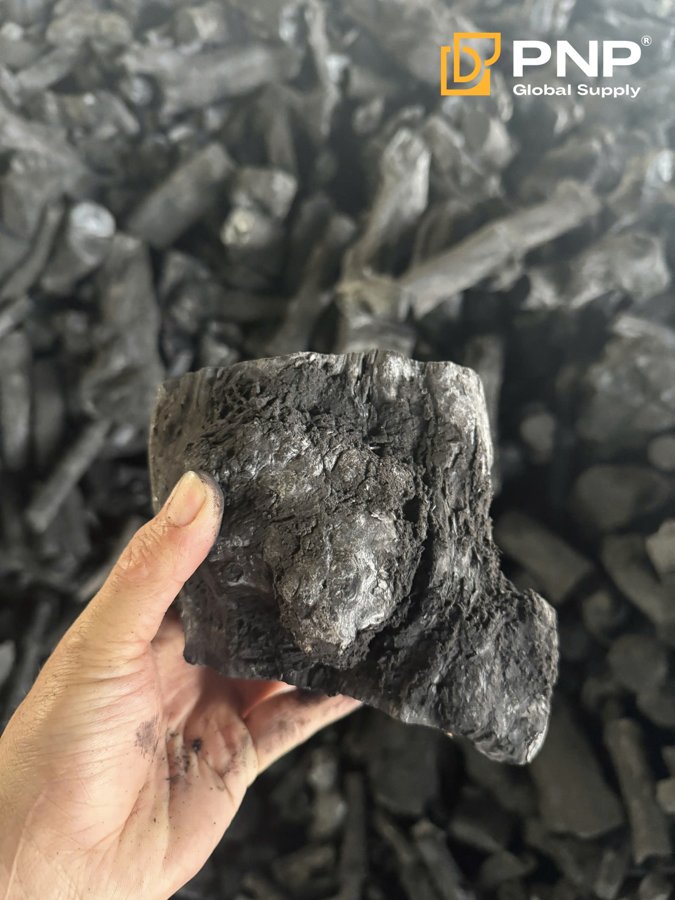
Vietnam has long experience in charcoal production, including both traditional lump charcoal and briquette charcoal. For international buyers, working with a professional wood charcoal supplier from Vietnam makes it easier to compare different charcoal options for BBQ, restaurant, wholesale, and distribution markets.
A supplier can help buyers review the differences between lump charcoal and briquette charcoal, choose suitable wood materials, confirm product size and shape, evaluate burning performance, discuss packing options, arrange sample testing, and plan container orders based on market requirements. For B2B buyers, the goal is not only to buy charcoal at a low price. The more important goal is to find a charcoal product that fits the target market, performs consistently, and supports long-term supply needs.
PNP Charcoal is a trusted wood charcoal supplier from Vietnam, offering quality charcoal products for BBQ, restaurant, wholesale, and export needs. Visit PNP Charcoal to explore more products.
Conclusion
A traditional charcoal kiln in Vietnam shows how wood can be transformed into charcoal through controlled heat, limited oxygen, and skilled airflow management. One kiln example used a pit with a base of about 2.2 meters, side edges of about 2.6 meters, a wood stack over 1 meter high, a 25 cm dry leaf layer, and around 10 days of slow burning to produce about 600 kg of charcoal.
If you are looking for a wood charcoal supplier from Vietnam, contact PNP Charcoal to request samples, compare charcoal types, and discuss packing requirements for BBQ, restaurant, wholesale, or export orders.
Contact us for more information
Facebook: PNP Charcoal
Instagram: PNP Charcoal
Email: info@pnpglobalsupply.com