In the global BBQ and fuel market, understanding container capacity is one of the most important factors when importing bags of charcoal from Vietnam. Whether you are a distributor, wholesaler, or BBQ brand owner, knowing how many charcoal bags can be loaded into a 20ft shipping container or a 40ft container helps you plan inventory, estimate costs, and optimize shipping efficiency.
Vietnam has become a key supplier of vietnamese charcoal, especially for BBQ and food service markets. However, charcoal is not a product that can be packed tightly without limits. Safety rules, ventilation requirements, and packaging standards all affect how much kg charcoal BBQ can actually be shipped per container. This article explains clearly and practically how many 10kg charcoal bags fit into 20ft and 40ft containers, with real-world packing considerations.
Understanding Charcoal Packaging Bags for Export
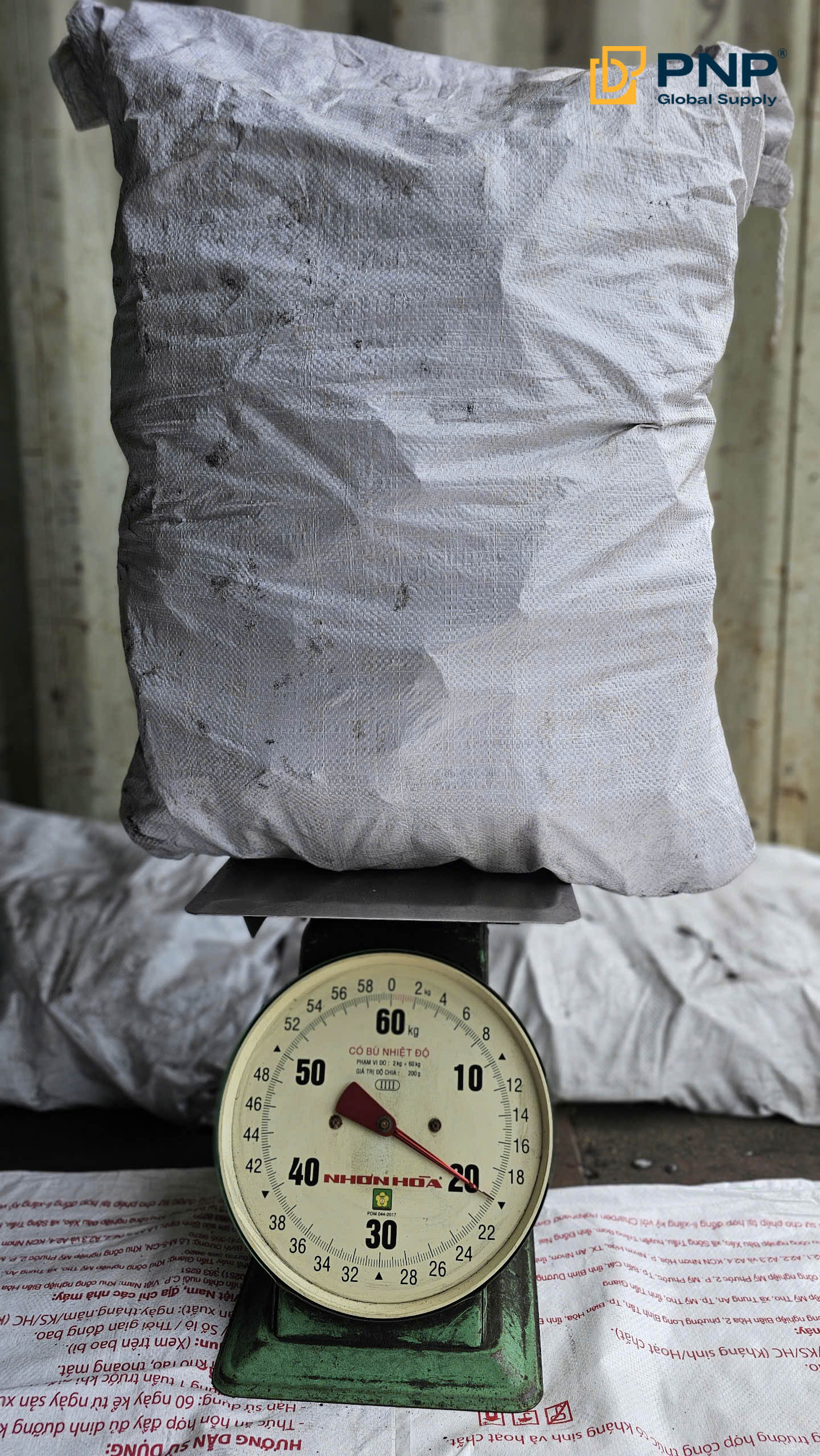
Most export-grade bags of charcoal are packed in PP woven bags, with 10kg being the most popular weight for international BBQ markets. These charcoal packaging bags are strong, breathable, and suitable for long-distance sea transport. They are widely used for lump charcoal and BBQ charcoal produced in Vietnam.
For importers, 10kg bags strike the right balance between convenience, handling, and retail flexibility. They are easy to stack, compatible with pallet loading, and commonly accepted in markets importing vietnam charcoal for BBQ, restaurants, and wholesale distribution. Because of this standardization, container capacity calculations are usually based on 10kg PP woven bags.
Why Charcoal Cannot Be Packed 100% Full
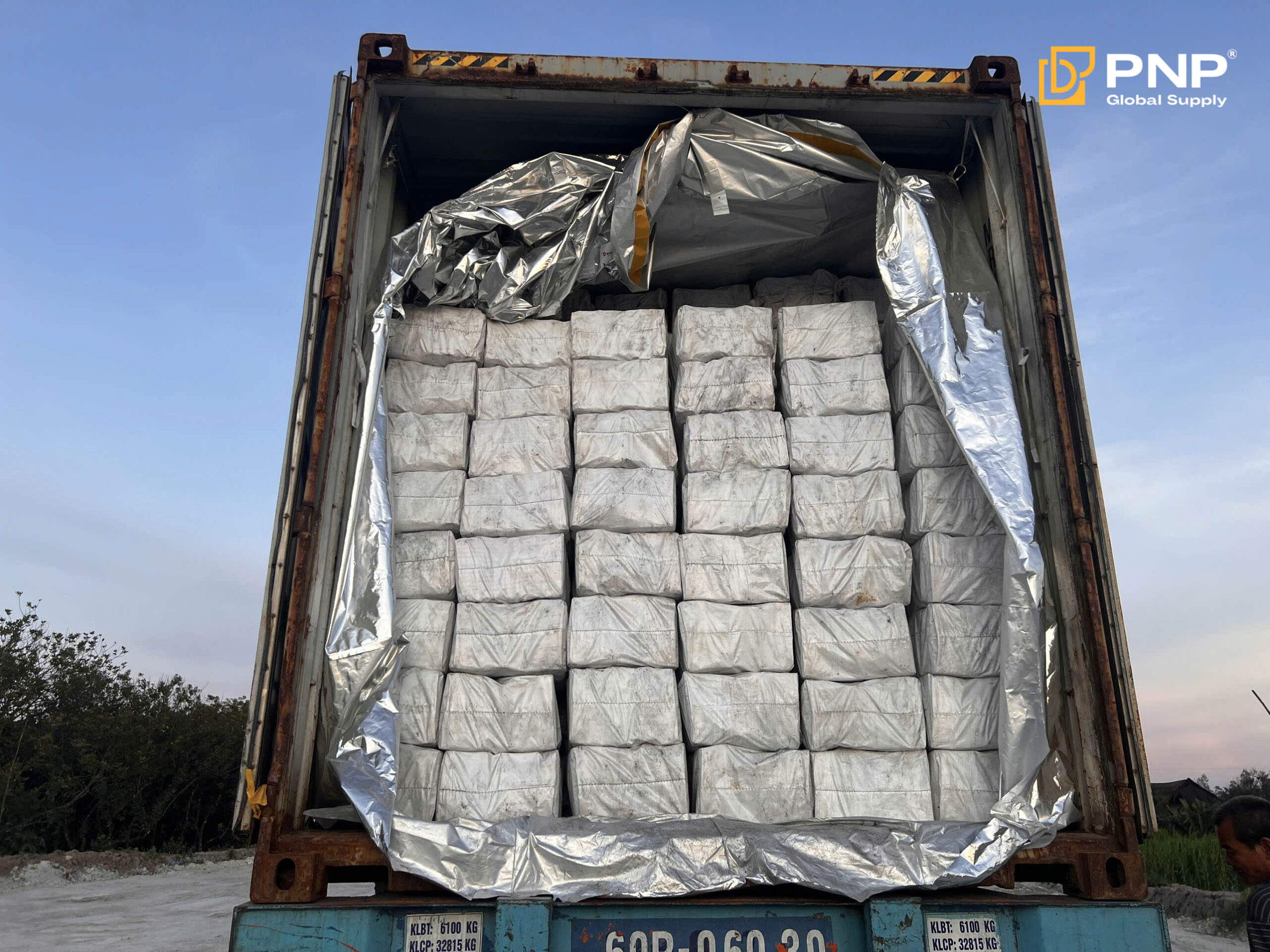
Unlike many dry goods, shipping charcoal requires extra attention to airflow and safety. Charcoal must not be compressed tightly to the ceiling or doors of the container. In standard export practice, a safety gap of around 30cm is left between the top of the cargo and the container ceiling. Additional space is also reserved near the container doors to reduce pressure and allow air circulation.
These gaps slightly reduce the maximum number of bags of charcoal per container, but they are essential to prevent moisture buildup, overheating, or damage during long sea freight journeys. Experienced exporters of vietnamese charcoal always follow these packing rules to ensure safe and compliant delivery.
How Many Bags of Charcoal Fit in a 20ft Shipping Container?
A 20ft shipping container is suitable for small to medium charcoal orders, trial shipments, or buyers entering a new market. Based on real packing data for 10kg square-packed PP woven bags, a 20ft container typically holds around 1,400 bags of charcoal, equivalent to approximately 14,000 kg of BBQ charcoal.
This capacity depends on bag shape, stacking method, and charcoal density, but square packing allows better space utilization compared to loose stacking. A 20ft container is ideal for importers who want manageable volumes while maintaining efficient loading when shipping charcoal from Vietnam.
How Many Bags of Charcoal Fit in a 40ft Container?
For bulk buyers and wholesalers, a 40ft container is the most efficient option. With 10kg PP woven bags packed in a square format, a 40ft container can load up to 2,800 bags, reaching a total weight of approximately 28,000 kg (28 tons) of charcoal.
Compared to smaller containers, a 40ft container maximizes cargo volume, lowers shipping cost per kilogram, and is ideal for stable, high-demand markets. This packing method is widely used for exporting Vietnamese mangrove charcoal to large distributors, restaurant chains, and international BBQ markets.
Key Factors Affecting the Number of Bags per Container
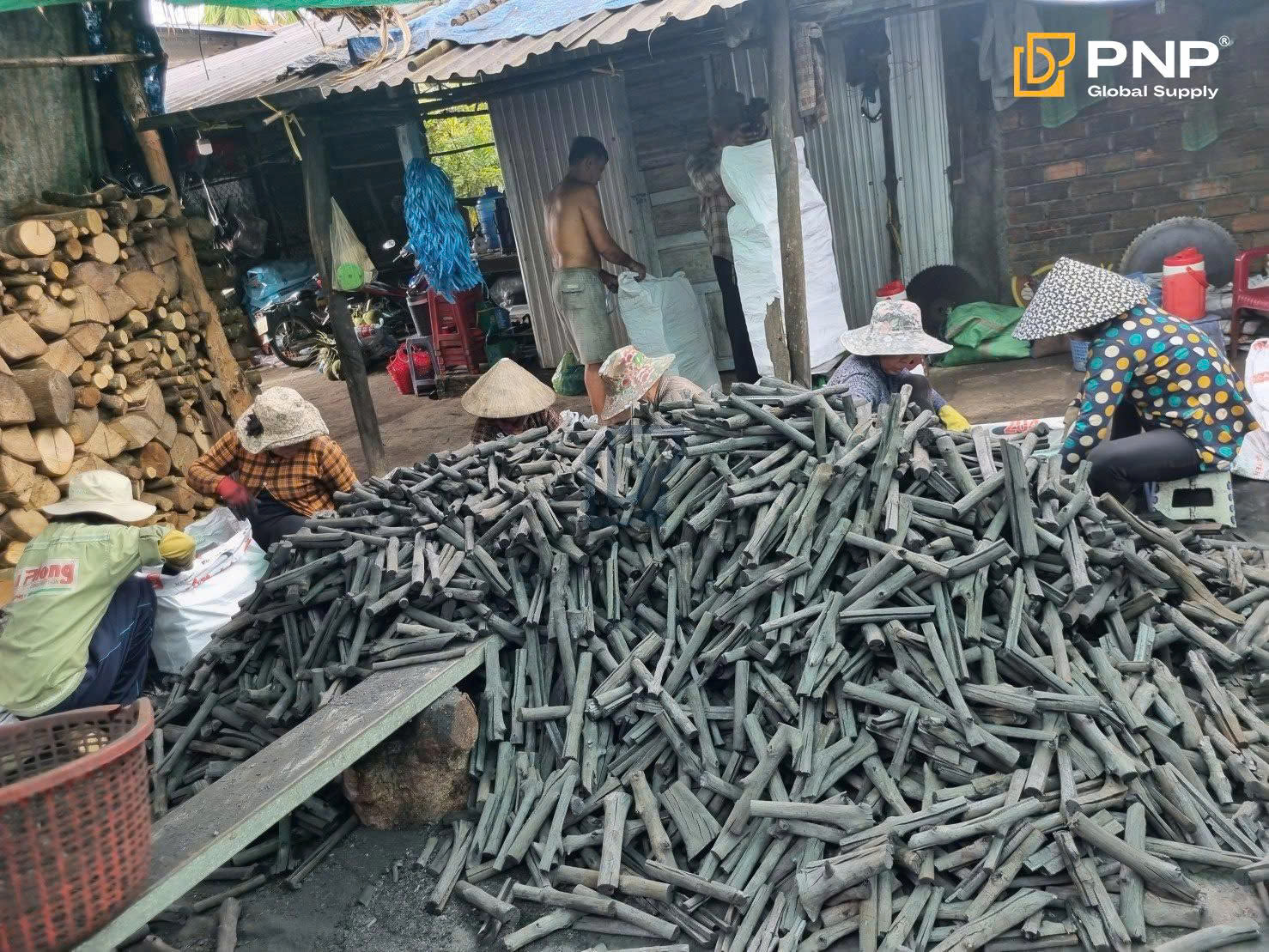
While the figures above are common industry averages, the actual number of bags of charcoal per container can vary. The type of charcoal plays a role, as different raw materials have different densities. Lump charcoal pieces that are larger and more irregular may reduce packing efficiency compared to uniform sizes.
The quality and size of charcoal packaging bags also matter. Thicker PP woven bags may take up slightly more space, while overfilled bags reduce stacking stability. Additionally, whether the cargo is palletized or floor-loaded affects capacity. Pallets improve handling but slightly reduce the total number of bags compared to loose loading.
All these factors are carefully considered by professional exporters of vietnam charcoal to ensure safe and efficient shipping charcoal operations.
If you want to learn more about packaging options, check out our article: Top 4 types of charcoal packaging for export
Choosing Between 20ft and 40ft Containers for Charcoal Shipping
Selecting the right container size depends on your business goals. A 20ft shipping container is suitable for market testing, seasonal demand, or smaller BBQ businesses. It allows buyers to manage cash flow while still accessing high-quality vietnamese charcoal.
On the other hand, a 40ft container is ideal for established importers with consistent demand. It lowers the average shipping cost per bag and supports long-term supply planning. For buyers focused on bulk kg charcoal BBQ distribution, the 40ft option delivers clear logistical advantages.
Practical Tips to Optimize Shipping Charcoal from Vietnam
To maximize container efficiency, importers should work closely with experienced suppliers who understand shipping charcoal regulations. Clear communication about bag size, loading method, and safety spacing helps avoid surprises at the port.
It is also recommended to request loading photos and packing lists, especially for first-time shipments of bags of charcoal. This ensures transparency and confirms that the container has been loaded according to agreed standards. Reliable Vietnamese suppliers are usually flexible and can adjust packing methods to match buyer requirements.
Vietnam’s Advantage in the Global Charcoal Market
Vietnam is one of the leading producers of vietnamese charcoal, offering a wide range of products suitable for BBQ and commercial use. With established export experience, Vietnamese manufacturers understand international standards and buyer expectations.
By combining consistent quality, competitive pricing, and efficient container loading, vietnam charcoal continues to gain trust in global markets. Understanding container capacity is a small but critical part of building a successful charcoal import strategy. PNP Charcoal is one of Vietnam’s leading charcoal suppliers, providing well-known, export-quality BBQ charcoal trusted by global buyers—visit our website: PNP Charcoal to explore our products and packing solutions.
Conclusion
Knowing how many bags of charcoal fit into a 20ft shipping container or a 40ft container helps importers plan better, reduce costs, and avoid logistical risks. With standard 10kg charcoal packaging bags, a 20ft container typically holds around 1,000 to 1,100 bags, while a 40ft container can carry about 2,000 to 2,200 bags, leaving proper safety gaps.
When working with reliable suppliers of vietnamese charcoal, buyers can confidently manage shipping charcoal and scale their kg charcoal BBQ business efficiently. Smart planning today leads to smoother imports and stronger market performance tomorrow.
________________________________
Contact us for more information
Facebook: PNP Charcoal
Instagram: PNP Charcoal
Email: info@pnpglobalsupply.com