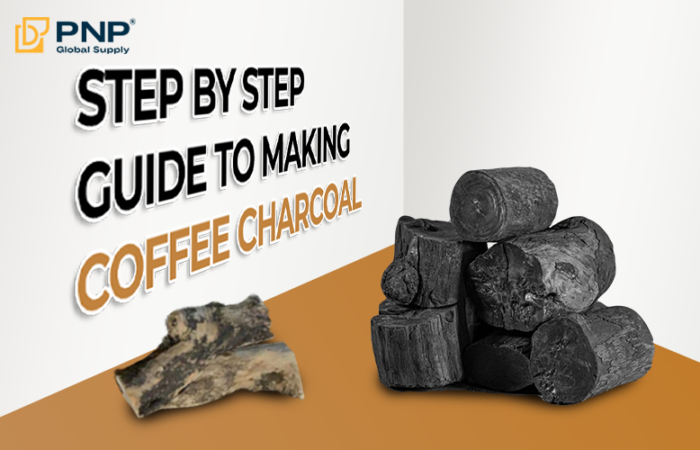
Longan charcoal is widely recognized as a premium type of lumpwood charcoal, valued for its high heat output, long burning time, and clean combustion. Made from longan wood, this charcoal has become a preferred choice among professional grillers, BBQ restaurants, and international importers seeking stable quality and reliable performance. Understanding how to make longan charcoal not only helps buyers evaluate product quality but also allows charcoal manufacturers to optimize production efficiency and consistency.
This guide provides a clear and practical overview of the longan charcoal production process, from raw material selection to charcoal carbonization, with a focus on how professional charcoal manufacturers produce high-grade lumpwood charcoal for export markets.
What Is Longan Charcoal?
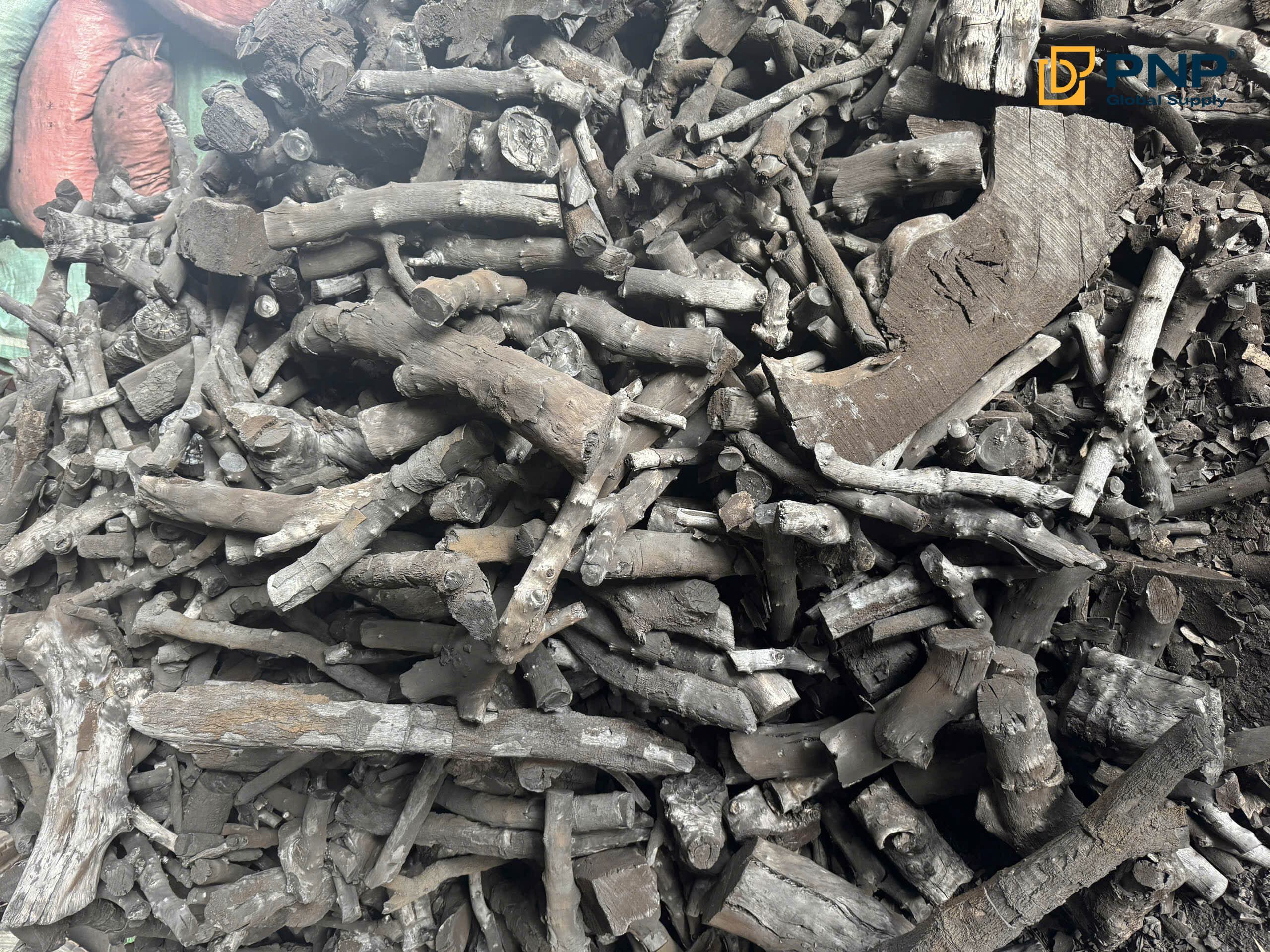
Longan charcoal is a type of wood charcoal made from longan tree wood, a hardwood known for its dense structure and low moisture content. These natural properties make longan wood ideal for charcoal production, resulting in charcoal pieces that burn steadily, generate strong heat, and produce minimal smoke.
Unlike softwood charcoal, longan charcoal belongs to the hardwood lumpwood charcoal category. It is commonly used for open-fire grilling, yakitori, Korean BBQ, and other high-heat cooking methods where heat stability and clean burn are essential.
How To Make Longan Charcoal
Raw Material Selection: The First Step in Making Longan Charcoal
The quality of longan charcoal begins with the selection of raw materials. Charcoal manufacturers typically source longan wood from pruning activities or reclaimed orchards, ensuring that production does not compete with food agriculture. Only mature, well-dried wood is selected to achieve consistent charcoal carbonization.
Before entering the wood charcoal making stage, the logs are cut into uniform sizes. This step is critical because uneven wood dimensions can lead to inconsistent heat distribution during the charcoal production process. Proper sizing also improves airflow inside the kiln, allowing for more controlled carbonization.
Moisture content is another key factor. Longan wood must be naturally air-dried before carbonization to reduce excess moisture. Lower moisture levels improve thermal efficiency, shorten carbonization time, and reduce the risk of cracking or incomplete charcoal formation.
Charcoal Carbonization: Turning Longan Wood into Charcoal
Charcoal carbonization is the most important stage in making longan charcoal. This process involves heating longan wood in a low-oxygen environment, allowing volatile compounds to escape while retaining fixed carbon.
Traditional and modern charcoal manufacturers use different kiln systems, including earth kilns, brick kilns, and improved carbonization furnaces. Regardless of the system, the principle remains the same: control temperature and airflow to gradually convert wood into charcoal without burning it into ash.
During the early stage of charcoal carbonization, moisture and volatile gases are released. As temperature increases, the internal structure of the wood transforms, forming dense lumpwood charcoal with high carbon content. Experienced operators carefully monitor the kiln to avoid over-carbonization, which can weaken the charcoal and reduce usable yield.
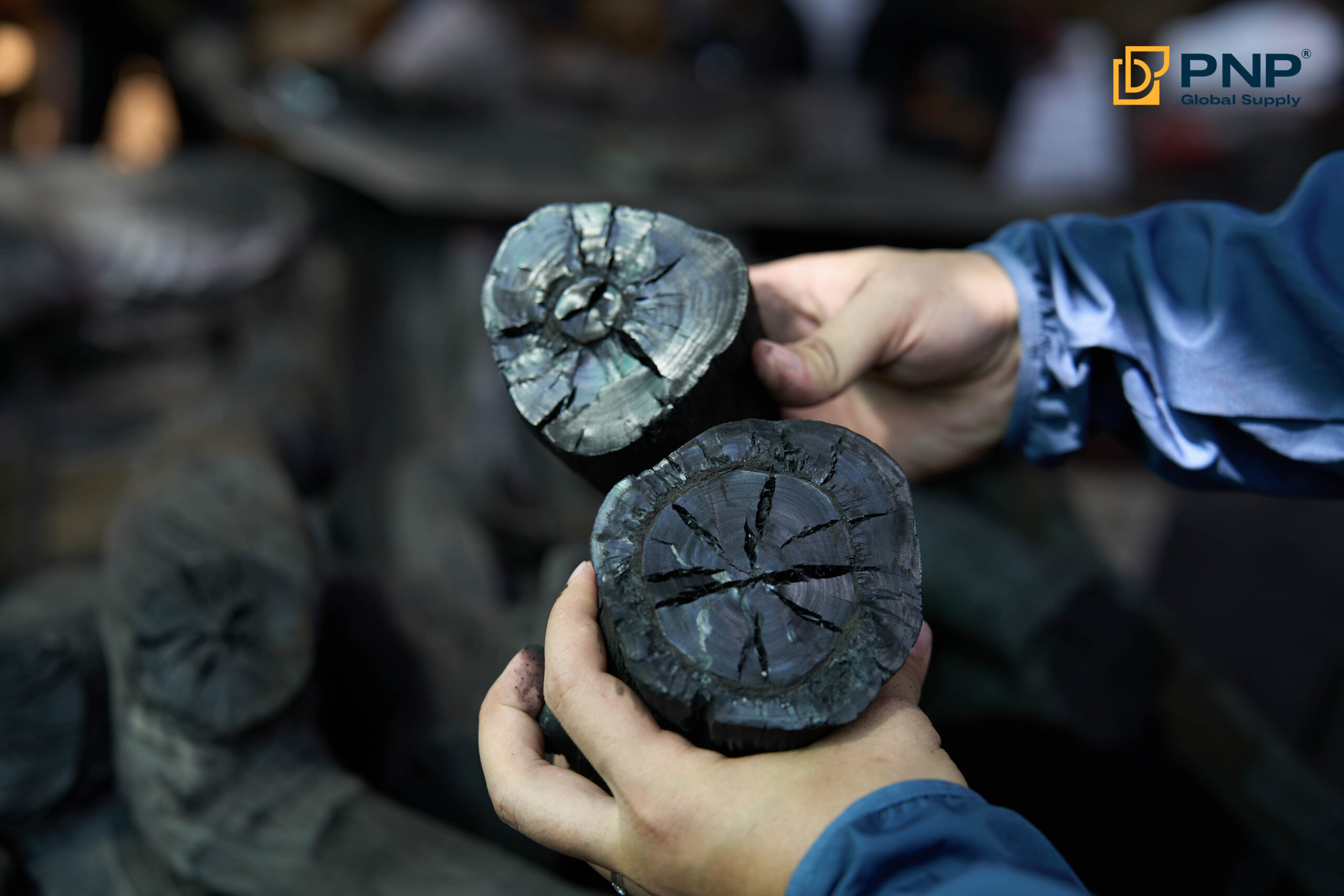
For longan charcoal, slow and stable carbonization is preferred. This method preserves the natural hardness of the wood and produces charcoal with uniform black color, solid structure, and strong burning performance.
Cooling and Stabilization After Carbonization
Once carbonization is complete, the kiln is sealed to allow the charcoal to cool naturally. Rapid exposure to oxygen at high temperatures can cause the charcoal to ignite, leading to product loss and uneven quality.
The cooling phase allows the longan charcoal to stabilize internally. This step improves structural integrity, making the charcoal less brittle and more resistant to breakage during transportation. For lumpwood charcoal intended for export, proper cooling is essential to maintain consistent size and shape.
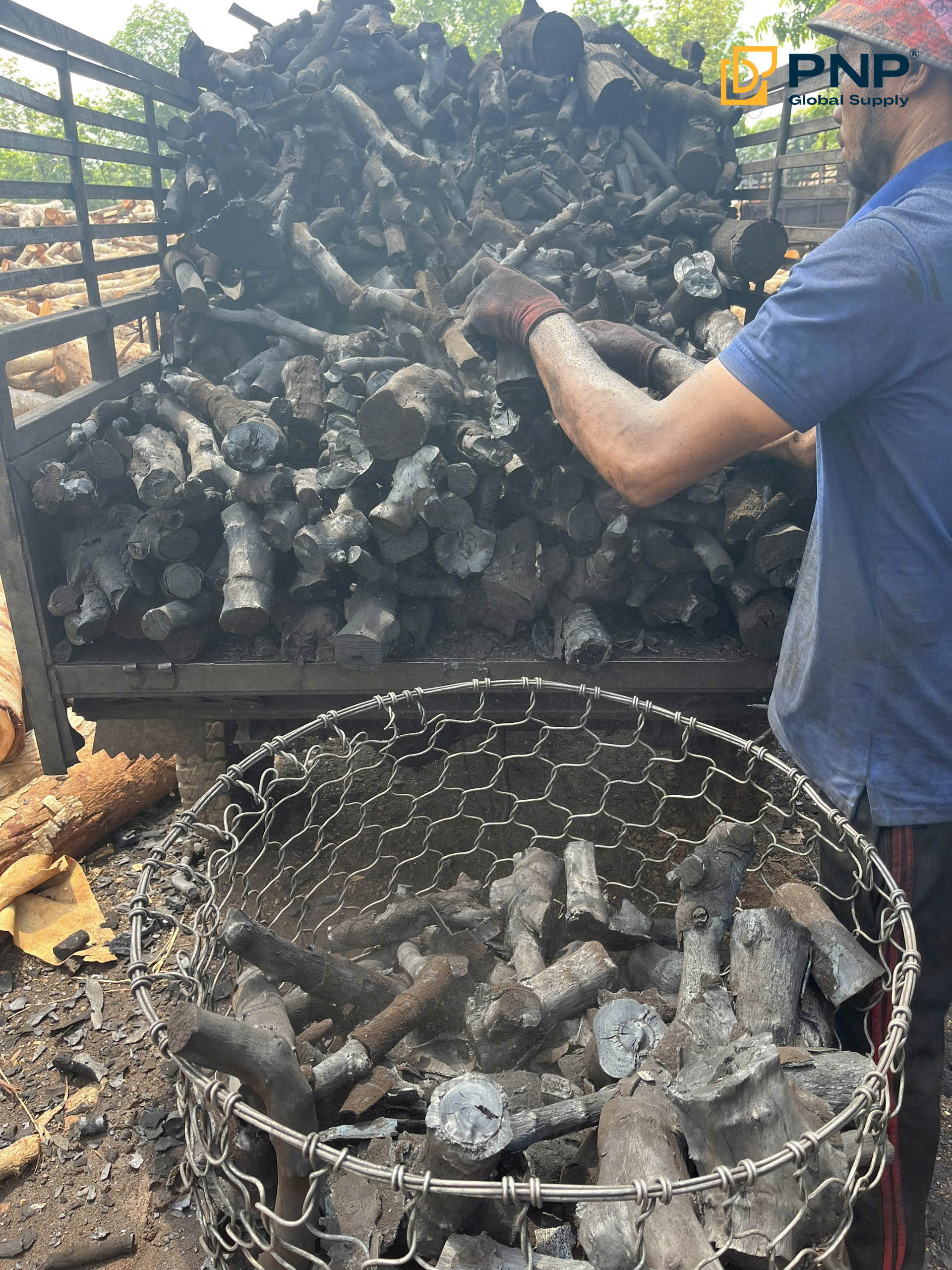
After cooling, the charcoal is unloaded and sorted. Broken pieces, ash residues, and undersized fragments are removed to ensure that only high-quality longan charcoal reaches the next stage of processing.
Sorting and Grading in the Charcoal Production Process
Professional charcoal manufacturers apply strict grading standards during sorting. Longan charcoal is typically classified by size, shape, and density. Larger, uniform lumps are favored for restaurant and commercial grilling, while smaller pieces may be allocated for retail or repackaging.
Color and surface texture are also evaluated. High-quality longan charcoal has a deep black appearance with a slightly glossy surface, indicating proper charcoal carbonization. Excessive gray patches or uneven coloration may suggest incomplete carbonization.
This grading step plays a crucial role in ensuring product consistency, especially for international buyers who require stable quality across multiple shipments.
If you want to learn more about how to make charcoal at home and understand the basic wood carbonization process, you can explore our detailed guide here: How to Make Charcoal at Home: The Ultimate DIY Guide
Packaging and Storage of Longan Charcoal
After sorting, longan charcoal is packed according to market requirements. Common packaging options include kraft paper bags, PP woven bags, and custom-branded export packaging. Proper ventilation in packaging helps maintain charcoal stability during long-distance shipping.
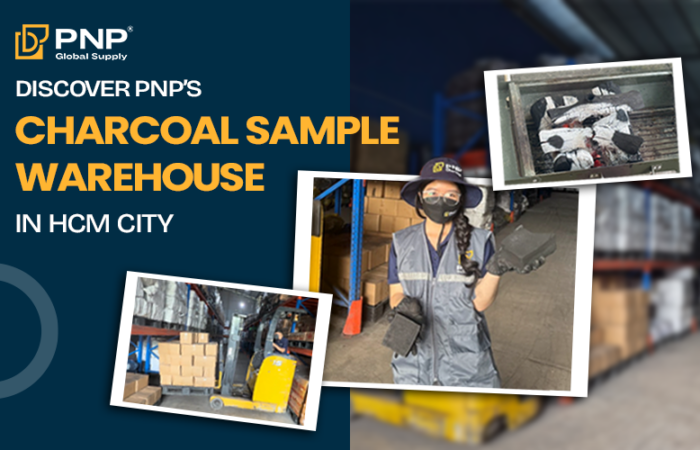
Storage conditions also affect final quality. Longan charcoal should be kept in dry, well-ventilated areas to prevent moisture absorption. Reputable charcoal manufacturers implement strict warehouse management systems to preserve charcoal performance from production to delivery.
Why Longan Charcoal Is Popular Among Charcoal Manufacturers
From a production perspective, longan wood offers several advantages in wood charcoal making. Its dense fiber structure produces lumpwood charcoal with high heat output and long burning time. This makes longan charcoal highly competitive in both domestic and export markets.
Additionally, longan charcoal has a relatively low ash content, making cleanup easier for end users. These characteristics explain why many charcoal manufacturers prioritize longan charcoal in their production portfolios, alongside other premium hardwood charcoal types.
Applications of Longan Charcoal in Grilling and BBQ
Longan charcoal is commonly used in professional kitchens and BBQ restaurants due to its stable heat and clean burn. It is well-suited for grilling meat, seafood, and skewers that require precise temperature control. Because it produces minimal smoke and odor, longan charcoal enhances the natural flavor of food without overpowering it.
For lumpwood charcoal users, longan charcoal offers reliable ignition and consistent performance, making it suitable for both high-heat searing and extended grilling sessions.
As a trusted charcoal manufacturer and exporter, PNP Charcoal supplies high-quality longan charcoal that meets the demands of professional grilling and BBQ applications. With carefully selected raw materials and controlled carbonization processes, PNP Charcoal ensures stable heat output, clean burning performance, and consistent lump size for reliable performance in both restaurants and export markets.
To learn more about our longan charcoal products and export solutions, visit our website: PNP Charcoal and connect with PNP Charcoal today.
Conclusion
Knowing how to make longan charcoal provides valuable insight into what defines high-quality charcoal. From raw material selection and charcoal carbonization to sorting and packaging, every step in the charcoal production process directly impacts performance and reliability.
For buyers and importers, understanding this process helps identify trustworthy charcoal manufacturers who prioritize quality and consistency. For producers, refining each stage of wood charcoal making ensures that longan charcoal continues to meet the demands of global markets as a premium lumpwood charcoal solution.
________________________________
Contact us for more information
Facebook: PNP Charcoal
Instagram: PNP Charcoal
Email: info@pnpglobalsupply.com