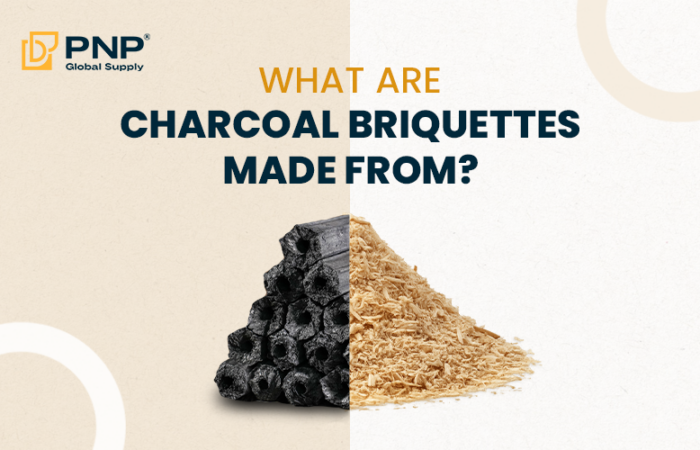
In recent years, sawdust charcoal has become an increasingly popular option in the global charcoal market. With rising demand for consistent quality, stable heat output, and scalable production, many manufacturers and importers are asking a very practical question: to produce charcoal 1kg, how much sawdust is actually needed? Understanding the conversion from 1kg sawdust to finished charcoal is essential for cost calculation, pricing strategy, and production planning, especially for businesses involved in charcoal briquettes from sawdust.
This article provides a clear, practical explanation of the sawdust to charcoal process, the conversion ratio, and the key factors that influence yield, helping buyers and producers better understand sawdust-based charcoal production.
What Is Sawdust Charcoal and How Is It Made?
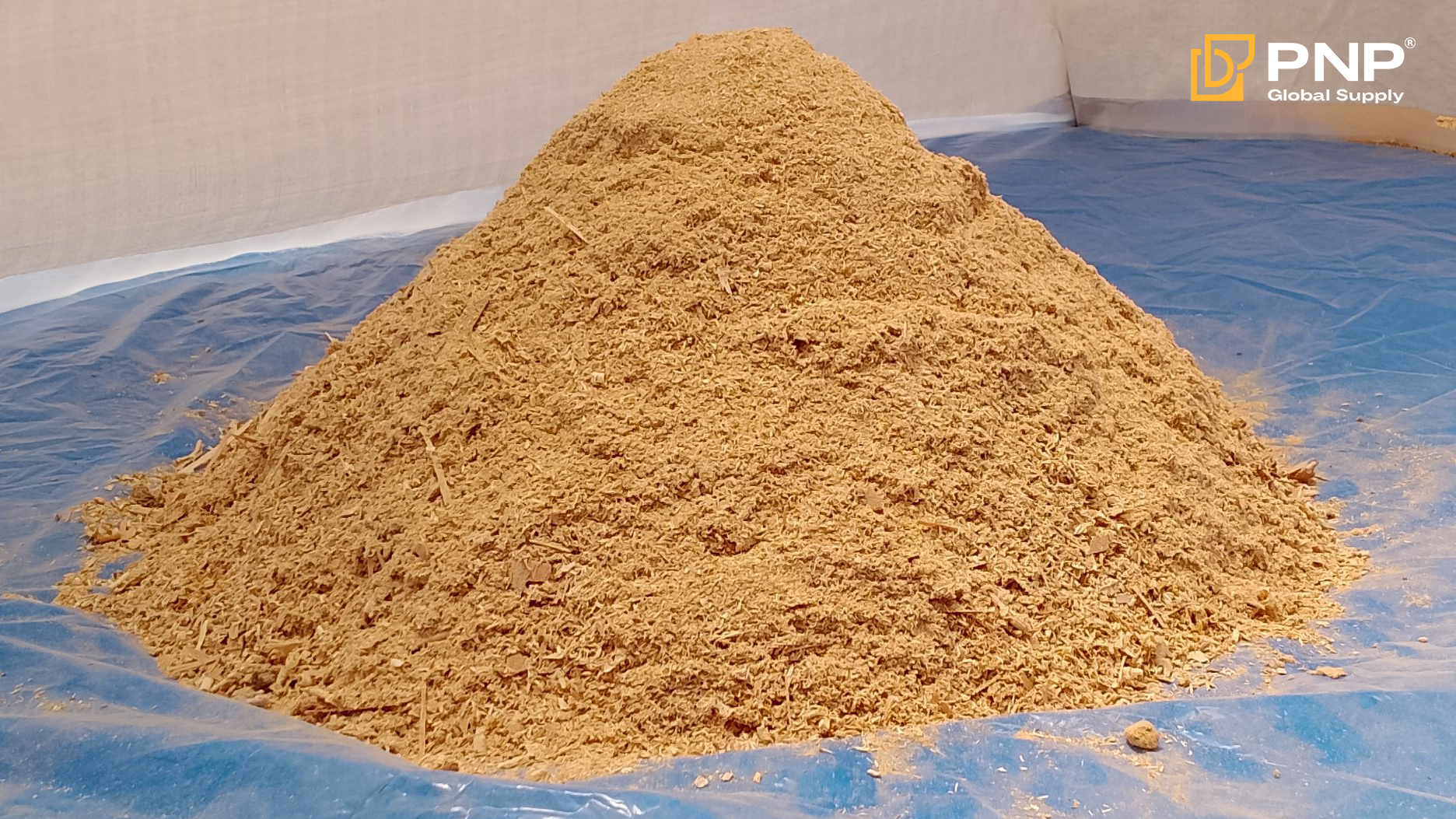
Sawdust charcoal is a type of charcoal produced by carbonizing fine wood particles collected as a by-product from sawmills and woodworking factories. Instead of using whole wood logs, this method converts sawdust into charcoal through controlled heating in low-oxygen environments.
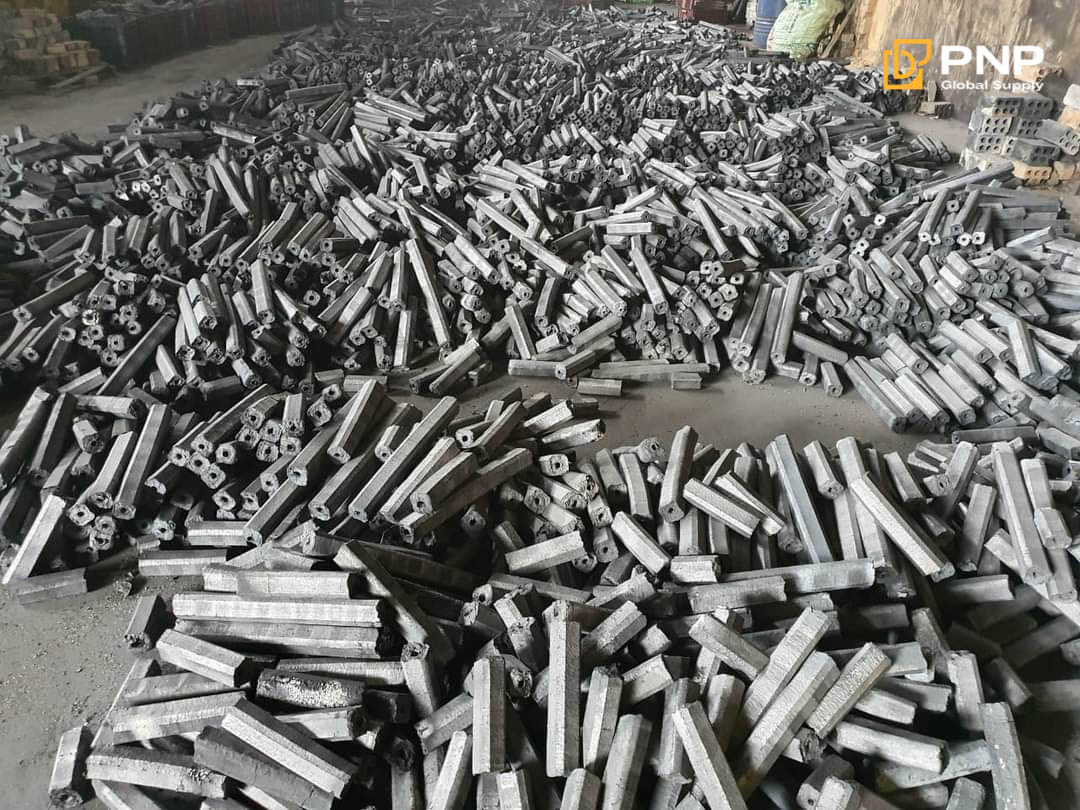
After carbonization, the charcoal powder is compressed into uniform shapes, commonly known as sawdust compressed logs or briquettes. These finished products are widely traded as charcoal briquettes from sawdust, offering consistent size, stable burning performance, and easier packaging compared to traditional lump charcoal.
The growing popularity of this material is closely linked to advancements in briquettes making technology, which allow manufacturers to control density, moisture, and burn time more precisely.
Understanding the Sawdust to Charcoal Conversion Process
To determine how much sawdust is required to produce charcoal 1kg, it is important to understand the production stages involved. The transformation from raw sawdust to finished charcoal includes several steps, each contributing to material loss.
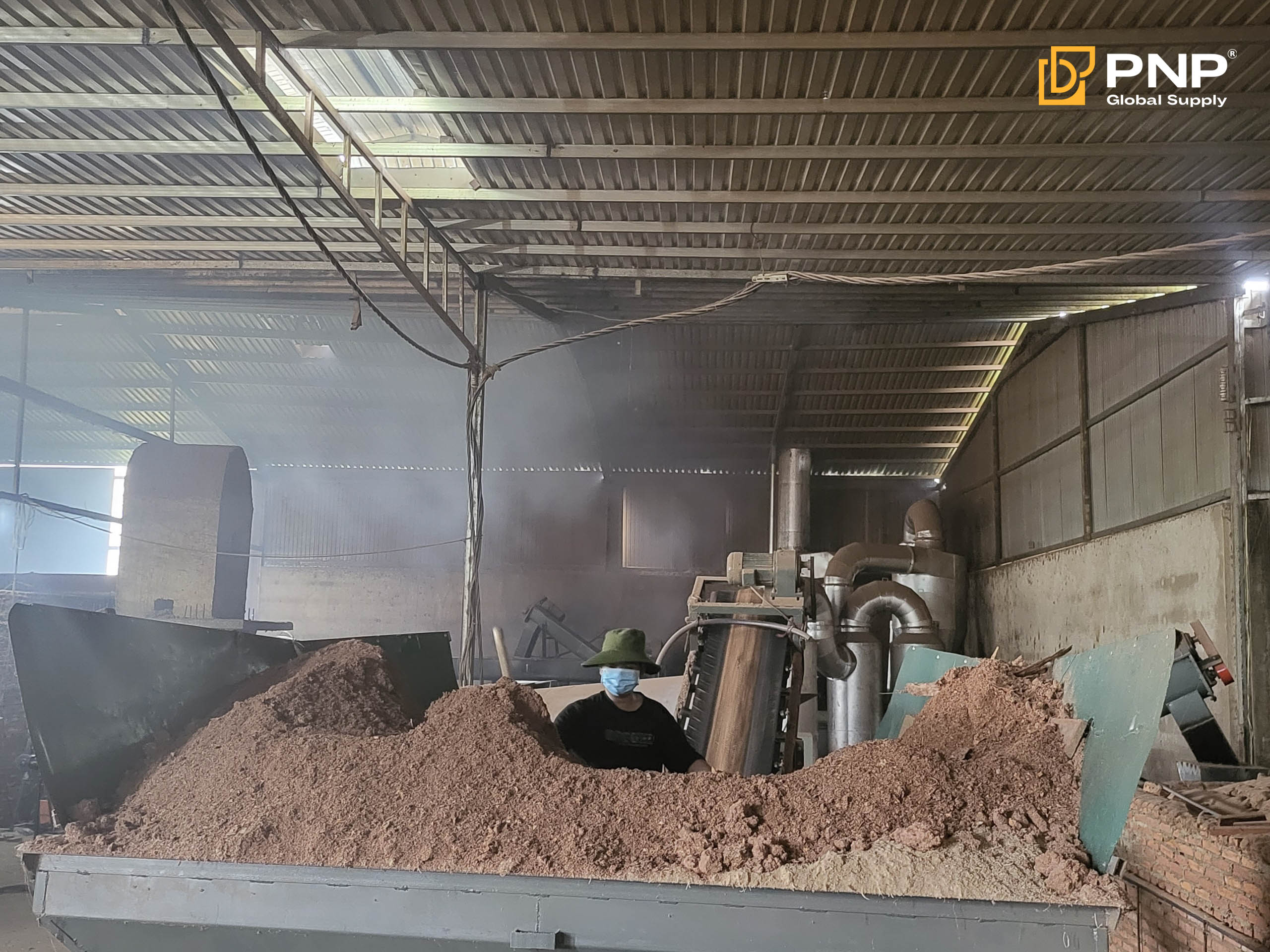
The first stage is drying. Raw sawdust often contains high moisture content, sometimes exceeding 30%. Drying reduces weight but is essential for efficient carbonization. Next is carbonization, where sawdust is heated at high temperatures in kilns or retorts. During this stage, volatile compounds are released, and only fixed carbon remains.
Finally, the carbonized material is crushed, mixed, and compressed into briquettes or logs. Each step reduces the original mass of 1kg sawdust, which explains why the final charcoal weight is significantly lower than the raw input.
If you want to explore the sawdust charcoal production process in more detail, you can read our full guide on how sawdust is converted into charcoal here: How to Make Charcoal from Sawdust
Key Factors That Affect the Sawdust-to-Charcoal Ratio
The amount of sawdust needed to produce charcoal 1kg is not fixed. Several variables influence the final yield.
Moisture content is one of the most critical factors. Wet sawdust loses more weight during drying, meaning more raw material is needed. Wood species also plays a role, as hardwood sawdust generally produces a higher fixed carbon yield than softwood sawdust.
Carbonization temperature and duration directly affect how much material is converted into usable charcoal. Higher temperatures improve charcoal quality but increase mass loss. Additionally, compression pressure during briquettes making influences density and final weight, especially for sawdust compressed logs designed for export.
How Much Sawdust Is Needed to Produce Charcoal 1kg?
Under standard industrial conditions, the average conversion ratio from sawdust to charcoal ranges between 4:1 and 5:1 by weight. This means that to produce charcoal 1kg, manufacturers typically need 4–5 kg of raw sawdust, depending on moisture content and production efficiency.
If the sawdust is well-dried before carbonization, the required amount may be closer to 4 kg. However, when using higher-moisture sawdust, the input may exceed 5 kg to achieve the same charcoal 1kg output.
In practical terms, 1kg sawdust alone is not enough to produce 1 kg of charcoal. Instead, multiple kilograms of sawdust are needed to account for moisture evaporation and volatile matter loss during carbonization.
From Raw Sawdust to Finished Charcoal Briquettes
The full transformation process from sawdust to charcoal involves several controlled stages. First, sawdust is collected and screened to remove impurities. It is then dried to reduce moisture content, improving carbonization efficiency.
Next, the dried sawdust undergoes carbonization, where it becomes charcoal powder. This powder is mixed with a natural binder and water, then shaped using high-pressure machines during briquettes making. The resulting products are charcoal briquettes from sawdust, often molded into cylindrical or hexagonal forms.
After compression, the briquettes are dried again to achieve stable moisture levels. The final products are then packed as charcoal 1kg retail packs or bulk export packaging, depending on market requirements.
Efficiency Comparison with Other Charcoal Types
Compared to traditional lump charcoal made from hardwood logs, sawdust charcoal offers better material utilization. Using sawdust reduces waste and allows manufacturers to turn low-cost by-products into high-value fuel.
While lump charcoal requires larger pieces of wood, charcoal briquettes from sawdust rely on fine particles that would otherwise be discarded. This efficiency has a direct impact on production cost and overall price of charcoal in international markets.
For importers seeking consistent quality and predictable supply, sawdust compressed logs are often preferred due to their uniform shape and controlled burning behavior.
Cost Impact and Price of Charcoal
The quantity of sawdust required to produce charcoal 1kg directly affects production costs. When more sawdust is needed, raw material expenses increase, influencing the final price of charcoal.
Efficient manufacturers focus on optimizing the sawdust to charcoal ratio by improving drying methods and carbonization control. This allows sawdust briquettes manufacturers to offer competitive pricing while maintaining consistent quality.
In export markets, pricing also depends on packaging format, certification, and logistics. However, the raw material conversion ratio remains one of the core factors in determining the cost structure of sawdust-based charcoal products.
Common Mistakes in Calculating Sawdust Requirements
One common mistake is underestimating moisture content in raw sawdust. Failing to account for drying loss can result in inaccurate production planning. Another error is assuming that 1kg sawdust can directly yield 1 kg of charcoal, which is technically impossible due to carbonization losses.
Some producers also overlook density variations in sawdust compressed logs, which can affect the weight of finished charcoal 1kg packs. Accurate calculation requires a full understanding of each production stage.
Insights from Sawdust Briquettes Manufacturers
Experienced sawdust briquettes manufacturers emphasize the importance of consistent raw material quality. Uniform sawdust size, controlled moisture levels, and stable carbonization conditions are key to achieving reliable yields.
Manufacturers with modern briquettes making systems are better equipped to optimize the conversion process, reducing waste and improving profitability. These insights are particularly valuable for exporters supplying large-volume markets where consistency and cost control are critical.
PNP Charcoal specializes in supplying high-quality sawdust charcoal with stable performance and consistent specifications, meeting the strict requirements of international markets. With a well-controlled raw material selection process, modern production systems, and experience in large-volume exports, PNP helps partners optimize cost efficiency while ensuring reliable quality for every shipment. In addition to charcoal supply, PNP also provides flexible solutions tailored to importers, wholesalers, and distributors worldwide. To explore our sawdust charcoal products and services in detail, please visit our website atPNP Charcoal.
Conclusion
Producing charcoal 1kg typically requires around 4–5 kg of raw material, meaning 1kg sawdust alone is not sufficient to produce 1kg of finished charcoal, as the final yield depends heavily on moisture content and production technology. This conversion ratio highlights why sawdust charcoal is best suited for industrial-scale production rather than small manual processing.
Thanks to efficient sawdust-to-charcoal systems and advanced briquettes making techniques, charcoal briquettes from sawdust have become a reliable and competitive option in the global charcoal industry. For importers and distributors, understanding how 1kg sawdust converts during the carbonization process helps evaluate product value, negotiate pricing, and plan long-term supply strategies more effectively.
If you are sourcing sawdust compressed logs or working with professional sawdust briquettes manufacturers, knowing the role of 1kg sawdust in producing charcoal 1kg is a crucial step toward making smarter purchasing decisions.
________________________________
Contact us for more information
Facebook: PNP Charcoal
Instagram: PNP Charcoal
Email: info@pnpglobalsupply.com