In the global BBQ and grilling industry, charcoal remains a key fuel source for restaurants, distributors, supermarkets, and importers. As demand continues to grow, many businesses choose to order charcoal in bulk to ensure a stable supply and better pricing. However, when purchasing charcoal in bulk, importers need to evaluate several important aspects before placing an order to avoid unnecessary risks.
Here are 8 key factors to consider when ordering charcoal in bulk.

Product Quality
Product quality is the most important factor when purchasing charcoal in bulk. The performance of charcoal directly affects cooking efficiency, heat output, and customer satisfaction. Poor-quality charcoal can burn unevenly, produce excessive smoke, or leave large amounts of ash.
When evaluating charcoal quality, buyers should check key specifications such as fixed carbon content, moisture level, ash content, and burning time. High fixed carbon content usually means stronger heat and longer burning time, while low moisture helps charcoal ignite more easily.
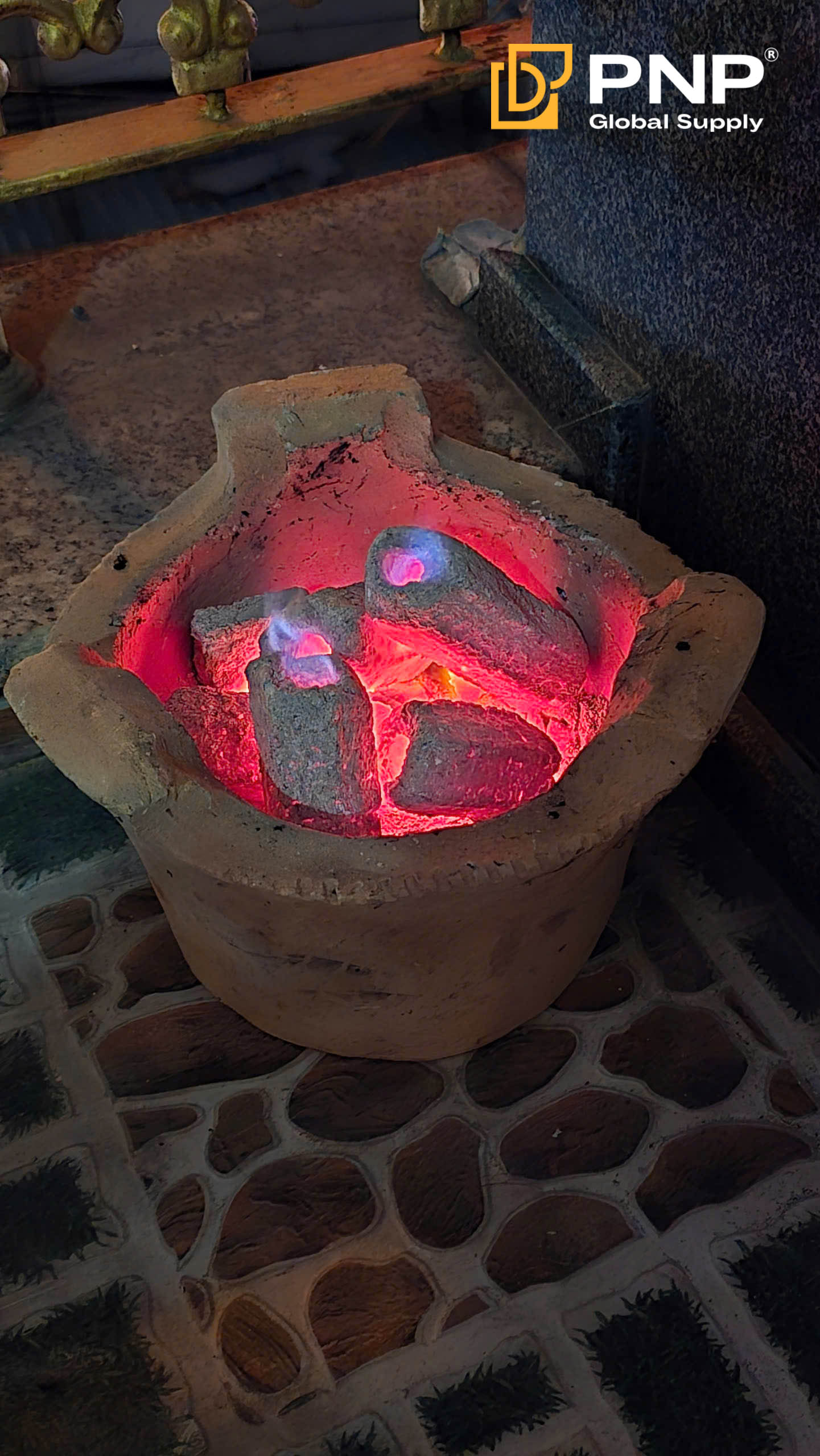
Different types of charcoal also have different performance characteristics. For example, hardwood lump charcoal produces strong heat and natural flavor, while charcoal briquettes often burns longer with less smoke. Many buyers prefer vietnamese charcoal because it is known for stable quality and consistent burning performance.
Testing product samples before placing large orders is also a common practice among professional buyers.
Supplier Capability and Reputation
Choosing reliable charcoal suppliers is essential when building a successful charcoal business. A supplier’s production capacity, experience, and reputation can determine whether your supply chain remains stable.
Buyers should evaluate how long the supplier has been in the charcoal industry, their export experience, and their ability to handle large orders. Factories with modern production facilities and multiple kilns are usually more capable of producing charcoal in bulk consistently.
Many international buyers work with Vietnamese manufacturers because vietnamese charcoal producers often have strong export experience and the ability to supply different types of charcoal for various markets.
A trustworthy supplier can become a long-term partner, ensuring stable supply and consistent product quality.
Delivery and Logistics
Efficient delivery and logistics play a major role when ordering charcoal in bulk. Since charcoal is usually transported in large containers, proper shipping arrangements are necessary to avoid delays or supply shortages.
Buyers should discuss logistics terms with charcoal suppliers, including container capacity, shipping schedules, and delivery timelines. Understanding international trade terms such as FOB, CIF, or EXW can also help buyers manage transportation responsibilities more effectively.
Reliable logistics ensure that the charcoal arrives on time and in good condition. For businesses running a charcoal business, delayed shipments can lead to stock shortages and lost sales.
Price and Discounts
The price of charcoal is always a major consideration when purchasing large quantities. Buying charcoal in bulk usually allows buyers to negotiate better pricing compared to smaller orders.
However, businesses should not focus only on the lowest price of charcoal. Extremely cheap products may indicate lower quality or inconsistent production. Instead, buyers should compare multiple charcoal suppliers to evaluate price, quality, and service together.
Bulk orders may also qualify for special discounts or long-term supply agreements. For companies planning to expand their charcoal business, establishing a stable pricing agreement with a supplier can provide long-term financial benefits.
Payment Terms
Payment terms are another important factor when ordering charcoal in bulk. International trade often involves large transactions, so buyers must carefully manage payment conditions to protect their cash flow.
Common payment methods in the charcoal industry include T/T (Telegraphic Transfer) and L/C (Letter of Credit). Each option has its own advantages depending on the level of trust between the buyer and the supplier.
New buyers often prefer secure payment methods such as L/C when working with unfamiliar charcoal suppliers. On the other hand, long-term partners may use more flexible payment arrangements.
Clear and transparent payment agreements help prevent misunderstandings and support the smooth operation of a charcoal business.
If you want to learn more about common payment methods in charcoal export, read the following article: Payment Methods in Charcoal Export: Common Payment Methods When You Buy Charcoal in Bulk
Storage and Usage Conditions
Proper storage is essential after receiving charcoal in bulk. Charcoal should always be stored in a dry, well-ventilated area to prevent moisture absorption.
Moisture can reduce burning efficiency and affect the overall performance of different types of charcoal. For distributors and retailers, maintaining good storage conditions helps preserve product quality until it reaches customers.
Understanding proper usage and storage practices helps businesses reduce product waste and maintain consistent quality for their customers.
After-Sales Support
After-sales support is often overlooked but plays an important role in long-term supplier relationships. Reliable charcoal suppliers should be willing to provide support even after the product has been delivered.
For companies operating a charcoal business, strong after-sales service can help build trust and ensure smooth cooperation in future transactions.
At PNP Charcoal, after-sales service is an important part of our commitment to customers. Our team provides continuous support after delivery, including technical consultation, product guidance, and assistance with future orders. If buyers have any questions about charcoal quality, usage, or storage, our experts are ready to help ensure the best performance for their charcoal business. To learn more about our products and services, please visit our website: PNP Charcoal
PNP Charcoal supports customers even after delivery
Regulations and Certifications
International charcoal trade must comply with various regulations and certification requirements. When ordering charcoal in bulk, buyers should ensure that the supplier can provide all necessary export documents.
These may include certificates such as CO (Certificate of Origin), CQ (Certificate of Quality), ISO certifications, or FSC certification for sustainable wood sourcing.
Such documents are important for customs clearance and legal import procedures. They also demonstrate that the supplier follows responsible production practices.
Conclusion
Purchasing charcoal in bulk is an effective strategy for restaurants, distributors, and importers looking to maintain a stable supply and reduce operational costs. However, successful bulk purchasing requires careful planning and evaluation.
Buyers should pay attention to product quality, supplier capability, delivery logistics, and the price of charcoal. In addition, factors such as payment terms, storage conditions, after-sales support, and regulatory compliance all contribute to a successful charcoal business.
________________________________
Contact us for more information
Facebook: PNP Charcoal
Instagram: PNP Charcoal
Email: info@pnpglobalsupply.com