In the global BBQ and industrial fuel market, charcoal remains one of the most in-demand energy sources. Restaurants, distributors, wholesalers, and importers all rely heavily on stable supply and consistent quality. That is why choosing the right charcoal suppliers is not just a purchasing decision—but a long-term business strategy. With rising competition, fluctuating logistics costs, and increased quality standards across regions like the Middle East, Europe, and East Asia, working with a reliable supplier becomes essential for sustainable growth.
This article guides you through five key steps to help you select the ideal charcoal supplier for a long-term partnership. Whether you are looking for charcoal for sale, evaluating the price of charcoal, or searching for trusted charcoal companies for export cooperation, these steps will help you make informed and profitable decisions.

Why Choosing the Right Charcoal Supplier Matters
Successful charcoal businesses depend on three core elements: consistent quality, stable supply, and competitive pricing. The right charcoal suppliers ensure your shipments meet export requirements, deliver on time, and align with your customers’ needs. Different markets prefer different types of charcoal—from mangrove charcoal for high-heat grilling, coconut shell charcoal for eco-friendly use, to coffee charcoal for long-lasting burn.
A reliable supplier also provides standardized charcoal packages, transparent pricing models, and full documentation for import charcoal procedures. When these factors are aligned, your business gains stability, stronger customer retention, and predictable profit margins. On the contrary, choosing the wrong supplier can result in delays, low-quality shipments, customer complaints, or even financial losses.
Step 1: Evaluate Charcoal Quality and Types
The first and most important step in selecting dependable charcoal suppliers is understanding the quality they provide and the types of charcoal they specialize in. Since each type is suitable for different markets and uses, you must review their specifications carefully.
Common types include:
- Mangrove charcoal – known for high heat and long burn, ideal for restaurants.
- Coffee charcoal – premium, long-lasting charcoal with stable heat and low ash.
- Sawdust briquettes – uniform, cost-effective, and widely used in the Middle East.
- Coconut shell charcoal – eco-friendly with clean burn and low smoke.
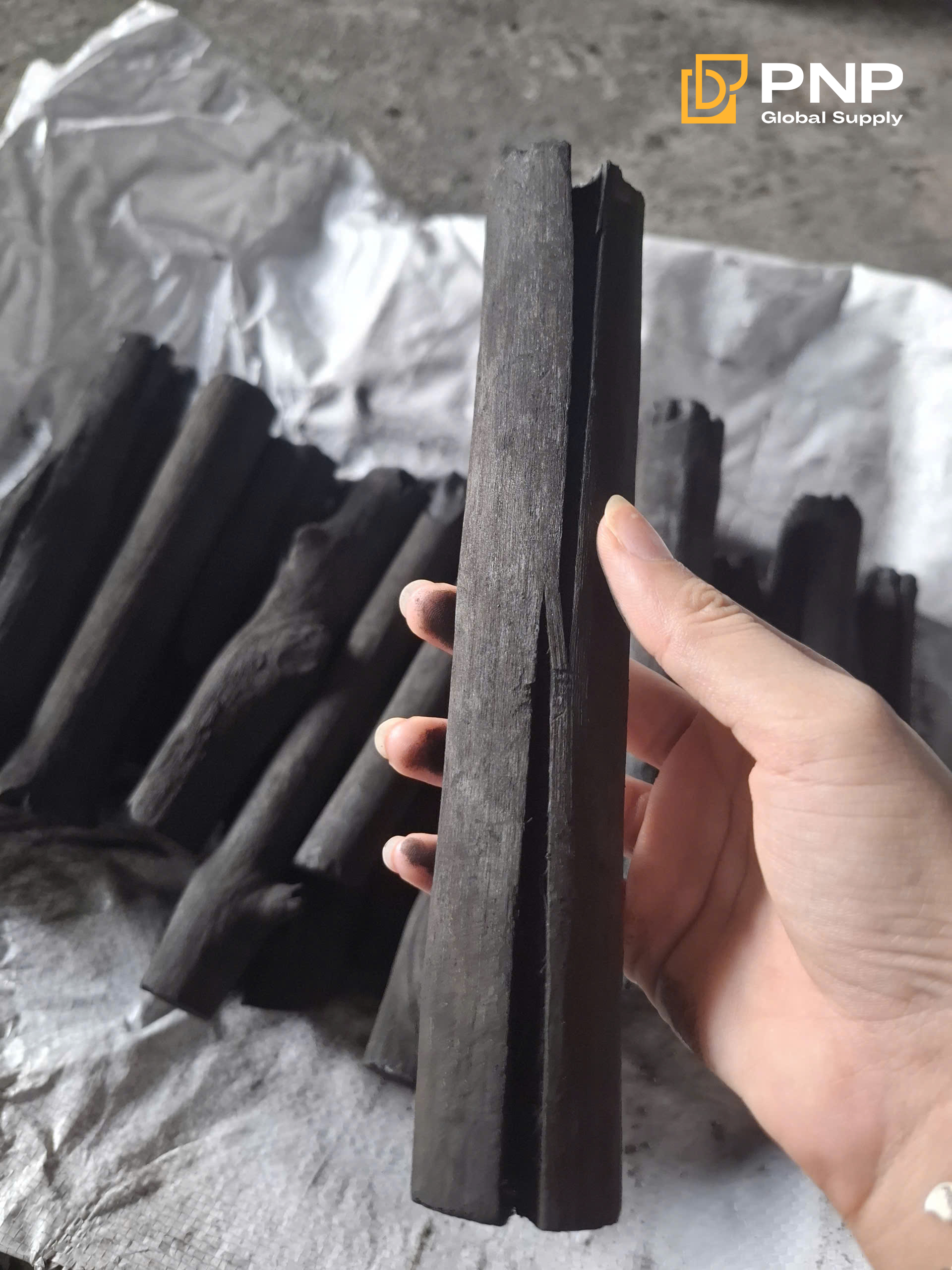
A reputable supplier should provide detailed product specifications, burn time, ash content, calorific value, moisture levels, and sample testing results. These details allow you to compare performance before deciding.
When assessing charcoal for sale, look at the appearance: premium charcoal will have a deep black exterior, clean break structure, minimal dust, and no impurities. Inferior products often generate excessive smoke, burn too fast, or contain mixed woods.
By understanding the supplier’s product range, you can determine whether they are capable of supporting your market’s needs in the long term.
Step 2: Assess Supplier Capacity and Export Experience
After evaluating the product quality, review whether the supplier has sufficient capacity and professionalism to support long-term cooperation. Reliable charcoal suppliers should demonstrate:
- Consistent monthly or yearly production capacity
- Experience handling charcoal for export
- Clear production processes
- Compliance with international standards
- Ability to supply large volumes during peak seasons
- Strong logistics network for global shipments
Export experience is critical because import charcoal requires several documents: packing list, invoice, certificate of origin, fumigation certificate, moisture report, and photos of loading and packaging. Suppliers with export expertise help prevent delays at customs and ensure smooth transportation.
You should also check how many countries they export to, the number of containers shipped monthly, and feedback from past partners. Companies that regularly export to strict markets such as Japan, Korea, the UAE, or Europe usually have higher production standards and better reliability.
Step 3: Compare Pricing and Charcoal Packages
Pricing plays a key role in choosing the right supplier. When comparing the price of charcoal, don’t just look at the number—evaluate the underlying factors that influence cost:
- Type of wood or raw material
- Burn time and performance
- Moisture and ash content
- Cost of packaging
- Seasonal fluctuations
- Logistics and delivery terms
- Port of loading and destination
Low-priced charcoal may seem attractive, but if quality is inconsistent, your business could suffer losses. High-quality charcoal tends to have better burn performance, which translates to better customer satisfaction and repeat orders.
Additionally, packaging plays a large role in cost structure and product presentation. Professional suppliers offer various charcoal packages, including:
- 3 kg – 5 kg consumer bags
- 10 kg – 20 kg wholesale bags
- Custom-branded bags for distributors
- Palletized packaging for export containers
Proper packaging prevents moisture, dust contamination, and breakage during transport. It also enhances your brand image in the market.
Make sure suppliers provide transparent quotations, including FOB, CIF, or DAP pricing options depending on your needs.
Learn more in the full article: TOP 4 TYPES OF CHARCOAL PACKAGING FOR EXPORT
Step 4: Review Reputation and Company Profile
To avoid risks, always check the reputation of different charcoal companies. A company’s history and credibility tell you a lot about how they operate and whether they can support long-term cooperation.
Here are criteria to review:
- Number of years in operation
- Reviews from global buyers
- Social media presence and website
- Certifications and testing reports
- Communication speed and professionalism
- Responsiveness to problems or complaints
- Transparency in production and pricing
A reputable supplier will send photos, videos, and documents upon request. They are open about their factory, capacity, and export record. If a supplier avoids providing information or lacks documentation, this could be a warning sign.
You can also request a factory visit or an online tour to verify their production line, storage warehouse, raw materials, and quality control process.
Step 5: Request Samples and Run Trial Orders
Before finalizing a partnership, always test samples. This step helps verify whether the charcoal matches the specification, appearance, and burn performance promised by the supplier.
When testing samples, evaluate:
- Ignition time
- Heat intensity
- Burn duration
- Smoke level
- Amount of ash produced
- Stability of burn
Trial orders allow you to observe the supplier’s real packaging quality, loading efficiency, documentation accuracy, and delivery timeline. After one or two successful trial orders, you will have a clearer understanding of their reliability.
This step builds trust and reduces risks before you commit to larger purchase volumes.
Additional Tips to Strengthen a Long-Term Partnership
Once you have selected the right charcoal supplier, maintain a strong working relationship by establishing clear processes:
- Set KPI standards for quality and packaging
- Agree on a communication schedule
- Create a complaint-handling protocol
- Request regular production updates
- Negotiate long-term pricing stability
- Share market insights to optimize supply
Suppliers value consistent buyers, so long-term commitments can often secure better pricing, priority production, and improved services.
At PNP Charcoal, we focus on building long-term, reliable partnerships by delivering consistent, high-quality charcoal for export markets. With strict quality control, stable production capacity, and professional communication, PNP ensures every shipment meets international standards — from packaging to performance. If your business is looking for a trustworthy charcoal supplier for sustainable growth, visit our website: PNP Charcoal to explore our full product range and partnership options.

Conclusion
Choosing reliable charcoal suppliers is essential for building a stable supply chain and maximizing your business success. By evaluating product quality, understanding types of charcoal, comparing the price of charcoal, reviewing export capabilities, examining company reputation, and testing samples, you can confidently select a partner that supports your long-term goals.
Whether you are looking for charcoal for sale, need help with import charcoal procedures, or want consistent quality for charcoal for export, following these five steps will help ensure a smooth, profitable, and long-lasting partnership.
________________________________
Contact us for more information
Facebook: PNP Charcoal
Instagram: PNP Charcoal
Email: info@pnpglobalsupply.com